Alasia
Introduction
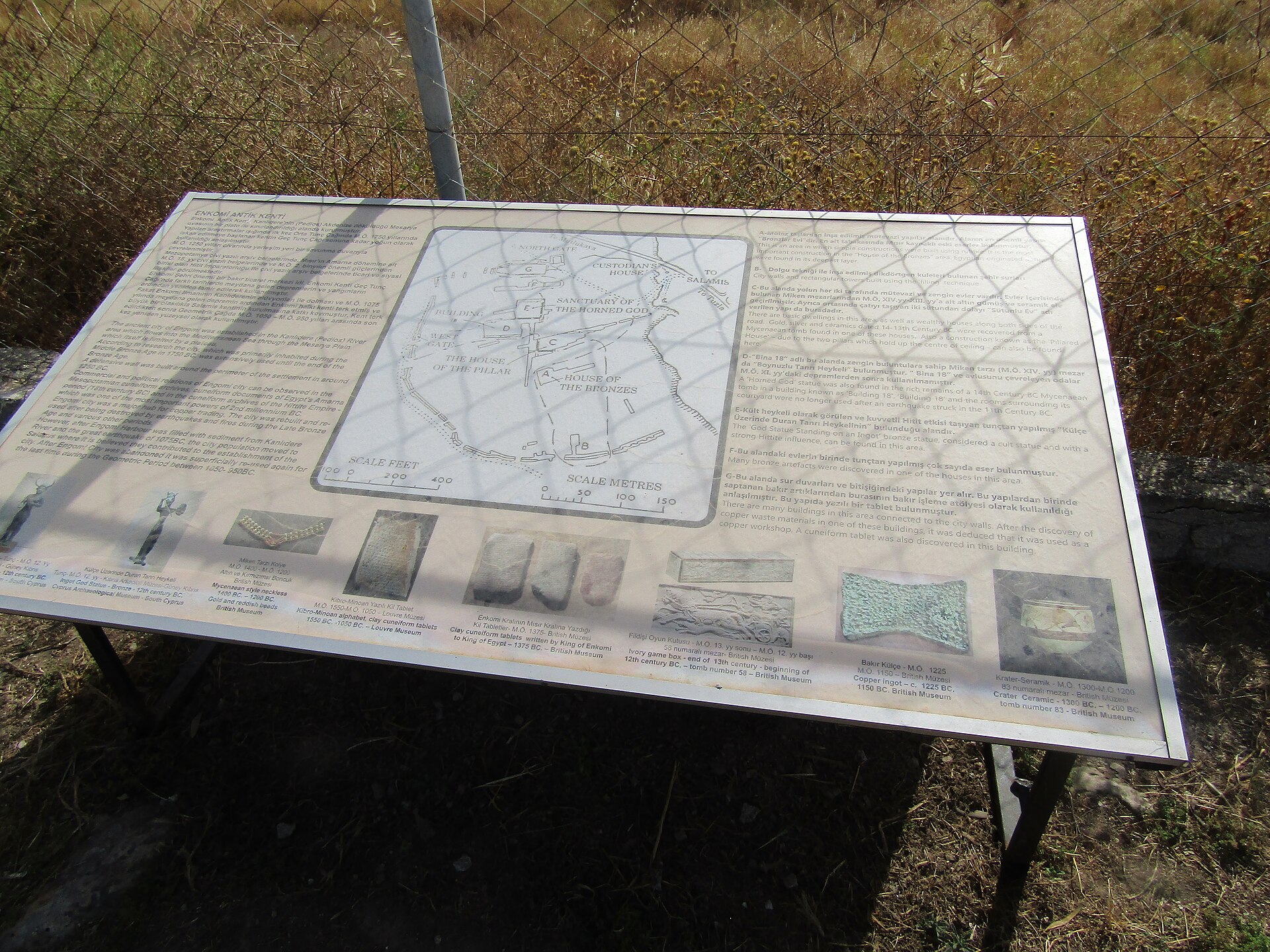
Enkomi is an archaeological site of the second millennium BC on the eastern coast of Cyprus, a short distance from the village of Enkomi. The site is currently under disputed governance, so check the practical situation before planning a visit. It has been suggested that this city was the Alashiya of the Amarna letters and of texts from several areas of the ancient Near East.
The site is known for the hundreds of rich tombs that have been excavated there and for exceptional metallurgic finds such as the Ingot God and the Horned God. A number of Cypro-Minoan Script inscriptions were found at Enkomi, including the longest known clay tablet.
Getting around
For day-to-day trips, most visitors end up relying on ride-hailing apps, taxis, buses and the light rail, with motorcycle taxis (okada) and tricycles (keke) filling in for short hops. Ride-hailing through Uber and Bolt is the most straightforward door-to-door option and fares per mile are comparatively cheaper than cabs, particularly outside Lagos. A "drop" is a private cab or keke — flag one down by waving and saying "drop." Licensed cabs follow each state's approved colour scheme and all commercial vehicles carry licence plates printed in red. Okadas are found almost everywhere at dedicated spots on neighbourhood streets and main roads, though they are banned outright in several states and restricted to suburban areas in Lagos; kekes complement them for rides under half an hour and are the only alternative in private estates and gated residencies. Note the curfews: kekes must be off the road at 6pm in Jos and 9pm in Lagos.
Buses are the workhorse of public transport, and the BRT corridor — high-capacity buses on dedicated lanes — is the easiest part of the system to use. The Cowry Card covers the BRT corridor, scheduled ferry services and the light rail between Marina and Mile 2, and is available from BRT bus shelters and terminals. Ferries and water taxis run at least 30 routes from jetties including Marina, Ajah, Badore, Ikorodu and Mile 12, but there are no regular schedules outside morning and evening peak hours; on weekends boats are used more for leisure cruises on the lagoon. You can hire a ferry or water taxi for the day at Five Cowries Terminal, Falomo, Ikoyi, for visits to private beach houses, resorts and towns like Epe and Badagry — book at least 72 hours in advance. Walking is possible in some neighbourhoods but cities are not designed around pedestrians, and there are no dedicated bicycle lanes anywhere; the AWA Bike scheme lets you book and lock bicycles via an app and is mainly used in Lagos. Accessible transportation is virtually non-existent, with the Lagos BRT the closest to accessible transport. From the airport, the practical options are a taxi, a ride-hailing car or a pre-arranged transfer; if your onward journey is to another region, note that some destinations are unreachable by road or rail, and domestic flights — though subject to common delays — are worth considering, with the first flights of the day almost always leaving on schedule.
Three days in Alasia
Day one begins with the island's deep past. Head to Enkomi, the Bronze Age city on Cyprus where archaeologists uncovered the Ingot God and the Horned God, and where Cypro-Minoan Script tablets were found. From there, follow the thread of Alashiya, the name by which this land appears in the Amarna letters and other records of the Near East. It is a day for thinking about how a place is named and known across centuries.
Day two turns to the water. Start at the Marina and walk the Mile, then use the ferries that link Five Cowries Terminal with Falomo, Ikoyi, Ajah, Badore, Ikorodu and Epe. For a longer excursion, consider Badagry. Walking is feasible in parts, and AWA Bike offers an accessible way to cover ground. Licensed ride-hailing through Uber and Bolt is the straightforward way to connect the pieces.
Day three stays in the city and leans on public transport. Buses and the BRT move you between districts, and the Cowry Card keeps fares simple. Note that okadas are part of the street scene, though licensed operators are the ones to use. If your plans stretch beyond Alasia, remember that Lagos, Jos and the wider country lie further afield, and the ride-hailing apps remain useful for the last stretch.