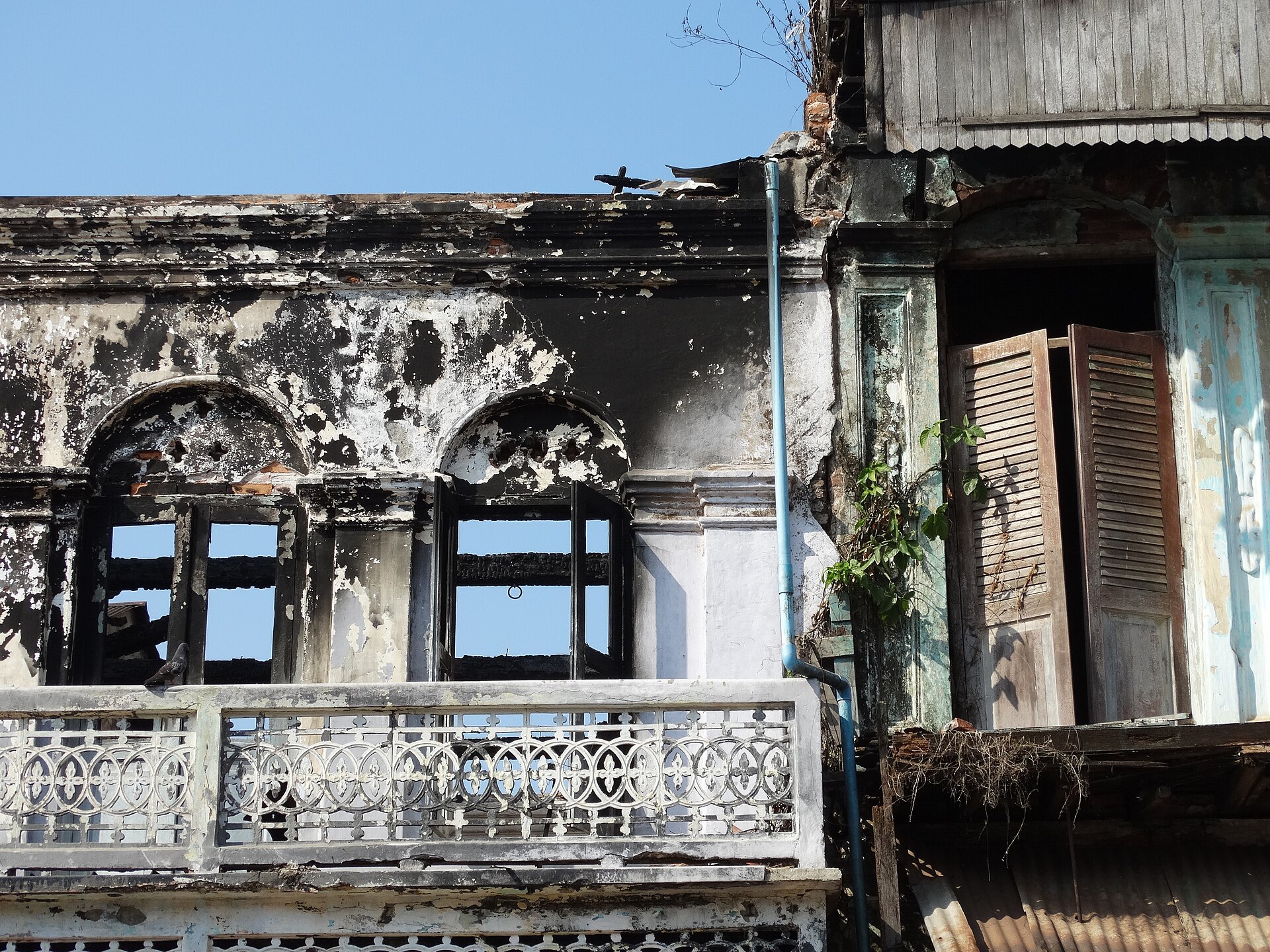
Mawlamyine
Introduction
Mawlamyine, once known as Moulmein, sits at the mouth of the Thanlwin (Salween) River in southeastern Myanmar, roughly 300 kilometres from Yangon and 70 kilometres south of Thaton. It is the capital of Mon State and an ancient city that served as the first capital of British Burma.
Before you go
Mawlamyine sits in southeastern Myanmar and serves as the first stop for many travellers arriving from Thailand, making it a practical starting point for exploring the rest of the country. The city itself is a sizeable one, and its appeal lies largely in what surrounds it.
- Plan time for the nearby sights: the largest reclining Buddha in Myanmar lies about 18 km south of the city, and the golden rock is roughly 20 km to the north.
- Approach the city as a gateway rather than a single destination, since it works well as a base for onward travel through Myanmar.
Getting there
Mawlamyine sits on the main overland routes from Yangon, Naypyidaw, Mandalay and Bagan, and the journey is worth breaking: Bago and the Golden Rock at Kyaiktiyo are both on the way. An overnight stop on top of the mountain, resting among thousands of other pilgrims, is a memorable option, though you will want ear plugs and a warm sleeping bag; otherwise stay in a guesthouse in Kinpun, the base camp.
- By bus: The main bus station is on Maung Rd, which bypasses the city to the east, and most buses start and stop there. Services run from Hpa-An (about 2 hr from the clock tower), Myawaddy (3–5 hr), Yangon (several a day from Aung Mingalar Bus Station, 5½–7 hr), Naypyidaw (a Scania bus from Bawgathiri Highway Station), Mandalay (the Shwe Mandalar overnight bus from the Highway Bus Station south of Mandalay, which provides a towel, pillow, blanket, toothbrush and water and makes at least two stops), and Dawei.
- By pick-up or shared taxi: Most non-bus transport arriving from the northeastern main road drops passengers at the main junction, from where most traffic continues south. From Myawaddy the shared taxi ride is very bumpy, much of it on gravel road, and takes 3–5 hr; you can pay in Thai baht, and there are currency exchange people and ATMs close to the border control. Shared taxis will drop you at your lodging.
- By train: The train station has up to three bumpy trains a day from Yangon, Bago and Kyaikto, starting in Yangon and Bago roughly 9 hr and 7 hr earlier respectively. Upper class tickets go on sale three days before departure at the downtown ticket office.
- By boat: Boats run between Hpa-An and Mawlamyine and are more expensive than bus or train, but the trip up or down the river is scenic. Elegant Myanmar sells tickets for their sailing from their office next to Ykko, south of the night market; you can also ask at your guesthouse, or at Breeze Inn Guesthouse, which may still operate a boat. Journey times are listed as 4 hours, but in the dry season it can take as little as 2 hours, or as long as 5 including a mandatory stop at a small village to visit a monastery and temple.
Getting around
Mawlamyine has no metro or tram system, so getting around relies on a mix of walking, motorbike taxis, trishaws, tuk-tuks, pick-ups and a limited local bus network. Walking is a genuine option in the centre and downtown, especially along Strand Road, but the city stretches far along the waterfront, so plan to combine walking in the centre with short rides for anything further afield. Rental bikes are available and cycling is manageable for longer distances within downtown, though there is no dedicated cycling infrastructure, traffic conditions vary and road quality is uneven.
Motorbike taxis, trishaws and pick-ups are available all over town and cluster especially around the central market — appear to be lost and someone will likely offer you a ride. Tuk-tuks, known locally as thone bee, and motorbikes are registered as taxis in the city. Agree on a fare before you set off, particularly for the run between the bus station, train station or main junction and the city centre, where drivers may open with an inflated asking price. You can also hire a tuk-tuk driver for a few hours to tour the area, telling the driver which places you want to visit; the opening quote for such a tour is typically well above what is reasonable, so bargaining is expected. Buses radiate mostly north to south and connect Mawlamyine to nearby cities and regions, but public transit within the city is limited, and bus stations often sit outside the centre. Mawlamyine Railway Station is the terminus of the Yangon–Mawlamyine Railway and the Tanintharyi Line, with trains from Yangon, Bago and Kyaikto; rail is best treated as a secondary option, as services are not always reliable and the journey is slow and bumpy. Boats travel between Hpa-An and Mawlamyine along the river, costing more than bus or train, and can be chartered privately or joined as a shared sailing. Have your hotel address written in both English and Burmese to show drivers, and ask your guesthouse about boat tickets and onward bus bookings — they often arrange both.
Where to stay
Mawlamyine has plenty of places to rest, with options ranging from budget guesthouses to comfortable mid-range hotels. Budget travellers can choose between several guesthouses, some in the centre and others a little further out. Aye Chan Mya Guest House is a brand new option that sits a little far from the centre but offers good value, while Aurora Guesthouse on Lower Main Road provides Wi-Fi and rooms that are nicer than its prices suggest. Breeze Inn Guesthouse is well known, with friendly staff and a river-view terrace where breakfast is served, though the building is run down and the rooms are basic. For something more comfortable, Cinderella Hotel is beautifully decorated and clean, with a large breakfast included, a restaurant, and a couple of dorm rooms alongside the guest rooms. Hotel Queen Jamadevi opened in 2016 in a quiet area and offers private bathrooms with hot water, a free Asian buffet breakfast focusing on Mon state specialities, a garden, and a free airport shuttle. Mawlamyine Strand Hotel and Sandalwood Hotel are further mid-range choices, the latter relatively new and fully tiled with breakfast included. Near the bus station, Pann Motel Pinlon is quiet and tidy, with fast Wi-Fi and helpful staff.
Food & drink
Mawlamyine's food scene is at its best along Strand Road and the streets running off it. The night market and food stalls north of YKKO restaurant are the place to mix with locals: choose from several stalls, some with English menus, though it pays to watch what's being prepared and pick from the dishes on display, since the best options may not be listed at all. Expect barbecue, cheap seafood, vegetarian dishes, rice and soups. For something sit-down, Yunnan / Yuu Nan Pan Tay Restaurant on Strand Road serves Thai food in friendly, clean surroundings, while YKKO offers Chinese and Thai dishes in a more professional setup. Shwe Nandaw on Lower Main Road, a short walk north of Aurora Guest House, opens early and is a nice local teashop with a terrace, fresh bakery including vegan and vegetarian options, Chinese fried and steamed specialities, and spicy milk tea. For Mon cooking, head to Daw Yi on Uze Na Pagoda Street at the corner of Strand Road, where a wide variety of Mon curries comes with tea, soup and salad included.
To drink, try faluda — a mix of ice cream, jelly, syrup, basil seeds and pudding — available at the night market or Deli France Bakery. Mya Nan Thida, a few doors north of Aurora, does milk shakes, ice cream, faluda and kulfi. OK Hotel at the corner of Strand Road and Thaton Tadar Street is popular with foreigners; food costs a little more, but the drinks are fine. At the north end of Strand Road, Strand View Restaurant has an outdoor garden in cosy surroundings and serves cocktails and spirits.
What to see and do
Mawlamyine's in-city sights can comfortably fill a day, especially if you include the markets and restaurants. Start in the north-eastern hills at Kyaik Tan Lan Pagoda, known for its views and its sunset. Just north of it, Mahamuni Paya holds a century-old replica of the Buddha from Mandalay's Mahamuni Paya, famous for its early morning face washing; here there is no washing ceremony, but women can get closer and there are fewer tourists, though the gold cover is thinner than in Mandalay. Down at the river, Gaung Say Kyun, or Shampoo Island, has its own pagoda at Sandawshin and a pleasant river view, reached by a short boat ride from near the bridge. The Thanlwin Bridge, a long crossing built in 2005, is another landmark. The city also has several churches, among them St Patrick's, St Matthew's (abandoned and locked), First Baptist and Holy Family.
Many of the region's famous sights lie beyond the city, and the best way to reach them is by scooter or motorbike, particularly to the south. To the north, Nwa-La-Boh Pagoda draws visitors for a golden rock formation balanced like three stones stacked on one another, similar to Kyaiktiyo but smaller; getting there involves a hike up and down in high heat and humidity, so bring water, good shoes and sunblock. South of town, in order of distance, you can visit Shwe Nat Taung Pagoda on its hill, the vast and tranquil Pa-Auk Tawya Monastery, a Hindu temple, and Kyauk Ta Lone hill, which offers wide views and sunsets. Further south stands Win Sein Taw Ya, the largest reclining Buddha in Myanmar, escorted by dozens of monk statues along the track from the main road, with an older reclining Buddha opposite. Beyond that, Kan Gyi Lake and Pagoda can be walked around on foot. You can also take a boat up or down the river, or cross by ferry to Ogre Island, known for cottage industries such as weaving, chalkboards, pipes, hats and rubber bands; the island is spread out, so a guide is useful, and morning high tide can mean disembarking into mud, making sandals a good choice.
When to go
Mawlamyine has a tropical monsoon climate, so the timing of your visit makes a big difference to what you can do. The long dry season runs from mid-November to mid-April and is the easier stretch for travelling, with little rain to interrupt sightseeing and outdoor plans.
From mid-April to mid-November the southwest monsoon brings extremely heavy rain. The wettest conditions fall between June and August, when the westerly winds are at their strongest and persistent downpours are the norm, so plan for wet weather if you travel then.
Three days in Mawlamyine
Day one: Start in Mawlamyine itself, the former Moulmein of British Burma and the capital of Mon State. Walk Maung Rd, the old commercial spine, and take in the town's mix of Mon, Burmese and colonial-era character. In the afternoon head for the Thanlwin, also called the Salween, and watch the river traffic against the hills. If you want a longer view, the road south toward Dawei and the Bawgathiri Highway Station gives you a sense of how the town sits between the river and the coast.
- Maung Rd for the old town streetscape
- The Thanlwin/Salween riverfront in the late afternoon
Day two: Use Mawlamyine as your base for the Buddhist sites of Mon State. The great pilgrimage draw is Kyaiktiyo, the Golden Rock, reached via Kinpun, and it is best done as a full day rather than squeezed in. Approach it early, since the platform gets crowded and the weather on the ridge can turn cold and windy. If you prefer to stay closer to town, spend the day around the monasteries and markets of Mawlamyine instead, and keep the Golden Rock for a clear morning.
- Kyaiktiyo (Golden Rock) via Kinpun
- Monasteries and markets in Mawlamyine as the quieter alternative
Day three: Look at the travel options before you commit. From Mawlamyine you can go north toward Yangon, Bago, Naypyidaw, Mandalay or Bagan, or south toward Dawei. Buses run from Aung Mingalar Bus Station in Yangon and from the Bawgathiri Highway Station, with operators such as Shwe Mandalar and Scania serving the route; the Highway Bus Station is the other main departure point. If you are heading for the Thai border, the road goes by way of Hpa-An and Myawaddy, and from Myawaddy you cross into Thailand. Plan for ATMs to be unreliable outside the main towns, and note that shared transport is the norm on many local routes.
- Northbound buses toward Yangon, Bago, Naypyidaw, Mandalay and Bagan
- Southbound and border routes toward Dawei, Hpa-An and Myawaddy