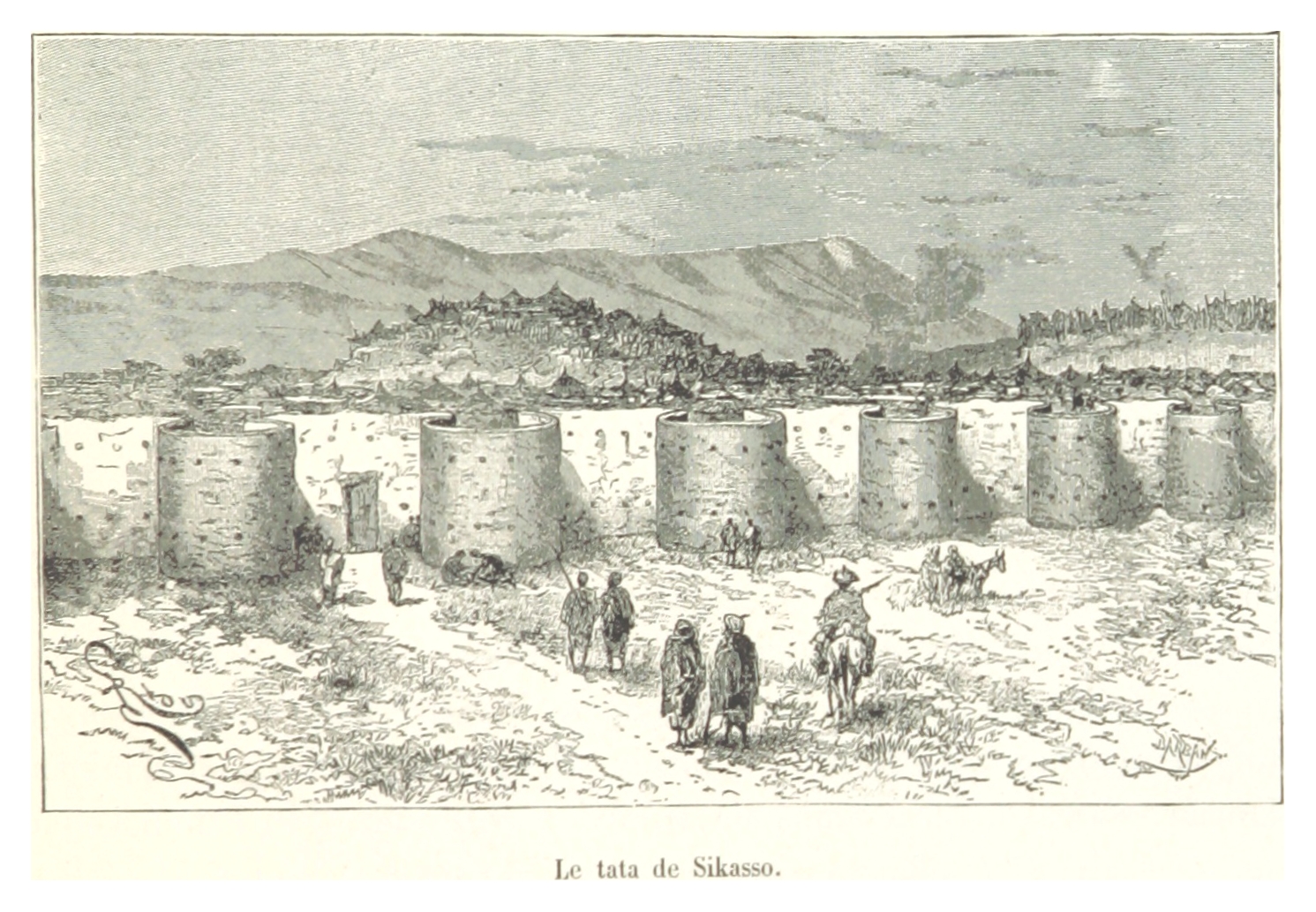
Sikasso
Introduction
Sikasso sits in the south of Mali, the capital of both the Sikasso Cercle and the Sikasso Region. It is a large city and a trading port, and it once served as the capital of the Kénédougou Kingdom between 1877 and 1898 — a history worth keeping in mind as you move through the area.
Before you go
Sikasso is a place to understand before you arrive: it was a small village until it became the capital of the Kénédougou Kingdom, and it held that role until it was absorbed into the French colonial empire. Knowing that history gives your walk through the city a different weight.
Its climate is subtropical, and unlike other parts of Mali it yields plenty of fruit and vegetables throughout the year. Plan your meals around what is growing, and expect warm, humid conditions rather than the dry heat you may associate with the country.
Getting there
Sikasso sits in the far south of Mali, close to two international borders: the city is about 100 km from the border with Côte d'Ivoire and roughly 45 km from Burkina Faso, so it works naturally as a stop when travelling between these countries. The main approach is from the capital, Bamako, which is well served by bus; SONEF is the largest operator on the route, and several other companies run services as well, giving you plenty of choice of departure times.
Getting around
Getting around Sikasso means relying on the road. There is no rail, metro or tram network to plan around, and no ride-hailing apps are documented, so treat app-based transport as something to confirm locally on arrival rather than assume. For longer journeys, intercity buses are the main documented form of public transport, with plenty of services from Bamako and SONEF the largest operator. Sitting close to the borders with Côte d'Ivoire and Burkina Faso, the city works as a crossroads between the coast and the landlocked interior, and any long-distance travel into or out of the region is handled by road. There is no documented airport-to-city transfer service, so the reliable way to reach Sikasso from elsewhere is by bus, particularly from Bamako.
Walking is a reasonable way to reach the main attractions, which are clustered in and around the city: the large market, Mamelon hill, the remains of Tieba Traoré's tata and the nearby Missirikoro Grotto, which lies outside the immediate centre. Plan walks around the climate. Most rain falls between May and October, with August the wettest month, and the hottest conditions come at the end of the dry season in March and April, when early mornings and evenings are more comfortable. Ask locally about taxis and current transport options once you arrive.
Where to stay
Sikasso has a small choice of places to stay, so it pays to sort out your room before you arrive. The Hôtel Du Cinquantenaire de Sikasso is one of the few high-end hotels in the city, with a restaurant and a pool on site — a comfortable base if you want to settle in without going far for dinner or a swim.
Hotel Tata is the other option worth knowing about. Beyond these two, the source lists nothing else, so plan around a short list rather than a wide range of accommodation.
Food & drink
The source material for Sikasso contains no information on where or what to eat or drink, so there is nothing to describe here.What to see and do
Sikasso's sights are few but distinctive, and most are easy to reach from the centre. Start at the Mamelon, the hill in the middle of the city that was once a sacred site of the Kénédougou kings; a French colonial tower now stands on the spot. Beyond the city, you can visit the Missiricoro caves and the Farako falls, both natural excursions that reward the trip out.
- The Mamelon — central hill, former sacred site of the Kénédougou kings, topped by a French colonial tower
- Missiricoro caves
- Farako falls
When to go
Sikasso has a tropical wet and dry climate, so the timing of your trip shapes what you can do. The rainy season runs from May to October, with most of the year's rain falling in that stretch and August the wettest month. Expect frequent heavy rain and muddy conditions, and build some flexibility into your travel plans.
- May to October (rainy season): Frequent heavy rain, mud underfoot, and the wettest conditions in August; keep plans adaptable.
- March and April (end of the dry season): The hottest time of year, with average daily maximum temperatures climbing just above the mid-thirties; plan activity around the cooler parts of the day.
Three days in Sikasso
Day one begins in Sikasso itself, in southern Mali near the borders with Côte d'Ivoire and Burkina Faso. Start with the Mamelon, the distinctive hill that gives the city its shape, and take your time walking its slopes for a view over the surrounding country. In the afternoon, ask locally about the legacy of the Kénédougou Kingdom and the Tieba Traor era, which shaped this part of Mali; the Hôtel Du Cinquantenaire and Hotel Tata are useful landmarks for orienting yourself in town.
- Mamelon
- Kénédougou Kingdom
- Tieba Traor
Day two takes you beyond the city to Missirikoro Grotto, one of the sites most associated with the Sikasso area. Plan your transport in advance, since getting there is easier with local advice, and expect warm conditions for much of the year. The rains generally fall between May and October, with August among the wettest months, while March and April are hot and dry; dress and pace yourself accordingly.
- Missirikoro Grotto
- May to October rains
- March and April heat
Day three is for the quieter side of the region. Visit Farako and its surroundings, then return to Sikasso for a last look around the Mamelon and the town centre. Sitting with a drink in the late afternoon is a good way to close the trip. If you are continuing onward, Bamako lies to the northwest, while Côte d'Ivoire and Burkina Faso are within reach across the nearby borders.
- Farako
- Mamelon
- Bamako