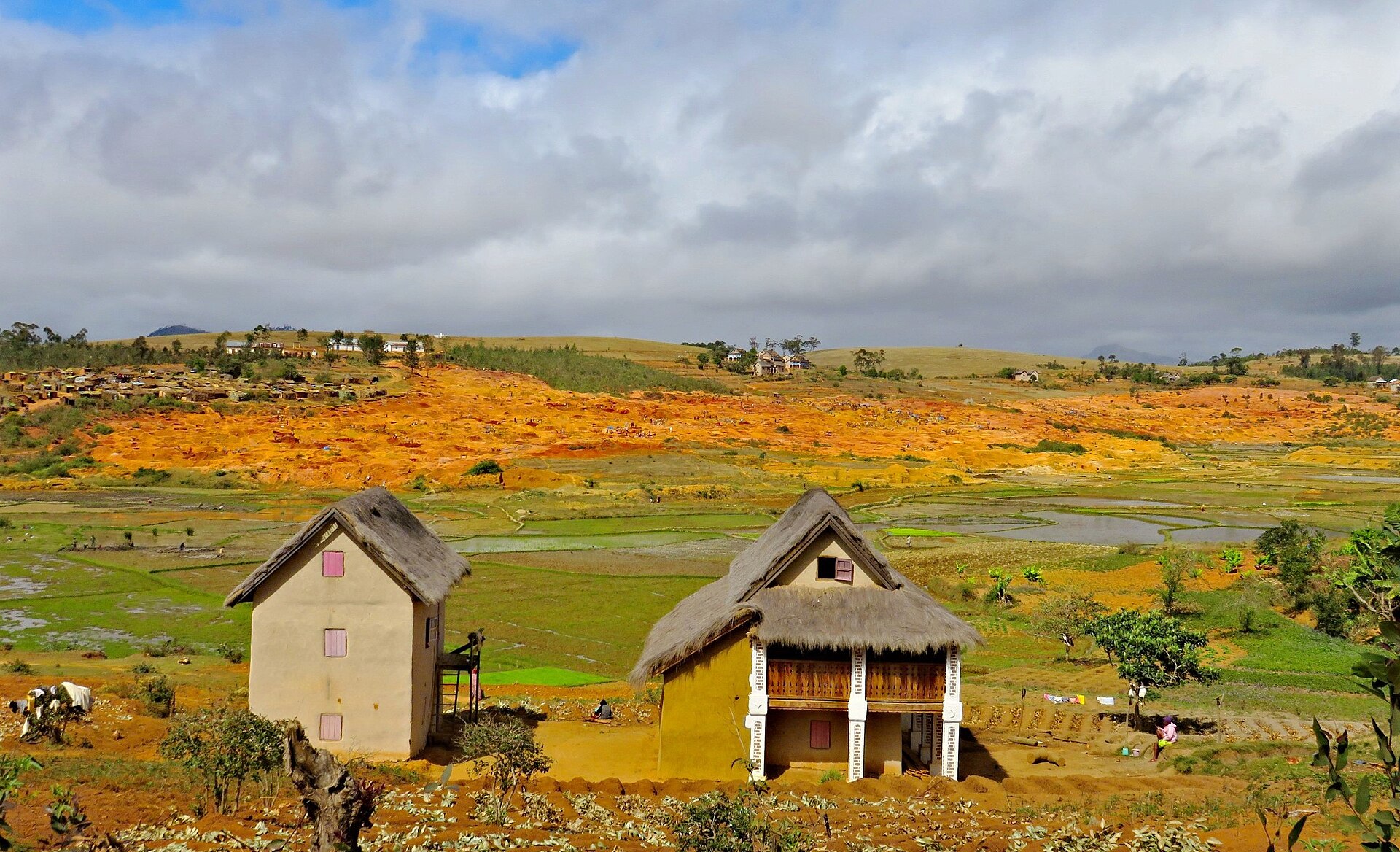
Fianarantsoa
Introduction
Fianarantsoa sits in south central Madagascar, as the capital of the Haute Matsiatra Region. Use this guide to orient yourself in the city and its surroundings before you arrive.
Before you go
Fianarantsoa sits in Madagascar's highlands, and the source material for this guide covers the city only at the level of a general orientation, so plan on gathering practical details such as transport and accommodation once you arrive rather than relying on a fixed list prepared in advance. Treat what follows as a starting point for understanding the city's setting and character, and confirm specifics locally before you commit to an itinerary.
Getting there
Fianarantsoa sits where several national roads meet, and they share the same character: narrow, winding through mountainous country, and full of scenic views along the way. The routes to Antananarivo, Manakara, Ambalavao–Toliara and Ranomafana are paved, though you should expect damaged stretches on the NR7 between Ambositra and Fianarantsoa. Most travellers arrive by their own car or by taxi-brousse, which leave from the stationnement near the train station; it is busiest in the early morning.
- Cotisse Transport runs two scheduled minibus services a day to and from Antananarivo (gare routière du nord). Buy your ticket with a seat reservation in advance, and be at the station 45 minutes before departure — the buses leave on time even if not full. The Fianarantsoa station has a toilet but sells no food or breakfast. Allow around nine hours, depending on traffic in Tana.
- The railway station connects to the port city of Manakara, but aging equipment makes this an unreliable option.
- The small airstrip can be used by chartered planes.
Getting around
Most of what you'll want to see in Fianarantsoa sits in a compact area, so walking is the simplest way to get oriented. The city is split between the Upper Town, the historic centre with its renovated brick houses and churches along Rue du Rova, and the Lower Town, the busy district around the train station. Be prepared for hills: the city sits high in the highlands, and two rivers cut through it.
- Taxis have no meters, so agree your fare before you get in.
- A few taxi-be lines run old, smoky Mercedes-Benz TN minibuses; there is no route map and no timetable, so ask locally which line goes where before boarding.
- The railway to Manakara is best treated as an adventure rather than a dependable way to get around, given its aging equipment.
- For longer trips out of the city, taxi-brousses leave from the stationnement near the train station and are busiest early in the morning. If you book a scheduled minibus in advance with a seat reservation, be at the station 45 minutes before departure and eat beforehand, as the station sells no food.
Where to stay
Fianarantsoa has a small but varied choice of places to stay, most of them concentrated along the main road and within reach of the taxi brousse and train stations. If you want to keep costs down, the budget options include a guest house in Ambatolahikosoa with double rooms and free Wi-Fi, and a simple hotel a short walk from the taxi brousse station that also serves basic meals and puts the train station within walking distance. On the main road, a bright yellow building is hard to miss and offers an acceptable stay with Wi-Fi and a simple breakfast included with doubles.
- Hotel Arinofy — budget rooms and meals, handy for the taxi brousse and train stations.
- Hotel Soratel — on the main road in Ampasambazaha, with Wi-Fi and breakfast included.
- Tsara Guest House — well-managed, with views over parts of the city, English spoken, laundry service, a very good restaurant, and a reception that can put you in touch with guides and drivers and suggest activities in and around Fianarantsoa.
- Three Palms Fianar Guest House — doubles with private bathrooms and free Wi-Fi.
- Residence Matsiatra — bed and breakfast with free Wi-Fi and flat-screen TV, a short distance from the centre.
For a step up, the Tsara Guest House stands out for its setting and service, and its Malagasy owner supports the protection of the old town. Note that credit cards are accepted there but with a hefty surcharge on your bill, so plan accordingly.
Food & drink
The source material for this city provides no details on where or what to eat and drink, so there is nothing specific to recommend.When to go
Fianarantsoa has a humid subtropical climate, so plan your trip around two distinct stretches of the year. The wet season brings heavy rain, turning the countryside green and muddy; wet roads and downpours can slow your travel between places, so allow extra time if you visit then.
The cooler, drier stretch of the year offers relief from the rains and easier conditions for getting around, with cooler days than in the wet season. If you want straightforward travel and comfortable daytime conditions, aim for this drier period.
Three days in Fianarantsoa
Day one: Settle into the Upper Town, where the old Rova and the streets around Rue give you a feel for the city's history, then wander down to the Lower Town to get your bearings. Allow time to arrange transport for the days ahead — Cotisse Transport is the name to know for connections toward Antananarivo, Manakara and Toliara, and taxis (often Mercedes-Benz TN) can be hired for local trips. For your first night, the Upper Town has guesthouses such as Tsara Guest House and Residence Matsiatra, while the Lower Town and Ampasambazaha area offer options like Hotel Arinofy, Hotel Soratel and Three Palms Fianar Guest House.
- Upper Town: Rova, Rue, orientation walk
- Lower Town: errands and transport bookings
- Guesthouses: Tsara Guest House, Residence Matsiatra, Hotel Arinofy, Hotel Soratel, Three Palms Fianar Guest House
Day two: Use the day to explore the surrounding Haute Matsiatra Region. Head to Ranomafana for its forest and wildlife, or go the other way to Ambalavao, known for its zebu market and wine. Ambositra, with its woodcraft, is another option if you have the time. Arrange your transport the day before, and be prepared for long stretches on the road.
- Ranomafana: forest and wildlife
- Ambalavao: zebu market and wine
- Ambositra: woodcraft
Day three: Spend your last morning in Fianarantsoa itself — the Upper Town rewards a slower look, and the Lower Town is good for picking up supplies and souvenirs. If you're heading onward, Cotisse Transport runs services to Antananarivo (Tana), Manakara and Toliara; allow plenty of time to reach the station. Before you leave, check whether your guesthouse has Wi-Fi if you need to stay connected, and treat yourself to a final meal in the Ampasambazaha area.
- Upper Town and Lower Town: last-minute shopping
- Cotisse Transport: onward connections to Tana, Manakara, Toliara
- Ampasambazaha: final meal