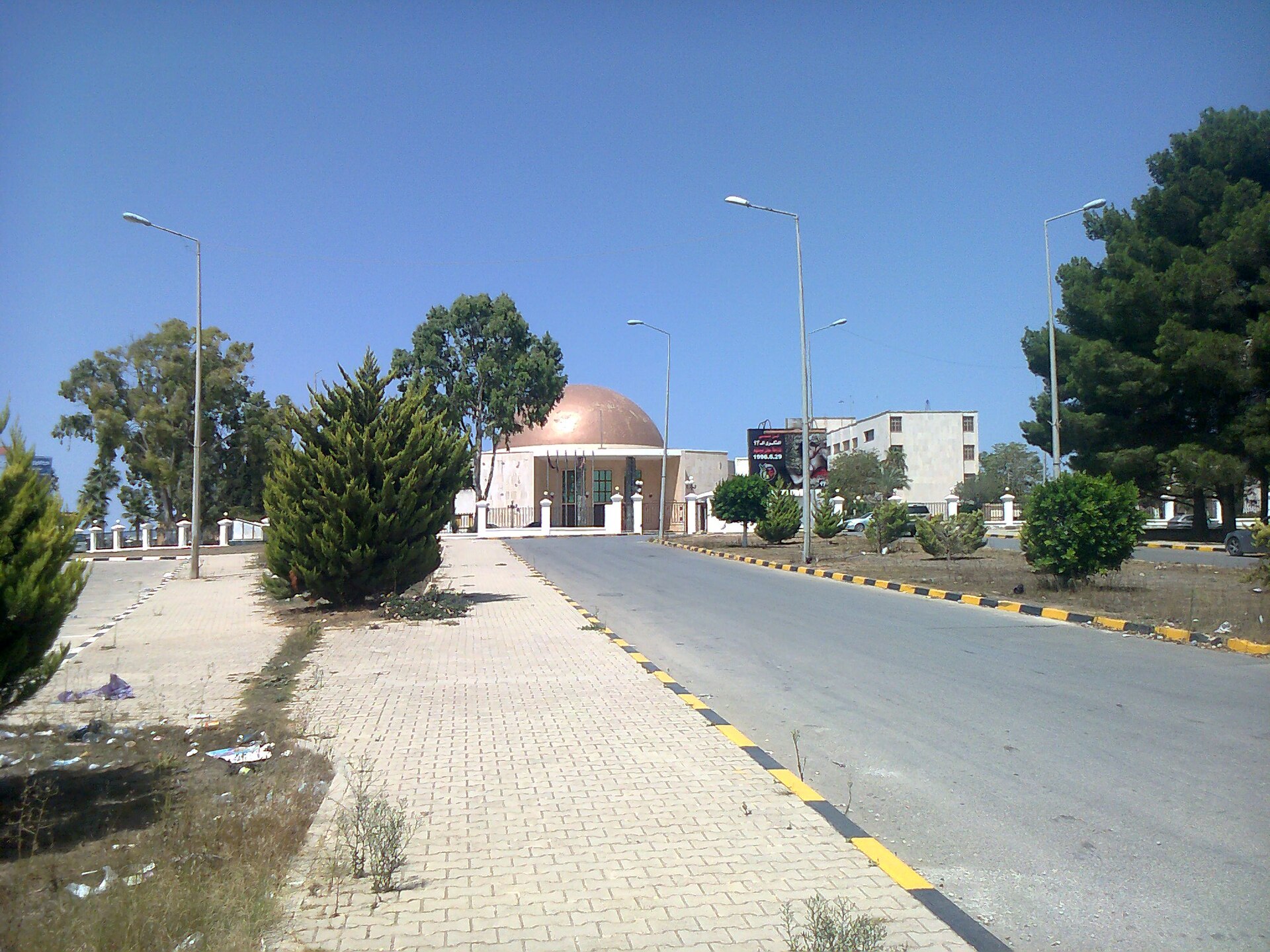
Al Bayda'
Introduction
Bayda, also written Elbeida and known as Beda Littoria under Italian colonial rule, is a commercial and industrial city in northern Cyrenaica in eastern Libya. It serves as the capital of the Jabal al Akhdar district, and it is one of the larger cities in the country, after Tripoli, Benghazi and Misrata.
Your sense of the place should start with that dual character: a working city of commerce and industry that also acts as the administrative centre for its district. The name Beda Littoria survives from the colonial period and is still used for the city.
Getting around
Al Bayda' sits in the Jebel Akhdar highlands, and its setting shapes how you move around: there is no railway, metro or tram network here or in nearby Benghazi, so every journey happens on the road. Within the city, public transport is poorly developed and taxis are your main option. Fares are rarely metered, so agree on the price with the driver before you get in, and carry enough cash in Libyan dinars, since bank cards are not accepted everywhere. No ride-hailing apps are described as operating here, so plan on arranging taxis directly. Walking works for short distances in the centre, but it is not a substitute for vehicles across the city as a whole. On foot, avoid photographing government buildings, military facilities and police checkpoints, and ask permission before photographing local people, especially women.
For longer journeys, buses and shared taxis link Al Bayda' with neighbouring regions. The most popular intercity route runs between Benghazi and Al Bayda' through the winding highland roads, a trip of roughly three hours; collective taxis and microbuses are the predominant vehicles, and there are no fixed schedules, as vehicles depart when they are full, so build in some waiting time. Intercity taxis are another option for the run to or from Benghazi. If you fly in, Labraq Airport lies just a few kilometres from the city, making the transfer into town short; alternatively, fly into Benghazi, which has more frequent flights, and continue by taxi or intercity bus on the roughly three-hour road journey. If you prefer to drive yourself, car rental is available and the main highway surface is generally decent, though the winding sections demand caution. Arabic is the main language and English is not widely understood, so have destination names written down or learn a few key phrases, and exchange USD or EUR at official exchange points or banks to keep dinars on hand for fares and small purchases.
Three days in Al Bayda'
Day one: Start in the centre of Al Bayda (also written Bayda, Elbeida or Beda Littoria), a city on the Jabal Akhdar — the Green Mountain — in Cyrenaica. Walking the streets gives you a feel for the place: the Italian layer in the architecture sits alongside everyday Libyan life, and Arabic and English are both useful. Within the city you can settle in, get your bearings and plan the days ahead.
Day two: Use Al Bayda as your base for the wider Jebel Akhdar. Fares for intercity travel connect the city with Benghazi, Tripoli and Misrata, and Labraq Airport serves the area. If you want a change of scene, the mountain landscape around the city is the reason many travellers come to this part of Libya.
Day three: Spend your last day at an easier pace, returning to the parts of Al Bayda you liked most. It is a Libyan city in Cyrenaica with an Italian chapter in its past, and three days lets you see it as both a mountain town and a gateway to the Jabal Akhdar.