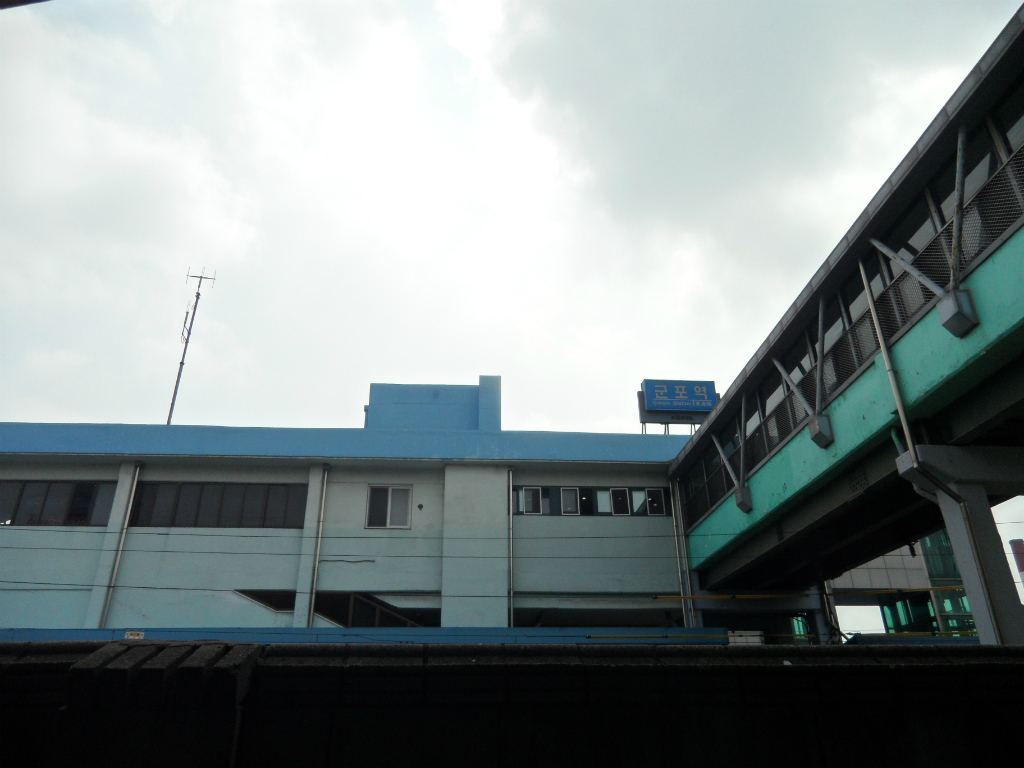
Gunpo
Introduction
Gunpo sits in Gyeonggi Province, south of Seoul within the Seoul National Capital Area. It borders Anyang to the north, Uiwang to the east, and Ansan to the south and west, and lines 1 and 4 of the Seoul Metropolitan Subway connect it both to its neighbours and to the capital. Three stops on the Gyeongbu Line, the national railway, link the city to the rest of the country.
Much of Gunpo is greenspace, largely thanks to Surisan and various smaller mountains, yet the city also holds several urban areas. Its downtown core is Sanbon New Town, a commercial hub centred on a pedestrian "street of culture" that the city has designated one of its eight scenic locations.
Before you go
Gunpo sits close to both Seoul and Suwon, and its character reflects that position: the city has grown outward as a suburban place shaped by heavy industrial expansion and fast urbanisation. Expect a built-up, connected environment rather than a remote one, with the larger cities of the region within easy reach.
The weather here blends continental and oceanic influences. That combination generally means you should prepare for both cold and warm extremes rather than a single steady pattern, so pack with layering in mind and check conditions shortly before you travel.
Getting there
Gunpo sits on Subway Line 1 and Subway Line 4, with seven stations serving the city. Listed from the closest to Seoul, these are Geumjeong, Sanbon, Gunpo, Surisan, Dangjeong, Daeyami and Banwol; one station is shared between the two lines, two are on Line 1 and four are on Line 4. Travel times by subway vary considerably depending on where you start: roughly an hour from Seoul Station, about 44 minutes from Oido Station, and around two hours from Sinchang Station.
By bus, an express service connects Gunpo with Incheon International Airport in about 90 minutes, while the journey from Gimpo Airport takes around two hours. Buses from Gangnam take approximately one to two hours. If you are driving, the trip runs about 51 minutes from Incheon International Airport, an hour from Gimpo Airport, 45 minutes from Gangnam, and roughly an hour and eight minutes from Seoul Station.
Getting around
Gunpo is compact and well connected, so public transport covers most of what you will want to do. The subway is the backbone: Line 1 and Line 4 both serve the city and link it directly into the wider Seoul metropolitan network, so you can reach central Seoul without changing to a separate regional service. Which station you use depends on where you are staying and where you are headed. Geumjeong is the transfer point between the two lines and the most flexible starting point; Sanbon sits on Line 4 beside Sanbon New Town and its pedestrian "street of culture"; Gunpo is on Line 1 and is also served by the national Gyeongbu Line. Surisan, Dangjeong, Daeyami and Banwol are further stops useful for the outer neighbourhoods and the Surisan area. Trains generally run from early morning until around midnight, with intervals varying by time of day. Ticketing works as elsewhere on the Seoul metropolitan subway — single-journey tickets from station machines, though a rechargeable transit card is more convenient because it covers both subway and bus fares. English signage and announcements at many stations and stops make the system manageable without Korean.
Buses fill in the gaps, with regular city, express and intercity services plus a community shuttle for residential areas, running on set schedules with real-time updates through mobile apps. Route 3030 runs from Sanbon Station to Seoul for a direct connection with no transfer, and other routes serve the Gangnam area. Fares are affordable, with discounts for students and seniors and priority seating for elderly and disabled passengers; a transit card is again the simplest way to pay. Taxis are readily available from stands or by hailing on the street, useful for short trips or places far from a station, with extra charges for tolls and night rides, and Kakao T is the standard way to book one — set it up before you arrive. Walking is genuinely pleasant around Sanbon New Town's pedestrian "street of culture," also known as Rodeo Street, a walkable commercial district of restaurants, bars, boutiques and noraebangs, with a large fountain in the middle and a nearby stage that often hosts small concerts at weekends and during festivals. The wider downtown stretches from Sanbon Station to Geumjeong Station and includes Sanbon Market and the Cherevil apartment towers. Beyond the centre, Gunpo is largely greenspace, with Surisan and smaller mountains accounting for most of the city's area, so walking is the natural way to reach Surisan itself, the Banwol reservoir and the Royal Azaleas Hill. Cycling is an option, with dedicated lanes on some major streets and paved trails, though not every busy road has a lane, so plan a route; bike rental is available. Local rules require working brakes and lights with reflectors front, back, pedals and wheels, obedience to traffic signals, riding on designated paths rather than sidewalks unless a cycling lane exists, yielding to pedestrians, helmets for children under 13, and no cycling under the influence or use of headphones or a phone while riding; unauthorized parking may be impounded and violations can incur fines. If you want the easiest access to both the downtown core and the subway, base yourself near Sanbon or Geumjeong. Expect heavier traffic at weekday peak hours, and congestion at weekends near popular shopping areas and attractions.
Where to stay
Where you stay in Gunpo largely depends on which part of the city you want as your base. Near Gunpo Station you'll find budget options such as Gunpo Vivace, while Gunpo Ritz sits in the Bongseong-ro area. Sanbon CF, on Beonyeong-ro, is another inexpensive choice. For something a step up, Hotel Prince in Geumjeong-dong offers mid-range rooms.Food & drink
Sanbon-dong is where most of the eating happens, and the range is broad. For Korean noodles and dumplings, try Johnson's GogiGuksu for meat noodles or Binghwa Mandu for dumplings. Gunpo Sikdang in Dang-dong focuses on Korean meat, while Damso Sosagol Sundae Yukgaejang near Dangjeong Station serves sundae-guk and yukgaejang. Japanese options include Mentzuru, known for ramen, and Sushi no yuki, a rotational sushi restaurant near Sanbon Station. Ogsang Sikdang also serves Japanese cuisine. Chinese food is available at HongkongBanjeom, and Masitta Tongyeong specializes in sashimi. For something spicy, Lahongbang Malatang serves malatang. Silver in Dangjeong offers hot pot rice sets, cockle dishes, and whole duck soup with shingled hedgehog and medicinal herbs. Opus, a short walk from Sanbon Station, is known for truffle cream pasta and Korean beef shredded steak.
For drinks and desserts, Sanbon Rodeo Street and the area around Sanbon Station have several cafés. Cafe Untie is known for wide-cookie selections and specialty coffee brews. Cafe Papio is a large, modern, dog-friendly café near Sanbon Station with dessert-rich menus. Cafe The Tree offers a calm, plant-filled space with signature desserts and lattes. Cafe PAAM has large windows and an expansive dessert menu. How Tasty in Dang-dong serves signature drinks like Howlatte and Howmocaratte along with handmade desserts. Cozy Mansion near Sanbon Station pairs wood-toned interiors with brown cheese caramel latte, chodang corn cream coffee, scones, and financiers. Dongyang Tea House sells oriental tea and snacks. Joseph Paris is a bakery café specializing in French bread. Cafejaejae near Sanbon Station serves a variety of beverages and egg tarts. Cafe cony is a quiet café with guests' paintings on the walls.
What to see and do
Gunpo's sights are mostly outdoor. Surisa Temple, founded on the slopes of Mount Surisan during the Silla Dynasty and rebuilt in the mid-20th century, is part of the Yongjusa Temple complex and holds the status of a Traditional Temple. For walking, head to Taeeulbong Peak, where the forest is well preserved and trails share the mountain with public exercise and rest facilities, or to the Dang Forest of Deokgogae in Daeyami, known for its stands of century-old oriental oaks, white oaks and beech trees and especially rewarding when the autumn leaves turn. In the north, Galchi Reservoir draws people fishing on weekends and holidays, while Chomak-gol Eco-Park in Sanbon-dong offers an eco-friendly forest path in the middle of the city, with restrooms and a café but no trash bins. Banwol Lake Park, a lakeside park with a walking path, is known for quiet scenery and sunset views.
Spring is Gunpo's busiest season. The Cherry Blossom Path near Geumjeong Station is the city's pride, with blossoms decorating the area around the station, and Royal Azalea Hill blooms from late April to early May. The Royal Azalea Festival fills the bloom period with concerts, exhibitions, experience events, love letter writing and sketch contests, while other recurring events include the Surisan Drawing Contest in October, a weekly Forest Concert from June to October, and the quarterly Citizen's One Mind Hiking. The Gunpo Allae Happiness Festival brings together cultural performances and a citizens' day celebration, and the Gunpo Reading Festival offers author events, book markets and performances. For indoor entertainment, Sanbon-dong has Lotte Cinema Sanbon FITIN and CGV Sanbon, and Megabox Geumjeong Ak Plaza serves the Geumjeong area. Sports facilities include the Gunpo Urban Corporation Citizen Sports Plaza and the National Sports Center, which has a swimming pool, soccer field, track and field, table tennis, badminton, a climbing gym and a fitness center.
When to go
Gunpo has a continental climate with oceanic influences, so you can expect four distinct seasons. Winter brings cold, dry conditions under the continental influence, with low temperatures and possible snow; visitor numbers are fewer and prices are lower. Spring is mild and transitional, with moderate crowds and a landscape that begins to green.
Summer turns warm and humid as the oceanic influence takes hold, and rain is common — this is peak tourist season, so prices are higher. Autumn offers cool, pleasant weather, with crowds thinning out and prices dropping after summer.
Three days in Gunpo
Day one: Base yourself in Sanbon New Town, the central district of Gunpo, and use the Seoul Metropolitan Subway to get your bearings. The town sits on Subway Line 4, with stations at Geumjeong, Sanbon, Dangjeong and Daeyami, so you can move around easily without a car. Geumjeong is a useful interchange, and the line also connects onward to Anyang, Uiwang, Ansan and Suwon. Spend your first afternoon walking the streets of Sanbon, getting a feel for how this planned town fits between the mountains and the larger cities around it.
- Arrive via the Gyeongbu Line or Subway Line 4
- Settle into Sanbon New Town as your base
- Note the stations you will use over the next two days
Day two: Turn your attention to Surisan, the mountain that gives Gunpo much of its character. Expect walking routes that suit a range of energy levels, and carry water and weather-appropriate layers, as conditions on the slopes can differ from the town below. After descending, head to one of the stations on Subway Line 4 for an easy onward trip. Suwon, Anyang, Uiwang and Ansan are all within reach, so you can pair a morning outdoors with an afternoon in a neighbouring city.
- Walk on Surisan
- Return to Sanbon, Dangjeong, Geumjeong or Daeyami station
- Continue to Suwon, Anyang, Uiwang or Ansan if you wish
Day three: Use the transport network for a wider day out. From Gunpo you can ride the subway toward Seoul Station, or follow the line in the other direction toward Oido Station and Sinchang Station. Buses also run toward Gangnam, and the airports are reachable via Incheon International Airport and Gimpo Airport connections. If you are heading back to Seoul, the Gyeongbu Line and Subway Line 4 make the trip straightforward. Check ticketing options before you set out, since trains and buses use different systems.
- Ride toward Seoul Station or onward to Oido and Sinchang
- Consider buses toward Gangnam
- Plan airport transfers via Incheon International Airport or Gimpo Airport