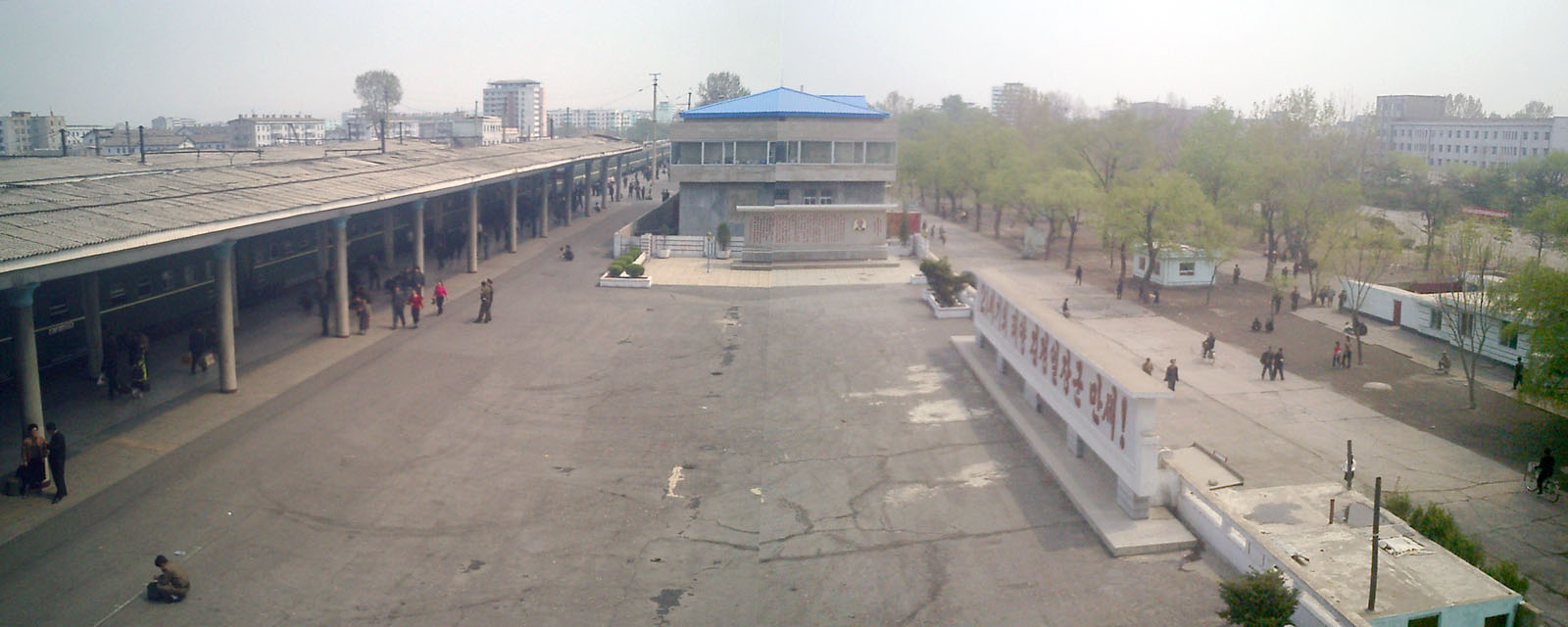
Sinuiju
Introduction
Sinŭiju is a North Korean city on the Yalu River, sitting directly across the international border from Dandong in Liaoning, China. It serves as the capital of North P'yŏngan province, and part of the city falls within the planned Sinŭiju Special Administrative Region, proclaimed in 2002 as an experiment in introducing a market economy.
In recent years the city has seen increasing tourism from China, drawn by its position on the border and its role as a gateway between the two countries.
Before you go
Before you go, understand that Sinuiju sits on the Yalu river, which marks the border with China, and that the large Chinese city of Dandong lies within walking distance across the bridge. The city is the main border city on that frontier and serves as the principal trading and transportation hub between the two countries, which makes it relatively easy to observe compared with other parts of the country. Plan your trip around that border setting rather than around a conventional sightseeing itinerary. Because Sinuiju's role is tied to cross-border trade and transport, what you can see and how you move through the area are shaped by arrangements on both sides of the river, so confirm the practical details of your visit well in advance.Getting there
< p >Sinuiju is reached primarily through its rail link, with Sinuiju Station serving as an important stop between Pyongyang and Beijing. Crossing by foot over the Sino-Korea Friendship Bridge from the Chinese border city of Dandong is theoretically possible, though this option is mostly limited to Chinese citizens holding the appropriate visas.A small airport sometimes receives flights from Pyongyang, but the airport in Dandong across the border offers a more reliable schedule and more accessible connections. If you want to get close to North Korea without passing through border controls, excursion boats from Dandong are apparently permitted within a few metres of the coastline, as long as nobody actually gets off.
Getting around
Getting around Sinuiju is unlike almost anywhere else, because independent travel is not permitted. Foreign visitors must be accompanied by an official guide at all times, and movement within the country is only allowed as part of an approved tour. Public transport use is not permitted for visitors, so you will not be buying a ticket and boarding a local bus or trolleybus on your own. Instead, your itinerary's vehicle plan is your transport: a border bus or car from Dandong, a local tour vehicle in Sinuiju, the train via Sinuiju Youth Station, or an arranged road transfer. The practical questions to settle before you travel are therefore administrative rather than navigational — ask your operator how you will cross the border, whether your guide stays with you through the border process, what luggage inspection involves, whether onward arrangements in Dandong are included, and that all transport costs are stated in writing. Charges for taxis, hire vehicles, guides, tolls and permits can be high and arbitrary, so written confirmation matters.
The Sino-Korean Friendship Bridge connects Dandong to Sinuiju and carries both rail and road; pedestrians are not allowed, so you cross by train or vehicle only. The crossing itself takes minutes, but the real time cost is immigration, customs, the guide handoff and inspection, and the long stop at Sinuiju for border guard carriage inspection and immigration is a normal part of the rail journey. The scheduled Sinuiju–Pyongyang sector is roughly four hours by timetable but often runs longer, so build in buffer time for onward connections. Sinuiju Youth Station is the key rail hub, an important stop between Pyongyang and Beijing and the northern terminus of the Pyongui Line. The city has no metro or tram network; its urban transit is a trolleybus line from the city centre to the railway station, reopened with new trolleybuses derived from the Pyongyang Chollima-321 model, with a second line to the Ragwon Machine Complex closed years ago — treat this as context for understanding the city rather than a mode you will ride. There is no public bus network a visitor can use independently, no reliable public taxi tariff, and ride-hailing is not a realistic option. Walking is possible within the specific sites your tour visits, but it is not a way to explore freely, and photography and device handling are subject to guide instructions. Because the main city square, the museum and the railway station sit together, this central cluster is the most walkable part of a visit. Sinuiju's small airport, with a single turf runway and Air Koryo flights from Pyongyang, is not the practical air gateway; most itineraries arrive in Pyongyang, join an approved tour, and reach Sinuiju by rail or arranged road transfer, with no independent airport taxi or bus option.
Where to stay
Lodging in Sinuiju is limited, and the Amnokgang Hotel is the one option identified here. It sits along the Amnok River, so ask for a room facing the water if you want the view across to the opposite bank.
Food & drink
The source material for Sinuiju's food and drink is empty, so there is nothing to describe. No dishes, drinks, or venues are named in the source, and none can be added here.What to see and do
In Sinuiju, the main sight is the Sinuiju Bridge, a structure bombed by the United States during the Korean War. Only half of it remains standing, and it sits next to the newer friendship bridge, making the contrast between the ruined span and its replacement the central point of interest. For something to do, head to the small park with a Ferris wheel. It has 14 colourful gondolas and two smaller rides, and it is seldom if ever in operation, which gives the place an eerie feel. Even when it is still, the wheel is an easy-to-spot landmark.When to go
Sinŭiju has a monsoonal humid continental climate, so the timing of your trip shapes what you pack and how you plan your days. Summers are hot and humid, with frequent storms making this the wettest and most unsettled stretch of the year. Expect heavy rain and thunderstorm activity, and plan for indoor stops or flexible schedules when you visit during these months.
Winters are cold and dry, with little snowfall. Conditions stay largely clear and precipitation is scarce, but temperatures are low enough that warm layers matter. If you prefer settled, dry weather over humid heat and storms, the winter months offer clearer skies, provided you dress for the cold.
Three days in Sinuiju
Day one: Plan your arrival around the Sino-Korean Friendship Bridge, which links Dandong in Liaoning, China, to Sinŭiju. Because Sinuiju sits on the Yalu River across from Dandong, crossing the bridge is the usual way in. If you arrive by train, you may pass through Sinuiju Station, on the Pyongui Line toward Pyongyang and Beijing. In the city, walking is a way to see the streets, and the Sinuiju Youth Station is among the places you may encounter.
- Sino-Korean Friendship Bridge
- Sinuiju Station
- Sinuiju Youth Station
- Yalu River
Day two: Because Sinuiju is in North Korea and part of the Sinŭiju Special Administrative Region, your movements are likely to be organised rather than independent. Foreign visitors generally cannot use public transport, so getting around is arranged for you. You may visit the Ragwon Machine Complex, and the Pyongyang Chollima is another name you may hear in connection with the area. The Yalu River remains the defining feature of the city.
- Ragwon Machine Complex
- Pyongyang Chollima
- Yalu River
Day three: Before you leave, consider the crossing back over the Sino-Korean Friendship Bridge to Dandong. If you are travelling onward, Air Koryo is the airline associated with North Korea, and the Pyongui Line connects toward Pyongyang. Charges may apply at various points, so check what is included in your arrangements. The Yalu and the Chinese city of Dandong sit just across the water, marking the end of your three days in Sinuiju.
- Sino-Korean Friendship Bridge
- Dandong
- Air Koryo
- Pyongui Line
- Yalu River