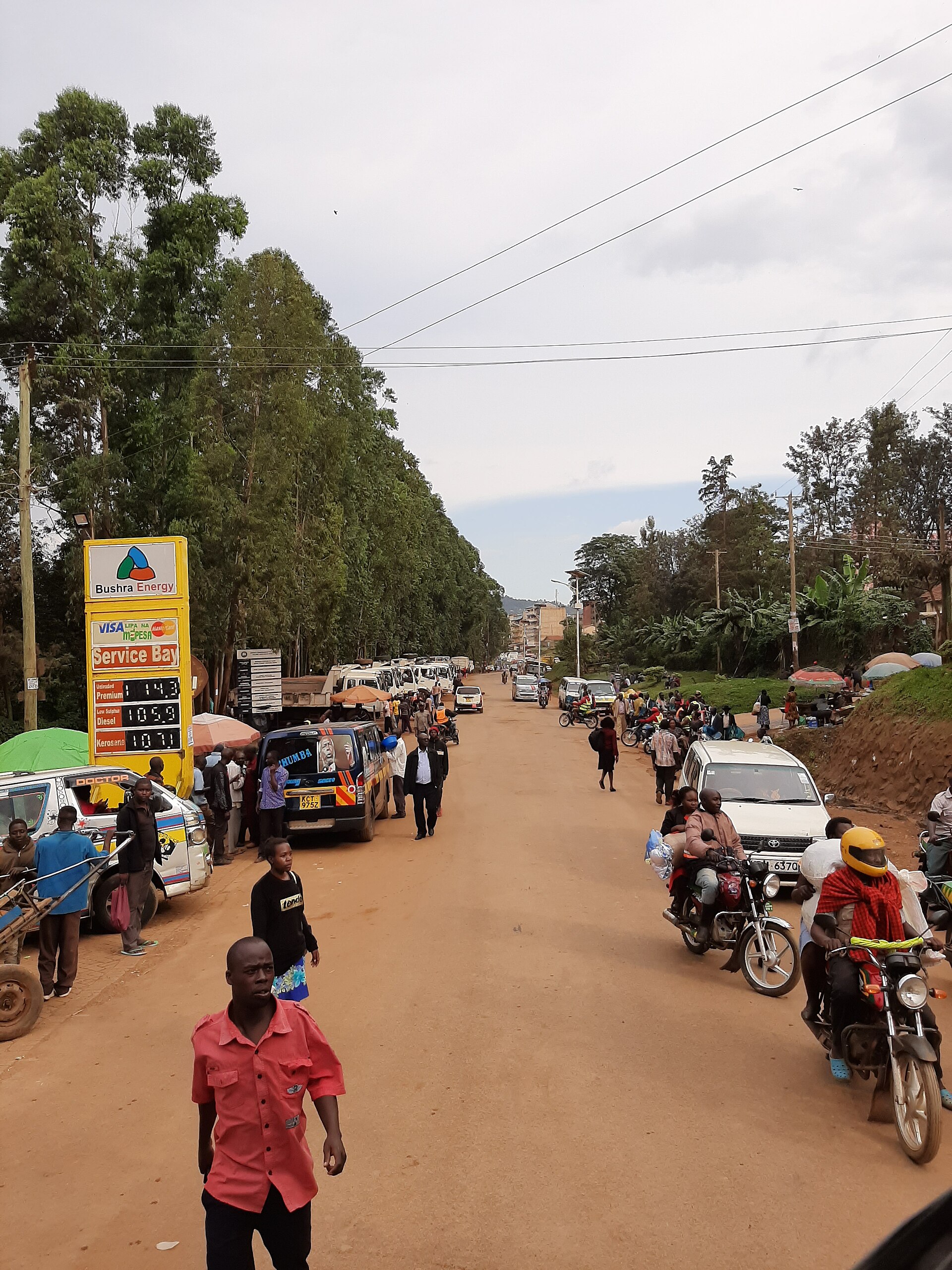
Kisii
Introduction
Kisii is a municipality and urban centre in south-western Kenya, and the capital of Kisii County. It sits in the Gusii Highlands and serves as a commercial hub for the surrounding region, including the South Nyanza area.
The town is well placed for exploring western Kenya: it lies at the centre of a tourist circuit that takes in the soapstone carvings at Tabaka, the Maasai Mara, Ruma National Park and part of the Lake Victoria Basin.
Before you go
Kisii sits in the highlands of southwestern Kenya, the capital of Kisii County and the main urban centre of the wider Gusii highlands. The town is a commercial, administrative and agricultural hub, surrounded by densely settled and intensively cultivated countryside. Expect a mild, wet highland climate rather than tropical heat, so pack layers and rain protection alongside light clothing.
The area is strongly associated with the Kisii (Gusii) people, and Ekegusii is widely spoken locally; Swahili and English are used in education, business and government, so you can get by in English but a few words of Swahili will be appreciated. Kisii functions as a market and service centre for farmers from the surrounding counties, and its economy is built on smallholder agriculture — tea, bananas, maize, beans, vegetables and dairy farming. Understanding this agricultural rhythm will help you make sense of the town and its busy market life.
Getting there
Kisii is reached by matatu from several directions. From Kisumu the journey takes around two and a half hours, and from Isebania on the Tanzanian border it takes about two hours. Homa Bay lies 58 km away if you are approaching from that side.
Easy Coach also runs services from Nairobi.
Getting around
Kisii is compact enough that you can cover the central commercial areas on foot, so if your accommodation, the market and the main business streets are all in the town centre, you can reasonably expect to walk between them. For anything beyond the core, plan on using one of the motorised options.
Matatus are the mainstay of public transport in and around Kisii, and they are also how most visitors arrive in town from elsewhere in the region. Within town they run alongside boda bodas (motorcycle taxis, useful for short trips and for spots larger vehicles cannot easily reach), tuk-tuks (three-wheeled vehicles, a common choice for short urban journeys) and taxis (conventional cars, typically the most comfortable option for point-to-point trips). Fares are generally negotiated or paid per trip rather than through a formal pass system, so it is worth confirming the price before you set off. There is no rail, metro or tram network serving Kisii — all movement is by road.
Where to stay
Kisii's sleeping options cluster along two main arteries: Hospital Road and the Moi Highway. On Hospital Road you'll find several guest houses and hotels offering single and double rooms, some with their own bathrooms, alongside a fast food spot with rooms attached. The Moi Highway has its own cluster of lodges and guest houses, including a long-established hotel in the town centre.
- Hospital Road — the densest choice of accommodation, from basic guest house rooms to county hotel rooms with private bathrooms.
- Moi Highway — lodges and guest houses, including a well-known town hotel, with rooms from budget to mid-range.
- Kisii bus station area — a convenient guest house for those arriving or departing by bus.
Most places offer single and double rooms, and the majority are budget-friendly guest houses rather than large hotels. Book ahead if you're arriving late, as the smaller guest houses have limited rooms.
Food & drink
The source material for Kisii contains no information on where or what to eat or drink, so there is nothing to describe in this section.What to see and do
Kisii's most rewarding outing is to Manga Ridge, where you can stand at the edge of the cliff and take in views over the town and the natural forest of the surrounding mountainous terrain. For a closer look at the landscape, head to Keera Waterfall, which drops 35 metres in the middle of the forest and is only a few minutes' walk from a dirt road. At the bottom of the falls you'll find caves of historical and cultural significance.
Three days in Kisii
Day one: Start in Kisii town, the heart of Kisii County in the Gusii Highlands of South Nyanza. Expect to hear Ekegusii spoken alongside Swahili and English, and take your time understanding the rhythms of the town. Walk Hospital Road and the Moi Highway to get your bearings, and use matatus for short hops within town; fares are modest. From Kisumu, Homa Bay or the Tanzanian border at Isebania, Easy Coach and other matatus make the approach straightforward, and Nairobi is reachable by the same operators.
- Kisii town centre
- Hospital Road
- Moi Highway
Day two: Head out to Tabaka, the soapstone carving centre in the Gusii Highlands, and watch craftspeople shape the soft stone. Continue to Manga Ridge for wide views across the highlands, then visit Keera Waterfall. The landscape here belongs to the Lake Victoria Basin, and the air is often cool and damp in the hills, so carry a layer.
- Tabaka
- Manga Ridge
- Keera Waterfall
Day three: Give the day to wildlife and water. Ruma National Park lies within reach of Kisii, and the shores of Lake Victoria are close enough for a longer excursion. If you are heading onward, the Maasai Mara is the bigger safari country to the south-east. Book transport in advance through Easy Coach or arrange a matatu, and keep the return to Kisii town easy.
- Ruma National Park
- Lake Victoria
- Maasai Mara