Garissa
Introduction
Garissa sits in northeastern Kenya along the Tana River, on the border between Garissa County and Tana River County. It is the capital of Garissa County and acts as the administrative and commercial centre for the surrounding region, so you'll find it a practical base for understanding this part of the country.
Before you go
Garissa is the main town of its district and a predominantly Muslim, Somali town on the Tana River. It serves as the geographical gateway to the interior of North Eastern province and is a hub in the humanitarian food aid programme reaching the north east of Kenya. Knowing this helps you set your expectations: this is a working town with a strong civic and aid role rather than a resort destination.
North eastern Kenya has an edgy feel, but the source notes no particular threat to foreigners. People in Garissa are generally very friendly, though visitors may be assumed to be UN personnel, so expect to be read in that light. Dress and behave respectfully in keeping with the town's predominantly Muslim character.
Getting there
Garissa is reached overland from Nairobi, with daily bus services running between the two. The road is hard surfaced and in good condition, and by car the journey takes five to seven hours.
There is also an airfield serving the city; the only scheduled flights are with Freedom Airline.
Getting around
Garissa is compact enough that walking covers much of the centre, the market area and nearby amenities, but the hot, arid climate means you should time your walks for the cooler early morning or after sunset, carry water and expect strong sun. For anything beyond a short hop, boda bodas (motorcycle taxis) and taxis can easily be hired; agree on the fare before you set off, as is customary, and use them for trips across town, to the airfield and to outlying spots. There is no rail, metro or tram network, so getting around is entirely a matter of road transport.
- Daily buses link Garissa with Nairobi on a good, hard-surfaced road, making this the most straightforward onward route; by car the journey takes roughly five to seven hours.
- Transport toward the coast, such as Malindi or Mombasa, is very limited, with buses only leaving at around 5am — confirm departure times in advance.
- The Garissa–Mombasa road has an unsurfaced gap of around 60 km that is fairly difficult without a 4-wheel-drive vehicle; allow at least a full day for the route.
- Outside Garissa, roads are unsurfaced and frequently become impassable, even for 4-wheel-drive vehicles, during the rains.
- If you arrive by air, you land at the town's airfield, served by scheduled flights with Freedom Airline (as of October 2024); hire a taxi or boda boda for the short transfer into town.
Where to stay
Garissa's accommodation is concentrated in the town centre, where the Nomad Hotel is the most popular choice for visiting internationals, including UN and other aid agency staff. Two other hotels on the main street, one of them the Halgan, offer modern air-conditioned rooms with en suite facilities at modest rates. The Hidig and Ainulqamar are further options, both offering good accommodation and meals.
For something more resort-like, the Palm Oasis Resort (formerly known as Almond) is very nice, with 75 modern air-conditioned rooms, wifi and a swimming pool.
Food & drink
Eating out in Garissa centres on the Nomad Hotel, where most international visitors take their meals, though you will also find several small local "hotels" — the local term for simple cafes — scattered around town if you want somewhere more everyday.
Garissa is a mainly Muslim town, so alcohol is not widely sold. For a cold Tusker and some company, the Major Club opposite the Nomad Hotel is the most popular gathering place for non-Muslim locals and visitors. The Government Guest House and Jamhuri Club are among the other spots where you can socialise over a drink.
What to see and do
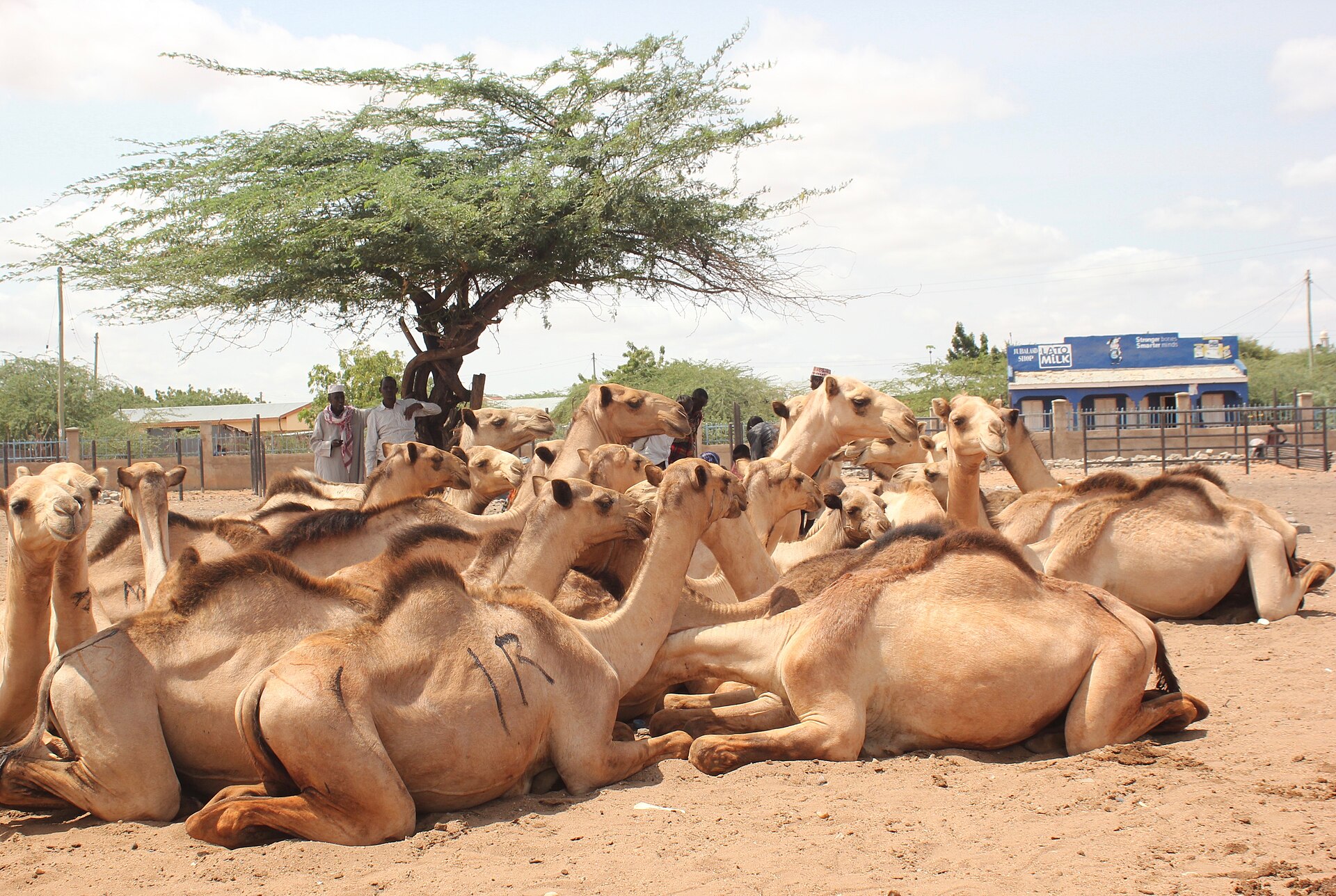
Garissa sits well off the tourist trail, but it offers an interesting insight into the Somali way of life without crossing into Somalia itself. Wander the town's attractive side streets, where you'll find typical brightly painted shop fronts. Out of town the landscape is thorn scrub, and you can glimpse wildlife from the road, including eagles, dikdik, baboons, giraffes, warthogs, garnoogs and meerkats. Large herds of camels are often seen being moved by families between seasonal village sites.Three days in Garissa
Day one begins in Garissa itself, getting your bearings in a town on the Tana River in Kenya's North Eastern region. Dress modestly out of respect for the Muslim, Somali character of the area, and take time to understand how the town relates to the wider Garissa County and neighbouring Tana River County. For lunch or dinner, try the Nomad Hotel, Halgan, Ainulqamar or the Hidig, and in the evening look for a drink at the Major Club, where a Tusker may be on offer.
- Nomad Hotel
- Halgan
- Ainulqamar
- The Hidig
- Major Club
Day two takes you outside Garissa to Palm Oasis Resort, a change of scene from the town centre. Eat at Almond, and if you want a quieter evening, the Government Guest House and Jamhuri Club are established places to spend time. Knowing how transport works here helps: daily services connect Garissa with Nairobi, Mombasa and Malindi, and Freedom Airline serves the area, so plan your onward movement in advance.
- Palm Oasis Resort
- Almond
- The Government Guest House
- Jamhuri Club
Day three is for the river and the wider county. The Tana River shapes life here, and a walk or drive along it gives you a sense of the landscape. If you are travelling in October, plan around the conditions of the season. Before leaving, revisit the town's eating places and reflect on what you have learned about Garissa, its people and its links to Somalia and the rest of Kenya.
- Tana River
- Garissa County