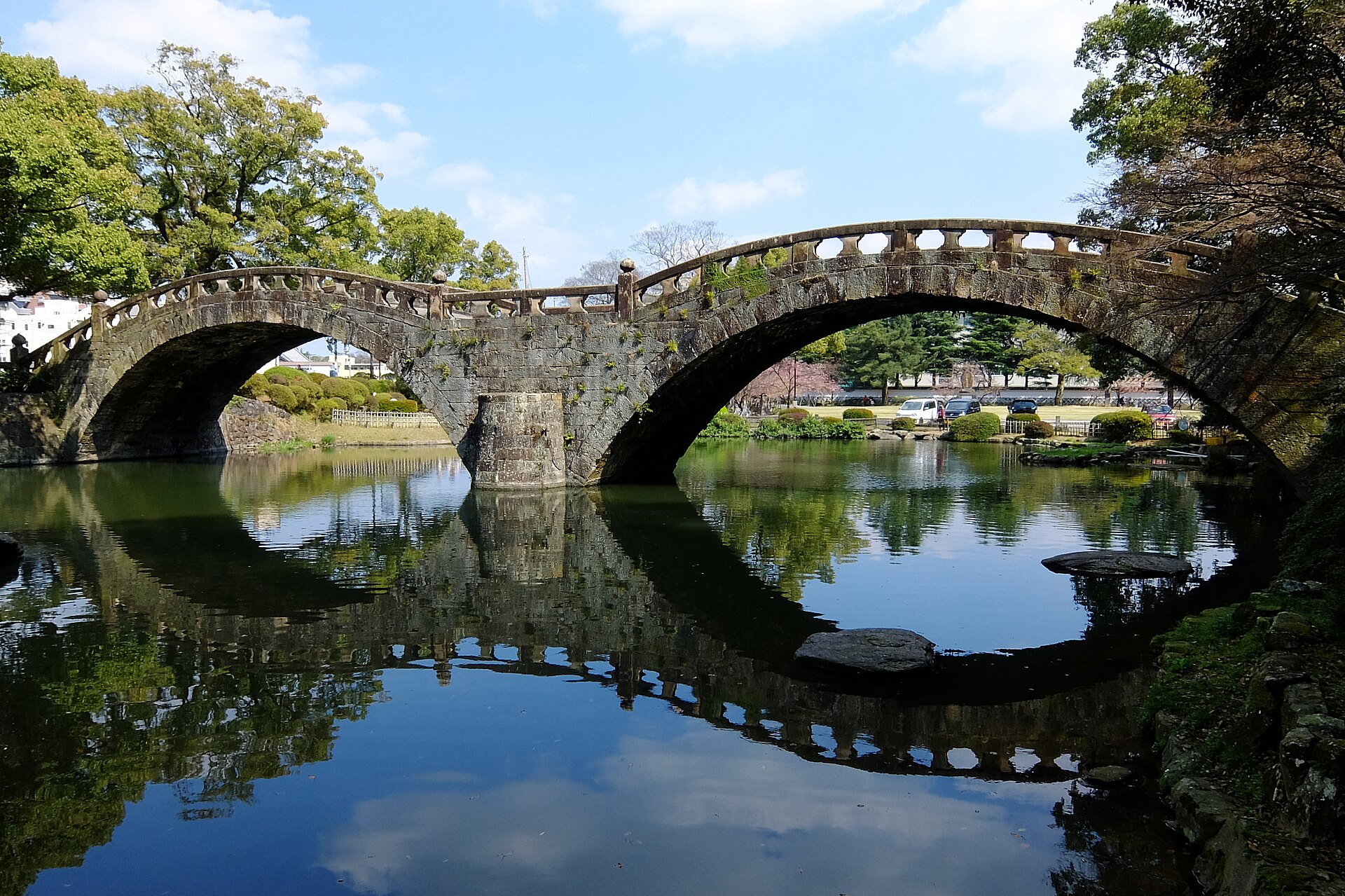
Isahaya
Introduction
Isahaya is a city in Nagasaki Prefecture, on the Japanese island of Kyushu. It spreads across a sizable area of roughly 342 square kilometres, and its population is spread fairly thinly across that ground, giving it a quieter, more open feel than the prefecture's denser urban centres.
What can be said is that Isahaya belongs to Nagasaki Prefecture and forms part of the wider Kyushu region, making it a natural stop for travellers exploring western Japan.
Getting around
Isahaya station is your natural hub: the Nishi Kyushu Shinkansen, JR Kyushu's Nagasaki Main Line, the Ōmura Line and the Shimabara Railway all connect here, making trains the most practical way to move between the city and the surrounding towns. The Nagasaki Main Line serves stations across the city including Isahaya, Nishi-Isahaya, Higashi-Isahaya, Hizen-Nagata, Yue, Oe, Nagasato, Kikitsu, Ichinuno and Konagai, while an older section of the line also serves Kikitsu, Higashisono and Ōkusa. For Shimabara, head out on the Shimabara Railway, which starts at Isahaya and runs through Hon-Isahaya, Saiwai, Ono, Kantakunosato, Moriyama, Kamanohana and Isahaya-higashi-kōkō. Coastal Konagai is roughly an hour by train from Nagasaki city and is your access point for the fruit-shaped bus stops along Highway 207.
Buses fill the gaps trains don't cover, particularly along the coast and into smaller communities, but they are infrequent in this area, so check times before setting out. The fruit-shaped stops are genuine, well-maintained working bus stops, and buses headed toward Saga Prefecture pass most of them. There is no metro or tram network; public transport is rail and bus based. Taxis suit short trips where bus times don't fit, and a rental car is suggested if you want to cover several scattered stops in one outing — if you drive, follow Japanese traffic rules, especially when stopping to photograph along the highway. Central Isahaya is compact enough to walk around the station area, but beyond the centre the city spreads across reclaimed plains and coastal stretches, so treat walking as a way to explore one neighbourhood rather than to cross the whole city. At Konagai you can walk from the station to Highway 207 and immediately spot a strawberry-shaped stop, with most of the others strung along the same route. If you arrive via Nagasaki Airport, connect into the rail network and continue to Isahaya station.
When to go
Isahaya has a humid subtropical climate, so your timing depends on whether you handle heat or rain better. Summers are warm and peak on average in August, making this the hottest stretch of the year; expect the heat to shape your days and plan lighter activity around the middle of the day. Winters are cool rather than cold, with January the coldest month on average, and snow is light to nonexistent, so cold-weather gear matters more than snow gear.
September stands out as the wettest month, so rain is the defining feature of a visit then — plan around wet weather rather than expecting dry days. If you want to avoid both the summer heat and the heaviest rain, aim for the cooler months outside September and pack for chill rather than snowfall.
Three days in Isahaya
Day one: Arrive in Isahaya, a city in Nagasaki Prefecture on the island of Kyushu, and get your bearings in Central Isahaya. The city is well connected by rail, with the Nishi Kyushu Shinkansen and the Nagasaki Main Line serving the area, and the Shimabara Railway also runs through it. Stations along these lines include Isahaya, Hizen-Nagata, Yue, Oe, Nagasato, Kikitsu, Ichinuno, Konagai, Higashisono, Hon-Isahaya, Saiwai, Ono, Moriyama and Kamanohana. Use the trains to settle in and explore the central streets on foot.
Day two: Head out along the Nagasaki Main Line toward the coast. Coastal Konagai is a good place to spend the day, and the line continues toward Nagasaki. If you are travelling onward to Shimabara, the Shimabara Railway is the connection to look for. Buses and taxis are also available for getting around, and the Nagasaki Expressway serves the wider area.
Day three: Use your last day to see more of the city and its surroundings. Kantakunosato is one place worth visiting, and the rail network makes it easy to reach the smaller stations such as Higashi-Isahaya and Nishi-Isahaya. If your journey continues, the Nishi Kyushu Shinkansen and the Nagasaki Main Line connect Isahaya with the rest of Nagasaki Prefecture and beyond, with Saga Prefecture also within reach.