Tomakomai
Introduction
Tomakomai is a city and port in Iburi Subprefecture on Japan's northern island of Hokkaido. It is the largest city in the subprefecture, and one of the biggest on the island, spread across a wide area that takes in both the port and the surrounding coast.
If you are travelling through Hokkaido, Tomakomai works as a port city with an industrial and maritime character rather than a resort town. The source material for this guide is limited, so treat what follows as a starting point rather than a full picture of the city.
Before you go
Before you go, know that Tomakomai's local tourist association maintains a guide site, but it is written in Japanese only. If you do not read Japanese, plan to gather your information from other sources before you arrive, or arrange translation help for the parts you want to use.Getting there
Tomakomai is the junction point for the JR Muroran, Hidaka and Chitose lines, and the trip from Sapporo, via Chitose airport, takes about 45–60 minutes by train.
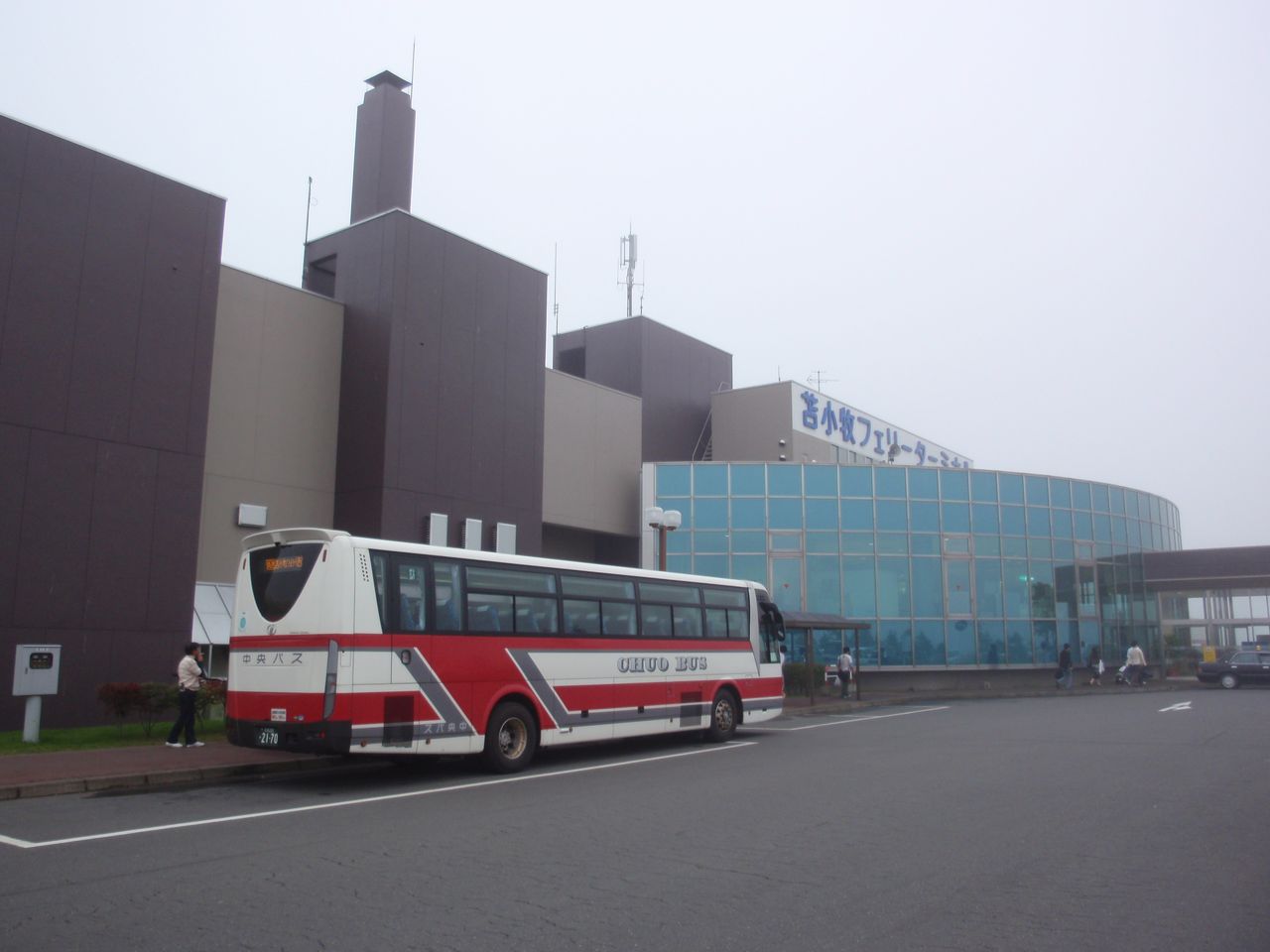
The city is also a major port, with shipping services to points throughout Honshu. There are two separate ferry terminals. Both are served by local buses from JR Tomakomai station, taking around 20 minutes to either, and by long-distance buses direct from Sapporo, taking around 90 minutes.
- Tomakomai-ko Ferry Terminal — Kawasaki Kinkai Kisen "Silver Ferry" to Hachinohe, four times daily; Shosen Mitsui Ferry "Sunflower" to Oarai, twice daily; Taiheiyo Ferry to Sendai (daily) and Nagoya (three to four times a week).
- Tomakomai-ko East Ferry Terminal — home of Shin-Nihonkai Ferry, with lines connecting daily to Tsuruga and Akita, and to Niigata three times a week.
Getting around
Tomakomai has no metro or tram system, so getting around relies on trains, an extensive local bus network, taxis, and your own two feet in the centre. The city covers a wide area and its sights and transport hubs are spread out, which means buses do most of the heavy lifting for local movement. Treat the bus as your default way of crossing town, boarding at JR Tomakomai Station or at stops along the main arteries. Services are run by several operators, including Hokkaido Chuo Bus, Donan Bus and Atsuma Bus, and ticketing and boarding arrangements can differ between companies, so pay attention to which one runs your route. Fares are typically paid on board, and carrying small change or a rechargeable card makes this smoother; ask at the station or a tourist information point about day passes or stored-value cards covering the local operators.
Rail is a genuine option here: the JR Muroran Main Line, Hidaka Main Line and Chitose Line all meet at Tomakomai, making the station the natural starting point for almost any regional journey. The Muroran Main Line serves stations within the city itself, including Nishikioka, Itoi, Aoba, Tomakomai and Numanohata, while the Chitose Line and Hidaka Main Line branch off from Numanohata toward Uenae and Yūfutsu respectively. In practice, the train is good for the airport and for day trips along the coast, but less useful for short hops within the city, where stations are spaced for longer-distance travel rather than local circulation. Taxis are readily available and are the simplest solution for short trips, late arrivals, or reaching the ferry terminals with luggage; ride-hailing apps are far less established in regional Hokkaido than in major Japanese cities, so assume you will flag a taxi or ask staff to call one. The central area around JR Tomakomai Station is compact enough to explore on foot, with shops, restaurants and the station within a comfortable stroll of one another, but the port, the ferry terminals and the outlying districts are not realistically walkable from the station. Both ferry terminals are served by local buses from JR Tomakomai Station, taking about twenty minutes to either, and both are also reachable by long-distance buses running direct from Sapporo in around ninety minutes. Check which terminal your service uses before setting out, since the two are in different locations. From New Chitose Airport, the Chitose Line train is the simplest way into the city, with the trip from Sapporo via the airport taking roughly 45 to 60 minutes.
Where to stay
Tomakomai is a working port and industrial city on Hokkaido's southern coast, and its accommodation is geared mainly toward business travellers and people passing through en route to the ferry terminals or the airport. The source material for this guide offers no detail on specific hotels, neighbourhoods or lodging types, so no particular area or property can be recommended here.
Food & drink
Tomakomai's food and drink scene is not documented in the available source material, so there is little specific guidance to offer here. If you find yourself in the city, your best approach is to explore what's available locally rather than relying on prior recommendations.What to see and do
Tomakomai's main outdoor draw is Northern Horse Park, a stretch of natural parkland where you can easily fill a day. Horseback riding and cycling are both on offer, so you can explore the grounds in the saddle or on two wheels. A free shuttle bus runs from Shin-Chitose airport every hour, which makes the park straightforward to reach even if you are basing yourself elsewhere in the region.
Three days in Tomakomai
Day one: Start your time in Tomakomai by getting your bearings around JR Tomakomai Station, the transport heart of the city and your anchor for the days ahead. From here you can orient yourself within Iburi Subprefecture and plan onward movement around Hokkaido, whether that means a run north toward Sapporo or Chitose, or a connection south along the JR Muroran line into the Hidaka direction. Spend the afternoon around the Ferry Terminal, where the scale of the port becomes clear: this is a major gateway linking Hokkaido with Honshu, and watching the comings and goings is a worthwhile introduction to the city's maritime character.
Day two: Give the day over to the ferries and the port. Several operators work out of Tomakomai, including Kawasaki Kinkai Kisen with its Silver Ferry, Shosen Mitsui Ferry with the Sunflower, Taiheiyo Ferry, East Ferry Terminal services, and Shin Nihonkai Ferry. Routes fan out to Hachinohe, Oarai, Sendai, Nagoya, Tsuruga, Akita and Niigata, so the harbour is a crossroads for travellers and freight alike. If you are continuing your journey by sea, this is the day to sort out your crossing; if not, the terminal area still rewards a slow look at how central the water is to life here.
Day three: Use your last day to move around the city and its surroundings by road and bus. Services such as Hokkaido Chuo Bus, Donan Bus and Atsuma Bus connect Tomakomai with nearby places, and fares are straightforward to check before you set out. Treat this as a day for the edges of the city and the routes toward Chitose, Sapporo or the Hidaka side, depending on which direction your onward travel takes you. Before you leave, return to JR Tomakomai Station to confirm your connections, whether by rail or back at the Ferry Terminal.