Aizu-Wakamatsu
Introduction
Aizuwakamatsu is a city in Fukushima Prefecture, in the Tohoku region of Japan. Its setting is spacious rather than dense, with the city's area spread across a wide stretch of the prefecture.
Travelers heading here should expect a quieter, more spread-out place than Japan's major cities, where the surrounding landscape is part of the experience.
Before you go
Start your planning at the Aizu Wakamatsu Station Tourist Information Center, which stocks pamphlets, maps and information on local sights, restaurants and events. If you are staying at a ryokan in Higashiyama Onsen or Ashinomaki Onsen, the center also runs a baggage delivery service that takes your luggage ahead to your hotel, so you can sightsee for the day and pick up your bags at check-in. For a wider view of the surrounding region, the Aizu Area Information Center covers the cities and towns of the Aizu Region in western Fukushima Prefecture with its own pamphlets, maps and information.
For multilingual background before you arrive, the city's official guide site, SAMURAI CITY Aizuwakamatsu, is a useful place to read up on what the city offers.
Getting there
The quickest and most convenient route to Aizu-Wakamatsu is by train: take the Shinkansen from Tokyo to Koriyama, then transfer to the Ban-etsu Saisen Line to Aizu-Wakamatsu Station. Tobu Railway and Aizu Railway also serve the area, though the Tobu route from Asakusa in Tokyo takes considerably longer than going by JR; these lines are most useful if you are coming from the Nikko or Kinugawa Onsen area, or if you hold a travel pass from one of those railways.
- By plane: Fukushima Airport has flights only to Osaka Itami and Sapporo Chitose; from there, buses run to Koriyama Station, where you can catch a train to Aizu-Wakamatsu Station. For most travellers, Sendai Airport or one of Tokyo's airports is more convenient. Sendai Airport has buses that travel directly to Aizu-Wakamatsu Station, and if you fly into Tokyo you can transfer to the Shinkansen or take a bus.
- By bus: JR East runs a direct highway bus from Tokyo's Shinjuku Highway Bus Terminal (near the New South Exit of Shinjuku Station) to Aizuwakamatsu Bus Terminal, opposite Aizu-Wakamatsu Station, with limited connections also from Tokyo Station. The journey takes about four hours with two rest stops, and tickets can be purchased at any JR ticket office. Buses also run from Niigata, from Iwaki within the prefecture, and from Sendai, with several departures arriving each day. From Nagoya, a night bus runs to Koriyama, from which you can catch a train to Aizu-Wakamatsu Station.
Getting around
Aizuwakamatsu is a compact castle town, and its headline sights — Aizuwakamatsu Castle (Tsuruga-jo), Mount Iimori with the Sazaedo, and the Aizu Matsudaira's Royal Garden (Oyakuen) — are all reachable from Aizuwakamatsu Station, the hub where trains, the sightseeing loop bus and the highway bus terminal come together. For sightseeing, the Sightseeing Bus departs from the station and loops around the major attractions; a one-day pass is available. Two loop buses run the same route in opposite directions, so check which way your bus is heading to reach your destination fastest. Walking is a genuinely viable option if you have the time and energy: the walk from the station to the castle, or to Iimoriyama and the Sazaedo, takes about 40 minutes, which makes a pleasant half-day on foot — but if you want to see several sights in one day, the bus will save you a lot of time.
- For general local travel, Aizu Bus operates the city and regional network.
- Taxis are available and are a sensible option for short hops when bus times don't suit, or for reaching sights after a long day of walking; ride-hailing apps are not a major part of the transport mix, so plan on conventional taxis.
- There is no metro or tram system — local travel within the centre is handled by bus, taxi or on foot.
- Basing yourself near Aizuwakamatsu Station gives you the easiest access to trains, the sightseeing loop bus and the highway bus terminal opposite the station.
Where to stay
For a traditional hot spring stay, base yourself in Higashiyama Onsen at Kutsurogi-Juku, a historic hot spring hotel made up of two separate buildings, Shintaki and Chiyotaki, each with a variety of picturesque baths. The Taisho-era painter Yumeji Takehisa is said to have loved Higashiyama Onsen and stayed at the Shintaki during his visits, painting while there; the Takehisa Yumeji Gallery in the Shintaki lobby displays some of his Aizu paintings and is open to hotel guests.
- Hotel Takako — a business hotel near Aizu Wakamatsu Castle; staying guests can order room service of sauce katsudon and other dishes from the restaurant (Hokuto) on the first floor.
- Washington Hotel — a typical business hotel.
Food & drink
No visit to Aizu-Wakamatsu is complete without trying sauce katsudon, the city's signature dish: pork cutlets coated in a sweet sauce, served over rice with shredded cabbage. Some local versions add egg. Several casual shokudo serve it, among them Wakamatsu Shokudo, Sumire Shokudo (which also offers ramen and udon sets) and Marumo Shokudo, a ramen-and-katsudon spot near Aizu-Wakamatsu Station.
For something sweet, look for agemanju — a deep-fried bun filled with adzuki bean paste, soft and sweet but heavy because of the frying. It is popular with children and older people alike, and many shops around town sell it.
When you want a drink, Jazz Cafe Dorothy is a jazz bar where you can settle in for the evening.
What to see and do
Start at Tsuruga Castle, the symbol of the city's samurai culture. The present building is a concrete replica of the original, rebuilt to its original design and now housing a local history museum across five floors, with each floor devoted to a theme such as Buddhist memorabilia, antique lacquerware and pottery, the Boshin Civil War and the Byakkotai. The top floor serves as an observation platform with a view over the whole Aizu valley, and in spring the castle grounds fill with cherry blossoms. Near the entrance to the grounds you'll find a souvenir shop selling goods from the Aizu region. Elsewhere in the city, Oyakuen Garden was built as a garden for a teahouse for the lords of Aizu and is known for the many kinds of medicinal herbs still grown there. The Fukushima Prefectural Museum covers natural history, history and culture, while the Nisshinkan, a former samurai school of the Aizu Clan, has been converted into a museum about daily life at the school, where you can try experiences such as archery, zen meditation and tea ceremony, along with painting Akabeko and Okiagari Koboshi. The Samurai Residence is a preserved estate featuring a teahouse, magistrate's office, warehouse and rice mill alongside the chief retainer's house, and the Kagetsu-tei Garden Museum is another stop.
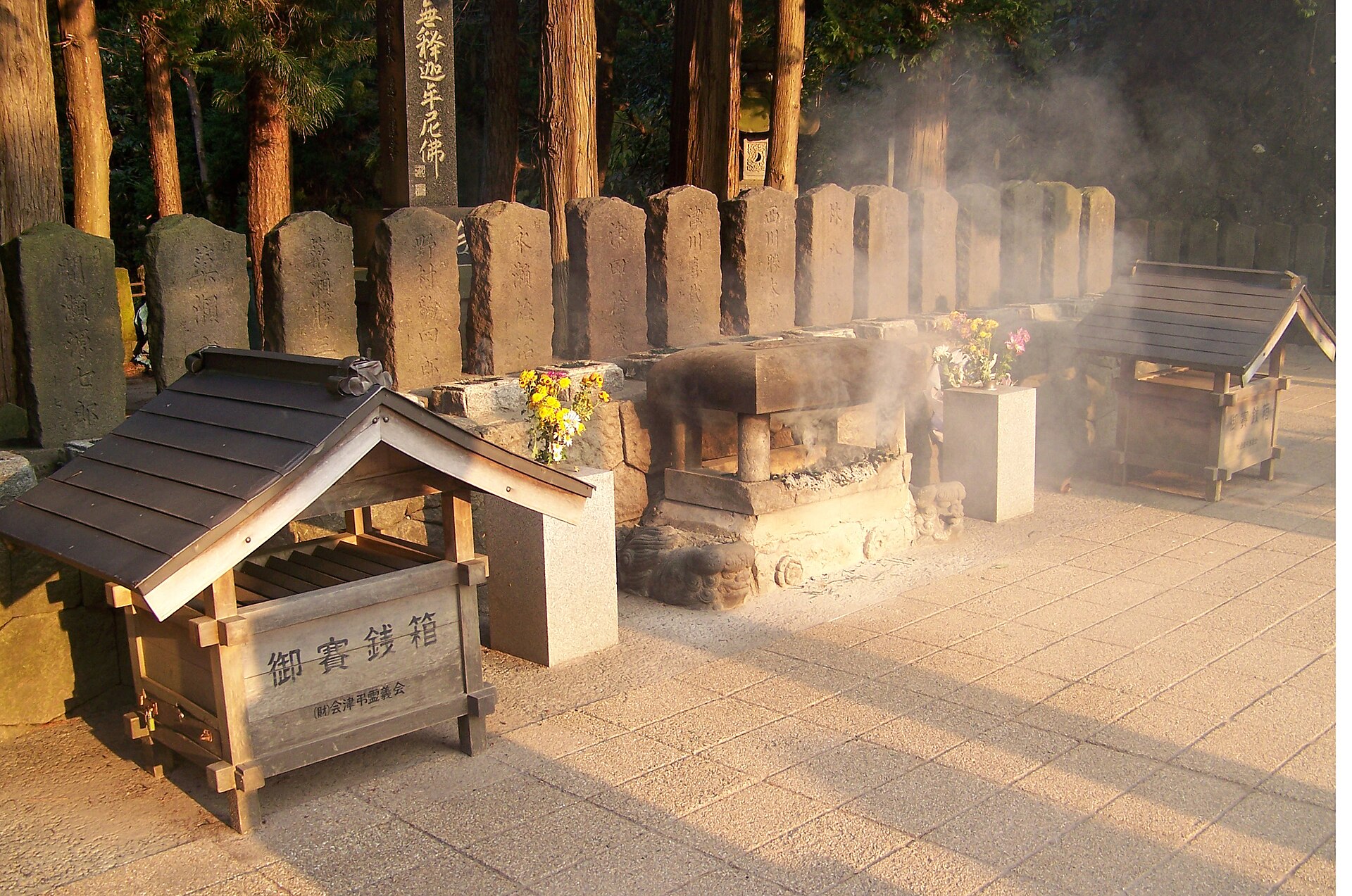
Nanokamachi Street is a historic street of nostalgic buildings tied to Hideyo Noguchi and the Shinsengumi. The Hideyo Noguchi Seishunkan, a former hospital, now holds a museum dedicated to Noguchi on its second floor, and nearby are the Sakaemachi Church where he was baptized and the original spot where the church stood. The Aizu Shinsengumi Memorial Hall, on the second floor of an antique shop, displays artifacts, art and documents related to the Shinsengumi, and the grave monument of Hajime Saito stands in the grounds of Amidaji Temple. Mt. Iimoriyama is famous for its association with the Byakkotai: after their defeat, nineteen teenage soldiers retreated to this hill and, seeing Tsuruga Castle burning, believed it had fallen and took their own lives. Their graves are on the hill, where incense is always burnt on their behalf; you can climb the many steps or take the escalator. On the hill, Sazaedo is an architectural wonder with two spiral staircases running opposite one another so that those going up never cross paths with those coming down, and its 33 statues represent the temples of the Saigoku 33 Pilgrimage. The Byakkotai Museum and the Byakkotai Legendary Museum both hold exhibits related to the Boshin War and the Byakkotai, and the Tonoguchi Weir Cave, part of an ancient irrigation tunnel, is best known as the tunnel the Byakkotai used to escape after their defeat. You can also see the Byakkotai Hara-kiri Memorial, the Byakkotai Graves, and monuments gifted by the City of Rome and by Germany.
When to go
Aizu-Wakamatsu has a humid continental climate, so the season you choose shapes the trip considerably. Summers are warm, with temperatures peaking on average in August, making this the time to plan around if you want the warmest conditions of the year. Winters are cold and bring very heavy snowfall, with snow cover that can pile up deeply and occasionally reach extreme depths for short spells, so expect a snowy, wintry landscape and travel conditions shaped by accumulated snow.
Rain is the defining feature of September, the wettest month of the year, so plan accordingly if your visit falls then. Otherwise, weigh a warm-weather trip against the deep snows of winter depending on whether you prefer heat or a wintry scene.
Three days in Aizu-Wakamatsu
Day one: Start by getting your bearings at Aizu Wakamatsu Station Tourist Information Center, then pick up maps and local advice at the Aizu Area Information Center before setting out to explore the castle town. Aizu-Wakamatsu is known as SAMURAI CITY Aizuwakamatsu, and its streets reward slow wandering on foot.
Day two: Head out to one of the onsen towns in the Aizu Region, choosing between Higashiyama Onsen and Ashinomaki Onsen for a soak and a leisurely day away from the city centre.
Day three: Reach Aizu-Wakamatsu by Shinkansen from Tokyo via Koriyama, or on the Ban Saisen Line to Wakamatsu Station; the Tobu Railway and Aizu Railway also connect the area, with services from Asakusa and links via JR to Nikko and Kinugawa Onsen. Fukushima Airport, Osaka Itami, Sapporo Chitose, Koriyama Station, Sendai Airport, JR East and the Shinjuku Highway Bus Terminal are all useful for planning your onward travel.