Niihama
Introduction
Niihama sits in the eastern part of Ehime Prefecture, a city whose identity is bound up with the Besshi copper mine that made it famous. It is one of the larger cities in the prefecture, though quieter in reputation than the prefectural capital, Matsuyama.
The city's best-known draw is the annual Niihama Taiko Festival, a loud, boisterous affair centred on heavy drinking that pulls visitors from across the country. Time your trip around it if you want the city at its most animated.
Before you go
Niihama sits on the coast of Shikoku, and the local tourist association runs a guide site for visitors. The site is written in Japanese only, but it includes integrated Google Translate, so you can read it in your own language before you set out. Use it to get a feel for the city and its neighbourhoods ahead of your trip.
Getting there
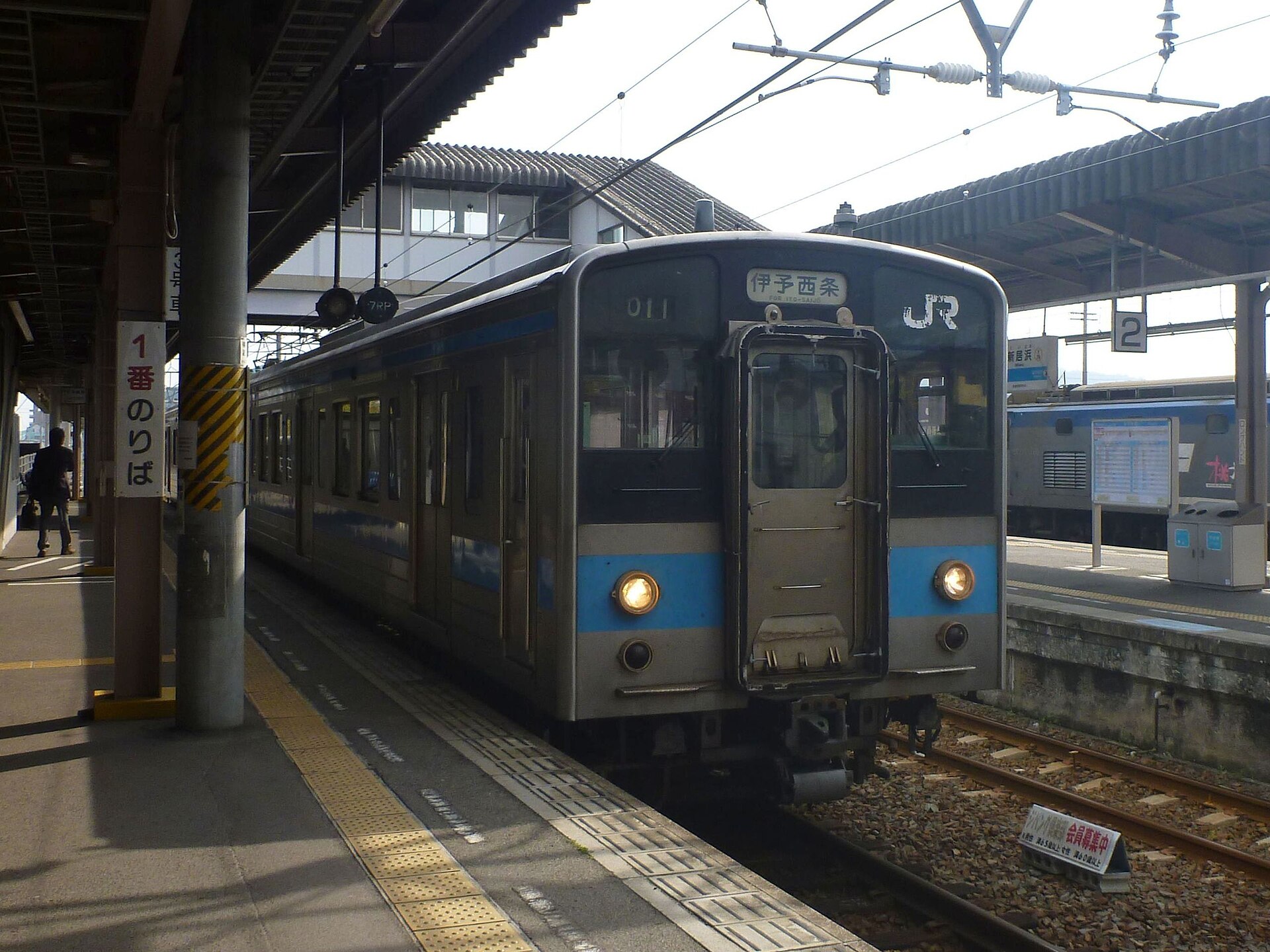
Niihama is served by its own station on the JR Yosan Line, which runs between Uwajima and Takamatsu. You can reach the city by train from either end of that line, arriving directly at Niihama station.
Getting around
Niihama sits on Shikoku's northern coast, hemmed in by mountains to the south and east and the Seto Inland Sea to the north, with the Kokuryo River splitting the city into a kawahigashi (east) and kawanishi (west) side. Keep that river divide in mind when planning a trip across town, and use Niihama Station as your orientation point, since most buses, taxis and the JR line converge there. The JR Yosan Line, operated by JR Shikoku, is the backbone of public transport, running along the coast and connecting the city with the wider region from Uwajima to Takamatsu. Within Niihama it serves Takihama, Niihama and Nakahagi stations; Takihama is one of the hubs for festival activity in October, and Nakahagi is useful for the eastern part of the city. Buy tickets at staffed stations or use a compatible IC card where readers are installed, and for local hops single tickets are usually simplest.
There is no metro or tram network, so beyond the railway you rely on buses and roads. Bus routes generally follow the main roads, linking the station area with both sides of the river and outlying districts, and buses are the practical way to reach places the railway doesn't serve, such as the mountainous Besshi area to the south, home to the Minetopia Besshi museum and onsen attraction. Pay on boarding or alighting depending on the operator, or use an IC card if the route accepts one, and ask at Niihama Station about local day passes or combined tickets if you plan to mix rail and bus over several days. Taxis are readily available around the station and in the central shopping and hotel districts, and are the easiest way to reach Besshi and the Chōshi no Taki and Mato no Taki waterfalls if you don't have a car; ride-hailing apps have a limited presence here, so pick up a taxi at a rank or ask your hotel to call one. Central Niihama around the station, the main shopping complexes and the riverside parks is compact enough to explore on foot, but Zuiō-ji Temple at the edge of the mountains, the waterfalls toward Besshi and Minetopia Besshi are well beyond walking distance. During the Niihama Taiko Festival in mid-October, expect heavy demand on transport and roads, with floats paraded across the city including at Takihama Station and Yamane Park.
Where to stay
Lodging in Niihama centres on the area around the station, where you'll find Toyoko Inn Niihama Ekimae for a straightforward stay close to the trains. Beyond that, the source lists no other accommodation, so plan your nights around the station district and arrange any other options before you arrive.
Food & drink
The source material for Niihama contains no information on where or what to eat and drink, so there is nothing to describe in this section.What to see and do
Time your visit around mid-October and you can catch the Niihama Taiko Festival, the city's signature event. Over three days, drum floats known as taikodai, each representing a different district of the city, are carried through the streets by large teams of bearers. The festival is nicknamed a "man's festival" (otoko matsuri) for its boisterous, hard-driven atmosphere, and watching the floats parade is the main way to experience Niihama at its most animated.
When to go
Niihama has a humid subtropical climate, so your packing and timing depend heavily on the season. Summers are warm and humid, with the heat peaking on average in August; expect sticky days and pack light, breathable clothing. Winters are cool rather than severe, with January the coldest month on average. Snowfall is usually light, but cold, damp days are common, so bring layers and something waterproof.
Rain matters most in September, the wettest month of the year. If you travel then, plan for wet weather and keep indoor alternatives in mind rather than building your days entirely around being outside.
Three days in Niihama
Day one: Start in central Niihama, using the JR Yosan Line to reach Niihama Station, and orient yourself along the Kokuryo River. Explore the neighbourhoods of Takihama, Nakahagi and Chōshi to get a feel for the city's character, and keep Google Translate handy for Japanese signage. In the evening, try local dishes in central Niihama.
- JR Yosan Line to Niihama Station
- Walk the Kokuryo River area
- Explore Takihama, Nakahagi and Chōshi
Day two: Head to Besshi and Minetopia Besshi to learn about the area's mining heritage, then continue to the Taki and Mato areas. Buses and taxis are useful for reaching these spots; pay with an IC card where accepted. Return to central Niihama for dinner.
- Minetopia Besshi
- Taki and Mato
- Buses and taxis; IC cards for payment
Day three: Take the JR Yosan Line toward Matsuyama or Uwajima for a change of scene, or stay local and visit Zui Temple. If your visit falls in October, check whether the Niihama Taiko Festival is on. End with a meal in central Niihama before departing.
- JR Yosan Line to Matsuyama or Uwajima
- Zui Temple
- Niihama Taiko Festival (October)