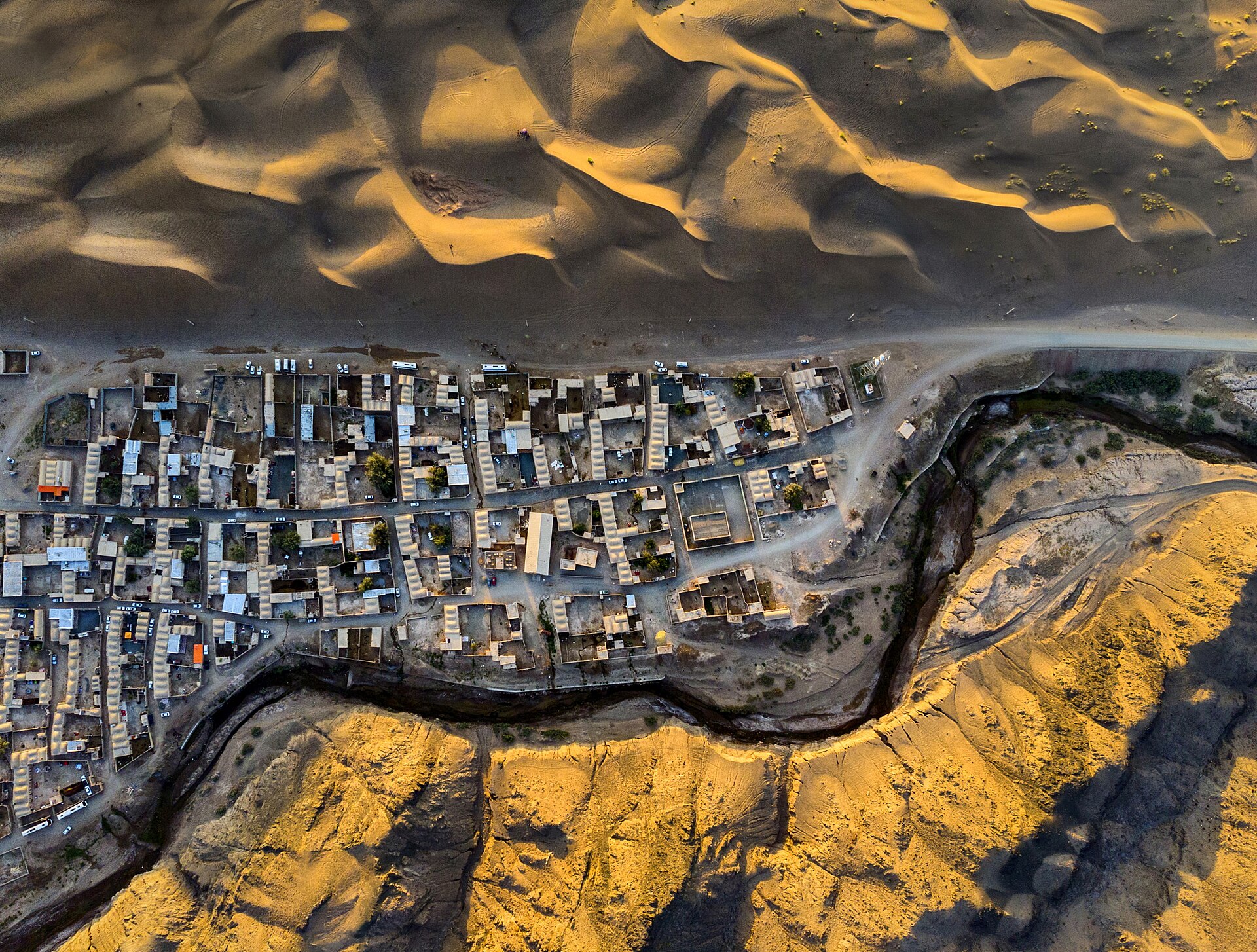
Nazarabad
Introduction
Nazarabad is a city in the Central District of Nazarabad County, in Alborz province, Iran. It serves as the capital of both the county and the district, making it the administrative centre for the surrounding area.
The city is well-known for growing fruit for Tehran, so expect the surrounding landscape and local trade to be tied to orchards and produce bound for the capital.
Before you go
Nazarabad has a long history stretching back thousands of years, and it is best known as the home of the Uzbeki Historical Hill, where the oldest brick in the world was discovered. The area's native people were nomads who spoke Savojbolaghi Turkish, and their alliance with the Qajar family during Agha Mohammad Khan's era helped shape the region's history. Today, most residents are transplants from other parts of Iran, though nomadic life can still be seen around Goldarreh village, where people live in black tents.
The city is also the hometown of Dr. Mosaddegh, the famous Prime Minister of Iran during the 1950s, whose efforts led to the nationalization of Iranian oil. He was overthrown in a coup d'etat on 19 August 1953, orchestrated by the United Kingdom and the United States, and was sent back to his old house in Nazarabad, where he died some years later. Knowing this history will deepen your appreciation of the area before you arrive.
Getting there
Getting to Nazarabad is straightforward if you plan around the fact that the source material offers no specific transport details. You will need to make your own arrangements, as no particular airport, rail line, or bus route is described here.Getting around
Nazarabad is a compact, car-oriented city rather than a major tourist hub, so getting around relies on the same everyday options locals use: taxis, shared taxis, buses, and your own two feet for short hops. There is no metro, tram or city rail network to navigate, and no suburban rail service within the city. Public transport is bus-based, with city and intercity buses and shared taxis covering longer distances within and around the city. Fares are generally paid in cash on board rather than through a ticket or pass system, so keep small change handy. Services are busiest during commuting hours and thinner in the evenings and on holidays.
Taxis are the most flexible option. Private taxis, metered or negotiated, suit door-to-door trips, especially with luggage or outside the centre, while shared taxis (savari) run fixed routes, pick up multiple passengers and cost less, though you may wait until the car fills. Ride-hailing apps used elsewhere in Iran are worth trying, but availability is more limited than in Tehran; if the meter is not used, agree on the fare before setting off. Central Nazarabad is small enough to walk for short errands and moving between nearby shops, bazaars and services, but beyond the centre distances stretch out and pavements can be inconsistent, so most visitors combine walking with taxis or buses. Dress modestly and take care when crossing busy roads. Carry cash in small denominations, learn a few Persian phrases for destinations and fares, and plan around daylight where possible.
Where to stay
Nazarabad offers limited accommodation, so plan your stay around the town itself rather than expecting a wide range of options.
Food & drink
No food or drink listings are available for Nazarabad in the source material, so there is nothing to recommend here.What to see and do
For a sense of the region's deep past, head to the Uzbeki historical hill, where traces of a civilization thousands of years old have been found. In the Ahmadabad district you can visit Dr. Mosaddegh's house and grave, while several religious sites anchor the surrounding villages: Imamzadeh Ibrahim near Karimabad, with its Safavid-era architecture, old trees and a 19th-century graveyard; Imamzadeh Abolhasan near Meskinabad, noted for its distinct architecture; and the 14th-century Imamzadeh Cheheldokhtar. If you want to see a way of life rather than a monument, make for Goldarreh village, the only nomadic settlement in western Karaj, where nomadic tribes live in black tents and keep many camels.Three days in Nazarabad
Day one: Base yourself in Nazarabad, the seat of Nazarabad County in Alborz province, and spend your first hours getting oriented in Central Nazarabad. It is a practical starting point: public services, taxis and private ride options are all found here, so you can arrange transport before heading out. Fares are best confirmed before you set off. Dress modestly and carry Persian cash, since cards are not always accepted. In the evening, eat simply and rest.
Day two: Head for the Uzbeki Historical Hill, the area's main historical sight. The hill is associated with the Qajar period, and with Agha Mohammad Khan, the Qajar founder. Allow time to walk the site and take in the setting rather than rushing through. If you want more context on the region, Savojbolaghi Turkish is the local language name you may see and hear around you. Return to Nazarabad for the night.
Day three: Use the day for the wider area. Goldarreh is within reach, and Tehran lies to the south if you are continuing your journey. If your interests run to modern history, the name Dr Mosaddegh, Prime Minister of Iran, is tied to this part of the country; in August 1953, his government was removed in a coup involving the United Kingdom and the United States. Knowing this history adds meaning to the landscape. End your three days back in Central Nazarabad.