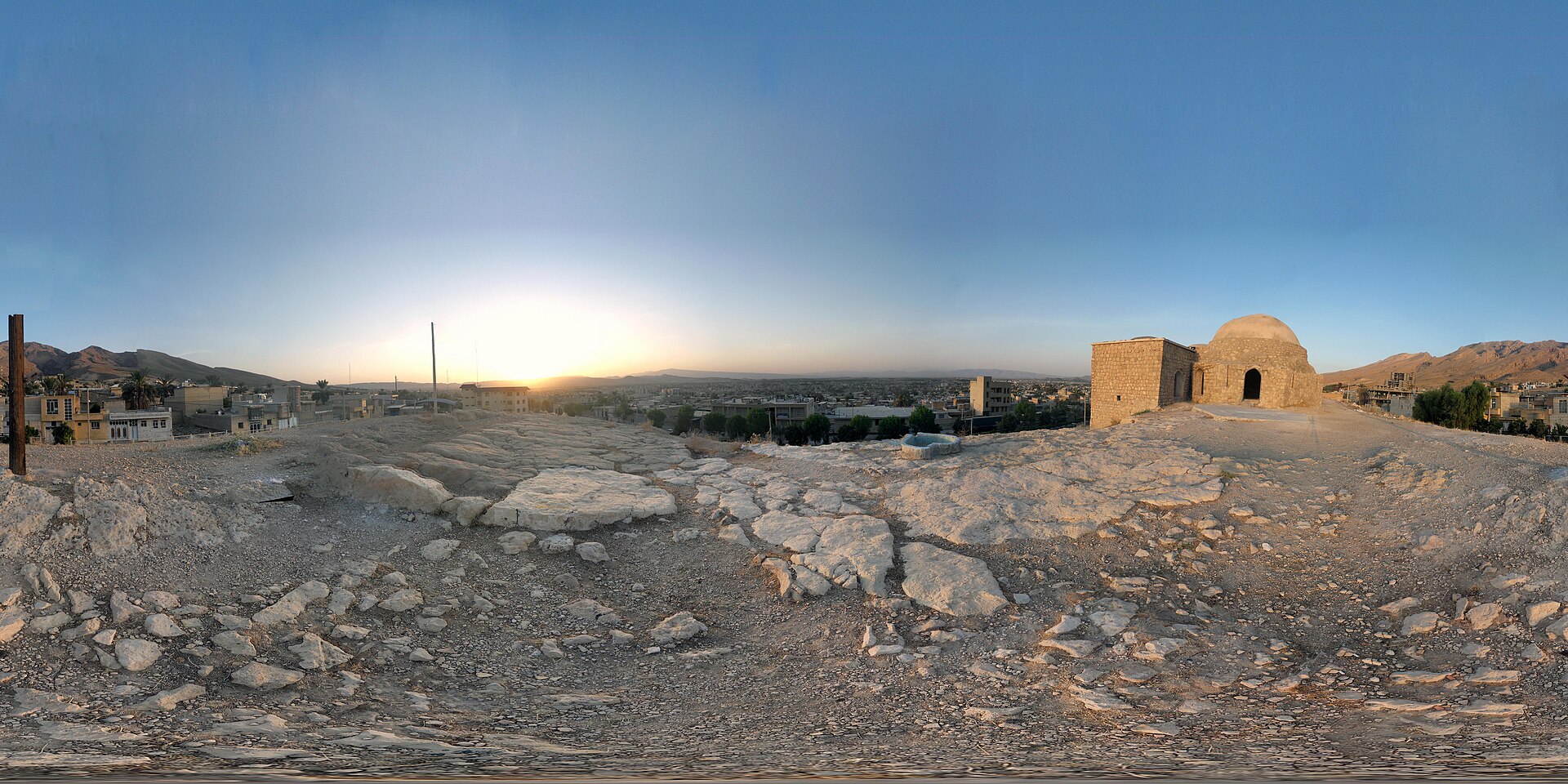
Jahrom
Introduction
Jahrom is a city in the Central District of Jahrom County, in Fars province, Iran, and serves as the capital of both the county and the district. It is also the administrative center for Jolgah Rural District, a role it took over from the village of Heydarabad.
Within Fars province, Jahrom is the largest city in the south of the region, making it a natural base for exploring this part of the province.
Before you go
Jahrom sits in the centre of Fars province, roughly 180 km south of Shiraz and about 1,050 m above sea level. Most residents are Muslims and speak Persian, so a few words of Persian will serve you well. The city is known for its dates and citrus fruits, which are worth seeking out while you are there.
- Iran is generally a safe country, but being an obvious tourist may draw attention from curious locals; don't be alarmed or react negatively.
- Keep your bag secured and leave personal valuables in your hotel room or hotel safe.
- Take the same caution walking alone late at night or when approached by strangers as you would at home.
- Emergency numbers: police 110, fire department 125, EMS 115, road EMS 115 or 112.
Getting there
Jahrom Airport (JAR) sits on Forudgah boulevard and has regular flights to Tehran and Mashhad. Long-distance buses link Jahrom with Tehran, Shiraz, Isfahan, Bandar Abbas and Lar.
By road, a highway connects the city with Shiraz and Tehran, and other routes run to Fasa, Qir and Lar, where you can connect onward to Bandar Abbas and the Persian Gulf coast.
Getting around
Your two options for getting around Jahrom are taxi and bus. Taxis, including online ride-hailing, are the most flexible choice: you aren't tied to a fixed route or timetable, and you can be taken directly to a specific address such as the bazaar or one of the historic sites. With a street taxi, agree on the fare before you set off; ride-hailing apps let you see the fare up front instead. There is no metro, tram or urban rail network, so buses and taxis cover local public transport.
City buses handle movement within Jahrom, while regional buses connect the city to nearby small towns such as Qotb Abad, Khafr and Duzeh and to surrounding villages; taxis serve the same destinations when bus times don't suit you. Walking works well for the central historic core, where the Jameh Mosque, the bazaar, the Khan school and the fire temple (Qadamgah) can be combined on foot; for longer hops across the city or outlying sites such as Sangtarashan cave, plan on a taxi or bus. If you fly in, Jahrom International Airport (JAR) on Forudgah boulevard has regular flights to Tehran and Mashhad, and you continue into the city by taxi or ride-hailing.
Where to stay
Jahrom has a small handful of hotels, each in a different part of town. The Pasargad Hotel sits by Chamran square, the Sajjad Hotel is on 22 Bahman street, and the Farahmand Hotel is out on the Qir road. The Sajjad is the cheapest of the three, while the Farahmand falls in the middle and the Pasargad is the priciest.
Food & drink
Jahrom has a broad spread of restaurants to choose from. Among the well-known names in the city are Kohan, Haft khan, Pasargad, Salvador, Chatre sabz, Pardis, Soufi, Tak, Karno, Nayeb, Goldis and Zhian, along with the Italian kitchen at Kaze and a branch of Dominos if you want something familiar.
For coffee and a sit-down break, head to Khayyam street, where most of the city's coffee shops are concentrated. Places such as Manoto, Shanar, Asal, Bermuda, Mahtab and Jazire give you plenty of options along the same stretch.
What to see and do
Jahrom's sights span several historical periods. South of the city you can visit Sangeshkan cave, described as the biggest handmade cave in the world. On Azadegan boulevard, across from the literature college, stands Ghadamgah, a Sassanid fire temple. The historical bazaar on Jomhuri street dates from the Zand dynasty, while the Khan school and mosque on Ebrat street belongs to the Safavid period. The Jame mosque on 22 Bahman street is a Seljuk-era congregational mosque.
If you are in town during Muharram, you can join the Muharram Mournings, the annual commemoration of the Battle of Karbala and the killing of Imam Hussein ibn Ali, with the Day of Ashura as the focal date. The observance defines Shia communal identity and is held in most Iranian cities, Jahrom among them; attending costs nothing.
When to go
Jahrom has a hot semi-arid climate, so the timing of your visit makes a real difference to how comfortable you'll be outdoors. Summers are extremely hot, with intense heat that makes midday activity uncomfortable, so if you travel then, plan your days around the worst of the heat and save your walking and sightseeing for the cooler edges of the day.
Winters are cold, and nights and early mornings can be genuinely freezing, so bring warm clothing if you visit in that season. Rainfall is modest and spread through the year, so you needn't build your plans around a single wet season.
Three days in Jahrom
Day one begins in Jahrom itself, in the Central District of Jahrom County in Fars, Iran. Take time to walk the city and get your bearings; taxis are available if you prefer to cover more ground. Most people here are Muslims and speak Persian, so a few words of Persian will serve you well. Keep the day unhurried and let the city set your pace.
Day two, head out into the countryside around Jahrom. Jolgah Rural District and the village of Heydarabad lie within the county, as do Qotb Abad, Khafr and Duzeh, each offering a change of scene from the city streets. Walking is a good way to see the rural areas, and you can return to Jahrom in the evening.
Day three, look beyond the county. Jahrom sits within Fars, with Shiraz to the northwest and Fasa, Qir and Lar also within reach, while Isfahan, Tehran, Mashhad and Bandar Abbas are longer journeys. Jahrom Airport (JAR) serves the city, so you can plan your onward travel from there. Keep the Emergency number and EMS details on hand before you set out.