Al-Kut
Introduction
Al-Kut, also spelled Kutulamare, Kut al-Imara or Kut Al Amara, is a city in eastern Iraq and the capital of Wasit Governorate. It sits on the left bank of the Tigris River, roughly 160 kilometres south east of Baghdad, in the province long known as Al Kut and renamed Wasit since the 1960s.
Getting around
Al-Kut sits on the Tigris in eastern Iraq, with the river wrapping around the old city centre on three sides, and two branches, the Al-Gharaf and Al-Dujaili, splitting off just north of the city. The town lies on the road network linking Baghdad with the southern governorates, including the route toward Basra, so it works as a crossroads rather than a dead end. Do not plan on trains, light rail or a metro to move around the city or to reach it; all local and regional movement here is by road. Most visitors arrive overland from Baghdad or the south, since the airfield associated with the city is a military installation rather than a civilian passenger airport. For the final leg into town, take a minibus or bus on one of the named lines or a pre-arranged car, and confirm arrangements with your accommodation before travelling.
Public transport is built around minibuses, mostly Kia vehicles, and medium-sized buses, many of them old. It is not an integrated network: vehicles compete with one another for passengers rather than running as coordinated services, so expect to flag down a passing minibus or bus rather than consult a timetable, and you may need to change vehicles to cross town. Services are organised into named lines, each with a short symbol, including Al Anwar (RA1), Al Falaheya (RF2), Al Hawraa (RH3), Al Iza (RI4), Aljehad1–Al Shabab Center (RJSH5), Aljehad 2 (RJS6), Al Khajeya (RKH7), Al Sewada (RSEW8), Al Shuhadaa (RSH9), Al Zahraa (RZ10), Al Maymoon (RM11) and Damook (RD12); knowing the name or symbol of the line nearest your destination is the most practical way to ask for the right vehicle. A Bus Rapid Transit route has been studied but is only a proposal, so do not count on dedicated bus lanes or BRT stations. For a direct, private trip, arrange a car or driver locally and agree the fare in advance, and do not assume app-based ride-hailing will be available.
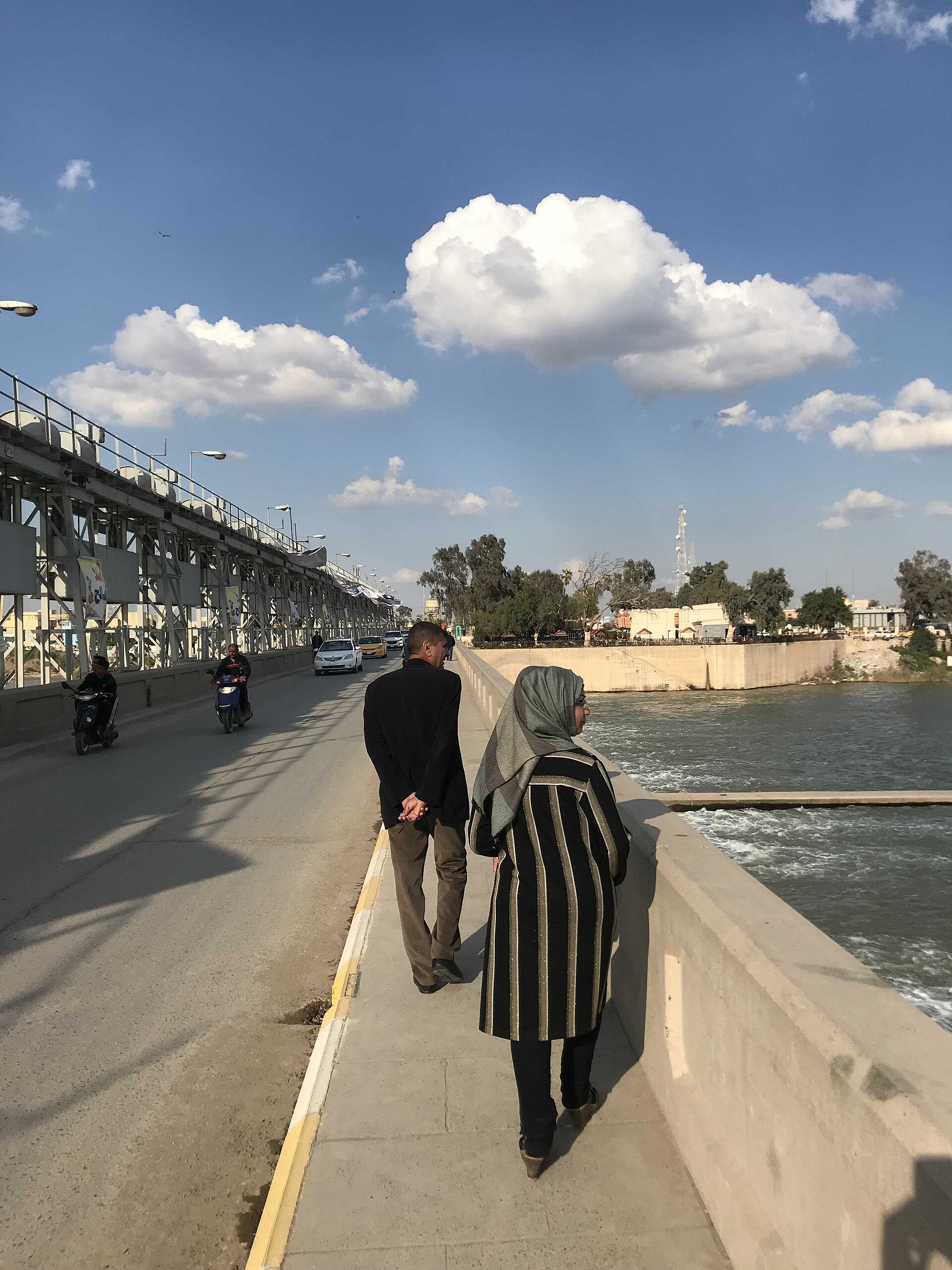
The old town lies within a sharp bend of the Tigris, almost making it an island, so the historic core is compact and best explored on foot. The Kut Barrage, built in the 1930s to feed the Gharraf irrigation canal, carries a road across the river and includes a lock for boats, making it a natural walking route between banks. Outside the centre the city spreads across a hot desert climate with very little annual rainfall, so plan walks for cooler hours and carry water.
Three days in Al-Kut
Day one: Start in Al-Kut itself, on the Tigris River in Wasit Governorate, and get your bearings along the water. The Kut Barrage is the natural first stop, where you can watch the river divide and understand how the town relates to the Tigris. In the evening, settle into the rhythm of the city centre and eat where the locals do.
- Walk the Tigris riverside in Al-Kut
- Visit the Kut Barrage
- Evening in the city centre
Day two: Head out to the smaller communities around Al-Kut, such as Al Anwar, Al Falaheya, Al Hawraa, Al Iza, Al Khajeya, Al Sewada, Al Shuhadaa, Al Zahraa, Al Maymoon and Damook. These neighbourhoods give you a sense of everyday life in Wasit Governorate away from the main town. Use the Bus Rapid Transit (BRT) services where they run, and take your time.
- Explore the surrounding neighbourhoods
- Use BRT services where available
- Spend the afternoon at a local centre such as Al Shabab Center
Day three: Follow the Gharraf and Gharaf waterways out of Al-Kut, where the landscape opens up and the pace slows. If you want a longer trip, the road south toward Basra or north toward Baghdad is straightforward, but a half-day loop back to the Tigris is enough. Finish with a quiet evening back in Al-Kut before you leave.
- Follow the Gharraf and Gharaf waterways
- Optional onward travel toward Baghdad or Basra
- Final evening on the Tigris in Al-Kut