Basra: A Port City Shaped by Rivers and History
Basra sits where the Shatt al-Arab meets the Persian Gulf, a waterfront city that was founded in 636 as a military encampment and rose to become one of the Islamic world's great centers of trade and learning. The river dominates everything here—it runs through the corniche where locals gather for coffee, it frames the old quarters with their wooden balconies, and it's the reason Sinbad the Sailor is said to have departed from this place on his legendary voyages. Expect a city of contrasts: recent reconstruction alongside centuries-old mosques, extreme summer heat tempered by winter months when the corniche comes alive, and a strategic location that has shaped its turbulent history.
When to Visit
Basra's climate is unforgiving for much of the year. Summer temperatures regularly exceed 50°C (122°F), which confines outdoor life to evening hours. If you want to walk, explore markets, and move around comfortably, come between November and March, when temperatures range from 15 to 27°C. October and April–May work if you're willing to adjust your schedule—visit markets and mosques in early morning, rest during midday heat, and save the corniche for evening. The river cruise and marsh tours are best undertaken one hour before sunset, when the light softens and the air cools slightly.
Along the Shatt al-Arab: The Corniche and the Waterfront
The corniche runs along the river's edge, illuminated until after 10 PM and lined with family cafes where people gather to drink coffee and watch the water. In winter, it fills with visitors. Take a meter taxi to reach it from the city center (4–6,000 IQD for short distances), or book a car through your hotel for evening outings. For a deeper view of the river itself, hire a small boat for an hour-long cruise departing just before sunset—the water catches the light differently as day ends, and the palaces and old buildings along the shore emerge from the afternoon haze. Boat tours cost 30,000–50,000 IQD per boat per hour.
If you want to see the marshes north of the city—the same wetlands where reed houses still stand—local guides offer tours of comparable price. A morning departure from Basra lets you avoid the midday heat and reach the marshes when light is clearest.
Museums and Historical Sites
The Basra Museum occupies the former Lakeside Palace of Saddam Hussein and opened in September 2016. It holds Sumerian artifacts and pieces reflecting the region's ancient and Islamic history. Admission costs 5,000–10,000 IQD for foreign visitors. Nearby, the Imam Ali Mosque is one of the oldest mosques in the history of Islam; parts of the original structure remain. The mausoleum of Imam al-Hasan of Basra, built in 1185, honors an early Muslim theologian whose work shaped Islamic thought.
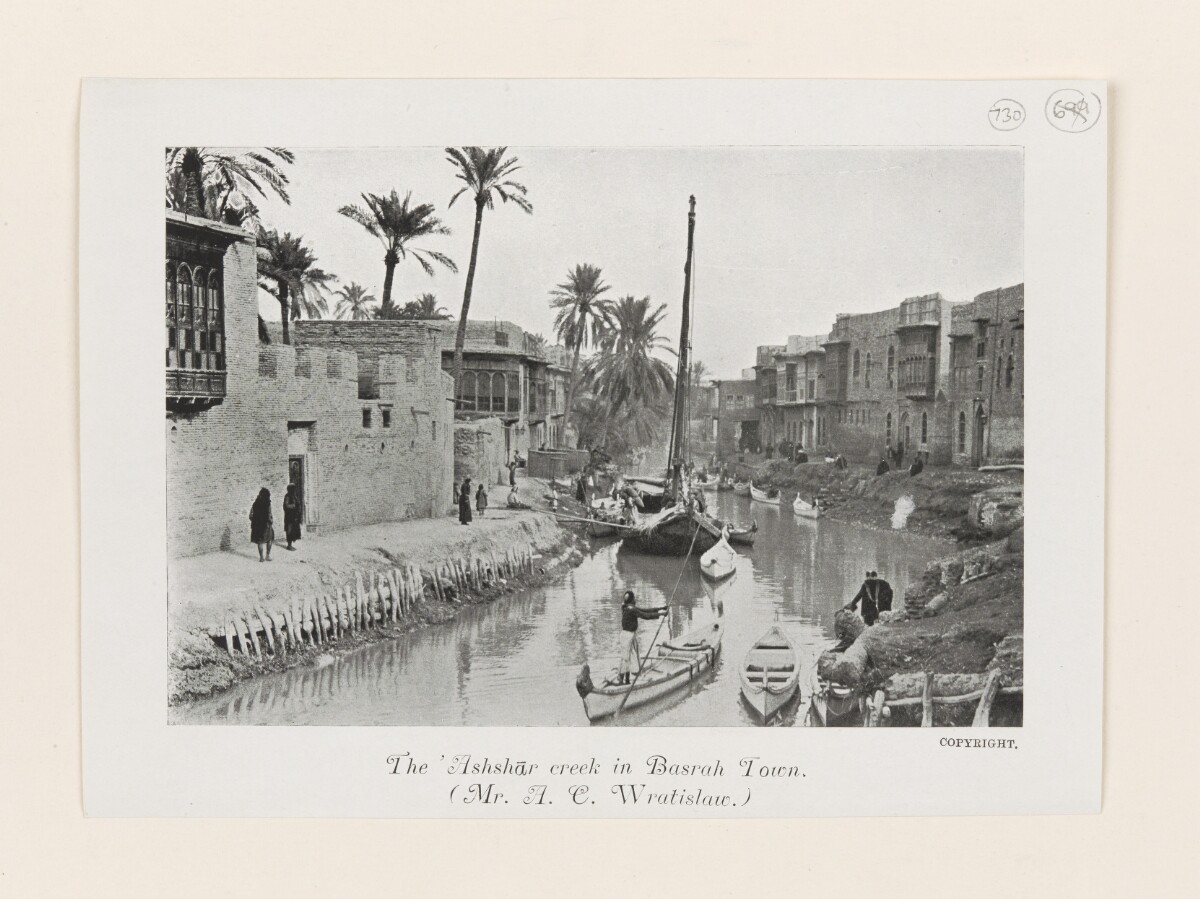
Old Basra—what remains of it—occupies only a few blocks and preserves traces of the "Venice of the East," a nickname it once earned for its canals and Ottoman mansions with iconic wooden shanasheel balconies designed to block heat while offering views to the street. A UNESCO-funded restoration project began in 2018 to stabilize derelict houses in these quarters. The Basra Heritage Museum, housed in a former Greek consulate building from Ottoman times, documents this architectural heritage. Walking these narrow streets offers a visceral sense of how the city looked before modern reconstruction.
For a different kind of remembrance, the Basra War Cemetery and the Basra Memorial near the town of Az Zubayr commemorate Commonwealth forces who died during World War I's Mesopotamian Campaign. The memorial records 40,682 names, 99 percent of them Indian soldiers.
Markets, Food, and Local Life
The Ashar markets and the Indian market (Al-magaeiz) are where Basra's commercial pulse beats. These bazaars sell Barhee dates—local, fresh, and prized—alongside dried seafood, textiles, and everyday goods. Meter taxis or minibuses (under 2,000 IQD) connect Al-Jazair to Ashar and the corniche, though it's worth confirming the meter is activated before setting off. Most restaurants cluster along the corniche with views over the river. Shatt Al Arab Restaurant, large and popular, serves traditional Iraqi foods. Elsewhere, family cafes offer meals for 15,000–25,000 IQD per person. The signature dishes are grilled zubaidi fish and shrimp majboos, best eaten fresh in the cooler months.
Cash is essential for markets and taxis; ATMs exist in Ashar shopping centers, and SIM cards from Zain and Asiacell are available at the airport and markets with 4G coverage in the city center. Bottled water should be your default—hotels provide free bottles, and street water is not reliable.
Practical Considerations
Basra International Airport connects to Baghdad (one hour by air) and regional hubs like Istanbul and Dubai. The A1 highway from Baghdad takes seven hours by car; the Safwan border crossing from Kuwait is 1–1.5 hours away. Dress modestly in cotton clothes—long sleeves help in markets and when visiting mosques—and bring sunscreen and sunglasses without fail. Photography is generally permitted on the corniche and in markets with permission, but avoid checkpoints and official buildings. The central corniche and Ashar areas have police presence; avoid political gatherings and industrial neighborhoods after dark.
A first visit might span two to three days: a morning corniche walk with coffee, an afternoon at the Basra Museum followed by shopping in Ashar, and an evening boat tour. If marshes interest you, dedicate a half-day to that excursion, leaving early to beat the heat.
Basra's story—from 7th-century garrison to Islamic Golden Age trading hub to modern oil port—is written into its streets, its river, and the faces of people who have rebuilt their city more than once. The corniche at dusk, the taste of local dates, and a boat moving quietly over the Shatt al-Arab will tell you why this place has mattered for nearly fourteen centuries. Start with the waterfront, then let the city unfold.