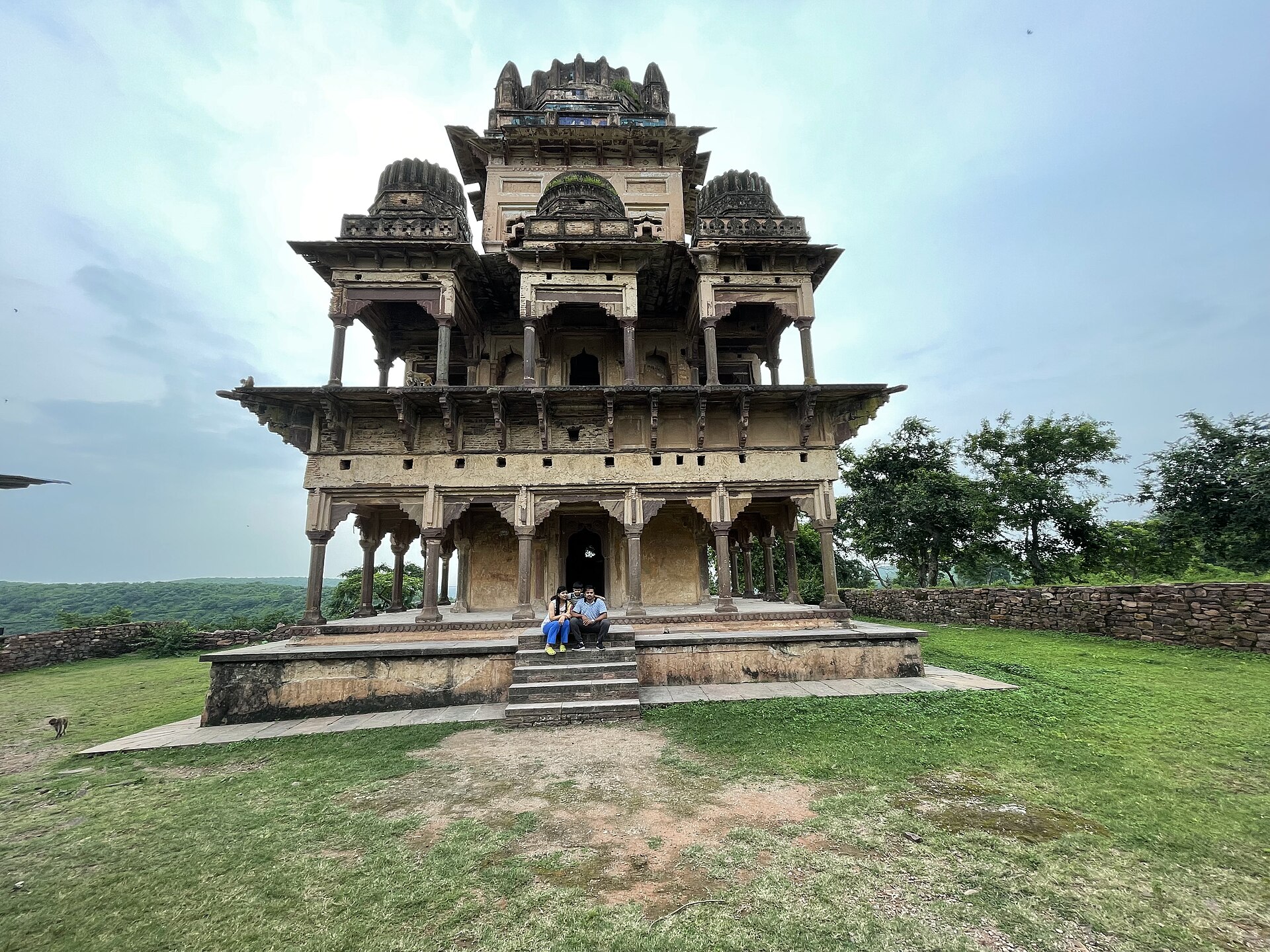
Saugor
Introduction
Sagar, formerly known as Saugor, is a city and administrative headquarters in the Sagar district of Madhya Pradesh, in central India. It sits on a spur of the Vindhya Range at an elevation of about 1,758 feet, roughly 182 kilometres northeast of the state capital, Bhopal.
If you are travelling through this part of central India, Sagar gives you a hill-set city with a long-standing name and a position on the map that makes it a natural reference point for the surrounding district.
Getting around
Sagar's city area is compact, so getting around is generally easy, and short trips on foot are practical for many visitors, especially with a lake sitting in the middle of town. For longer hops, the main mode of local transport is the auto rickshaw. Shared autos, where seats and fares are shared with other passengers, are the cheapest option for short trips; reserved autos cost more but give you a direct ride to a specific destination. Cycle rickshaws are slower than autos but a common local option for short distances, while taxis are the fastest way around but comparatively expensive. Buses are also available for moving around town.
There is no metro or tram network in Sagar, so rail and road are the practical options. The main railway station, Sagar Railway Station (SGO), sits on the Bina–Katni route about 3 km from the city centre and links north India with central and south India, with regular services to Jabalpur, Indore and Bhopal and some trains continuing to Mumbai and Kolkata. A second local station, Saugor Makronia (MKRN), sees more goods than passenger trains. For short-distance travel in and around the city, private buses, state transport buses and passenger trains complement each other, and long-distance buses run to Bhopal, Damoh, Jhansi, Jabalpur, Gwalior and Banda. Since Sagar has no airport of its own, plan to arrive overland by bus, train or taxi from Bhopal, Khajuraho or Jabalpur.
When to go
Sagar has a humid subtropical climate, so plan around three broad seasons: a hot summer, a monsoon that brings some relief from the heat, and a cool winter. Summer is the hottest stretch of the year, with the most oppressive conditions arriving before the rains break. If you struggle with heat, avoid this period or plan your days around the coolest hours.
The monsoon follows, and it is very wet, with heavy rainfall. It is somewhat cooler than the hot season, so if you don't mind rain it can be a more comfortable time to be in the city. Winter is the coolest period of the year and the most comfortable for getting out and about. The source gives no dates for any season, so treat these as the northern-hemisphere summer, monsoon and winter months and check conditions before you travel.
Three days in Saugor
Day one: Arrive at Sagar Railway Station (SGO), the town's railhead in Madhya Pradesh, with connections from Bina, Katni, Jabalpur, Indore, Mumbai, Kolkata, Damoh, Jhansi, Gwalior and Banda. Settle into Saugor and get your bearings in the town itself, which sits in the Vindhya Range. Buses and shared cycle transport make it easy to move around, and Saugor Makronia (MKRN) is the other local stop if your train brings you in there.
Day two: Use Saugor as your base for exploring the surrounding Vindhya Range countryside. The town's position in Madhya Pradesh puts it within reach of larger centres such as Bhopal, Jabalpur and Khajuraho for onward planning, though the day is best spent close to Saugor at an easy pace.
Day three: Take a final morning around Saugor before returning to Sagar Railway Station for your onward train. Summer is hot and winter is milder, so time your walks accordingly. If your route continues, connections toward Bina, Katni, Jabalpur, Indore, Mumbai, Kolkata, Damoh, Jhansi, Gwalior and Banda are available from SGO.