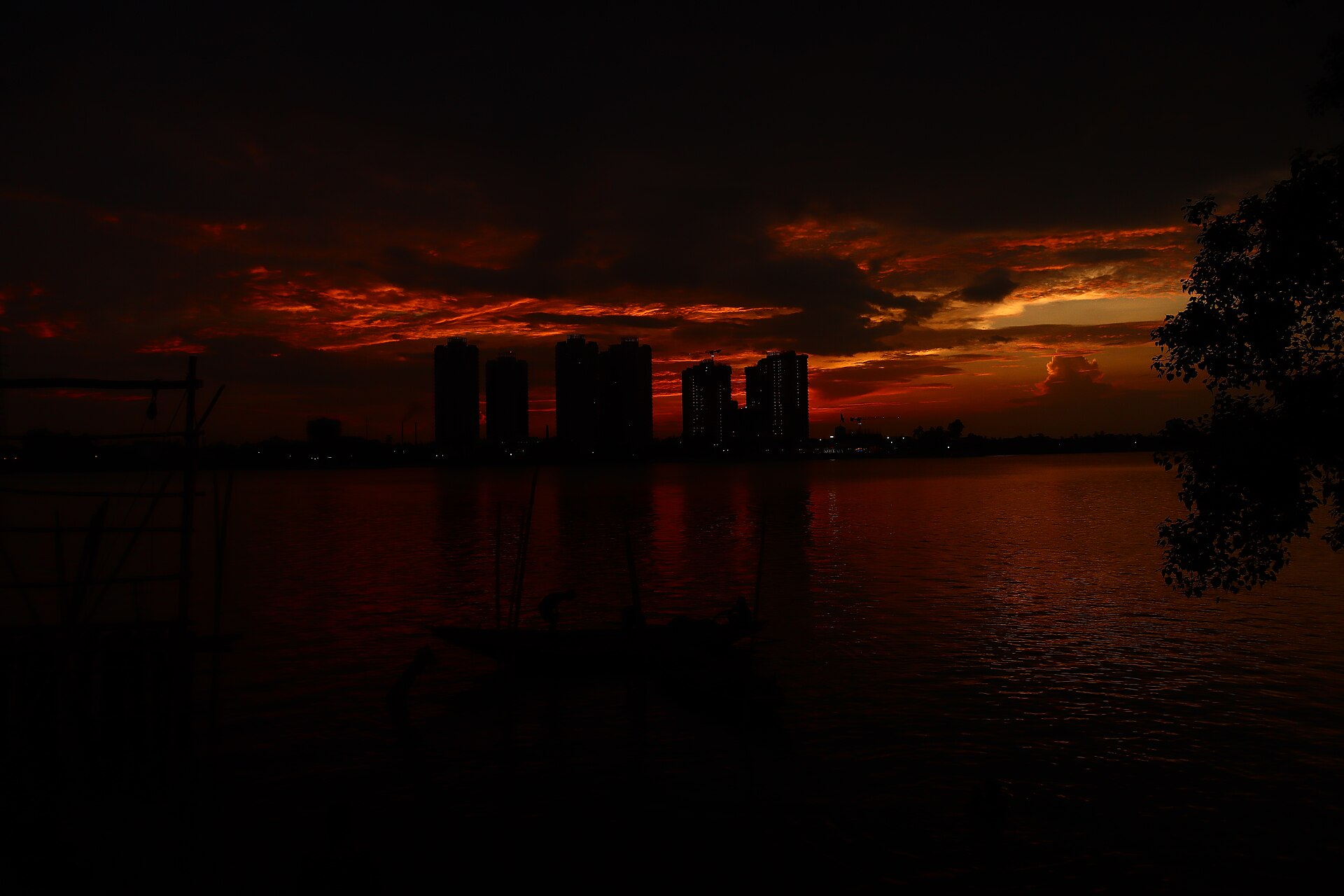
Titagarh
Introduction
Titagarh is a city and municipality in North 24 Parganas district, in the Indian state of West Bengal. It lies within the area covered by the Kolkata Metropolitan Development Authority (KMDA), placing it among the settlements that make up the wider metropolitan region around Kolkata.
Before you go
North 24 Parganas sits on the Indian half of the Ganges Delta, a landscape of distributaries reaching into the Sundarbans. The Hooghly is the main river, but the Bidyadhari, Ichhamati and Jamuna also thread through the region, so expect a delta setting shaped by water wherever you go.
Check the weather news before you set out. The district has weathered several cyclonic storms, most notably Aila and Amphan, and monsoon rains can reach terrible levels and breed diseases such as malaria or dengue. Stay current on forecasts and take precautions against natural disasters. For official information, the North 24 Parganas District website is the place to look.
Getting there
Since the source material for Titagarh contains no information about arriving in the city, there is nothing to write for this section.Getting around
Titagarh is strung along Barrackpore Trunk Road (B.T. Road), the main artery that runs through the town and connects it to its neighbours and onward to Kolkata. The suburban railway is the backbone of movement in and out: Titagarh has its own station on the Sealdah–Ranaghat line, part of the Kolkata Suburban Railway, linking it directly with Sealdah and the chain of towns along the line. If you are basing yourself in Kolkata and visiting for the day, the train is the most straightforward option; services run frequently through the day, you buy a single journey ticket at the station counter, and you should expect busy carriages at peak hours on these unreserved trains.
Buses are the workhorse of local travel along B.T. Road. Route 78 runs between Barrackpore Court and Esplanade, a useful link to central Kolkata without the train, and several other routes connect Titagarh to surrounding neighbourhoods and to Howrah, including 81/1 between Barasat and Rajchandrapur, C28 and S32 between Barrackpore Court and Howrah Station, S11 between Nilganj and Esplanade, and E32 between Nilganj and Howrah Station. These are ordinary stage-carriage buses: you board, pay the conductor according to your destination, and alight where you need. For crossing the Hooghly, ferry ghats offer an unhurried alternative to road travel — Peer Ghat links to Maniktala Ferry Ghat at Serampore, and Lakshmi Ghat links to Mahesh Jagganath Ferry Ghat at Rishra. The built-up parts of town are walkable for short errands and for reaching the station, the ghats and the markets along the main road, but the road network mixes paved and unpaved stretches, so dress for a busy working town. Local taxi and app-based ride-hailing networks are not documented here, so arrange any private car through your hotel or a local contact.
Three days in Titagarh
Day one: Start in Titagarh itself, in North 24 Parganas district of West Bengal, and get your bearings along the Barrackpore Trunk Road, the main artery linking the town toward Kolkata. Use the Kolkata Suburban Railway network, with Sealdah and Ranaghat among the lines serving the area, to arrive and settle in; buses on routes toward Barrackpore Court, Esplanade, Howrah, Barasat and Rajchandrapur connect the town to its neighbours. Spend the afternoon on the Hooghly, the river that shapes the town's riverside character.
- Walk the Barrackpore Trunk Road corridor to understand how Titagarh sits within the Kolkata Metropolitan Development Authority (KMDA) area.
- Time your riverside stroll for the cooler part of the day; the Ganges Delta climate here is warm and humid for much of the year.
Day two: Head out along the Hooghly toward Barrackpore, using the suburban rail or the bus routes toward Barrackpore Court, and follow the river's edge where the town meets its larger neighbour. The Hooghly remains the defining waterway of this stretch of North 24 Parganas, and the riverside gives you a sense of how the delta landscape has long supported settlement and trade. Return to Titagarh in the evening.
Day three: Use the rail links toward Sealdah or the bus routes to Esplanade and Howrah for a day in Kolkata, then loop back via Barasat or Rajchandrapur if you want to see more of the district. Keep in mind that this part of West Bengal is exposed to cyclones such as Aila and Amphan, so check conditions before planning long journeys during the storm season. End your trip back in Titagarh.