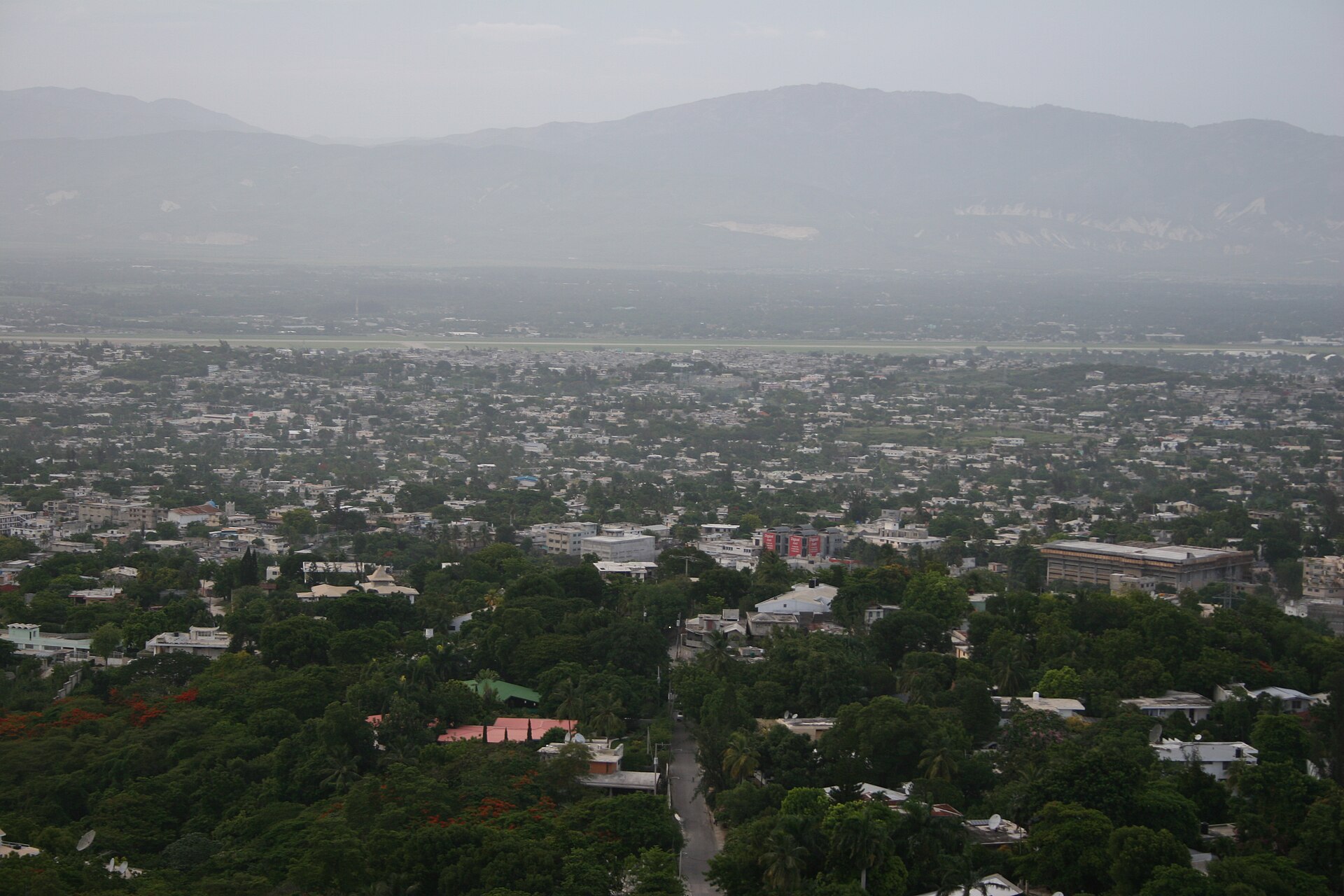
Delmas
Introduction
Delmas is a commune in the Port-au-Prince Arrondissement, within Haiti's Ouest department. Rather than a separate city, it forms an urban continuation of the capital, so your time here folds naturally into a visit to Port-au-Prince itself.
Much of the area's commercial and industrial enterprise is located in Delmas, which gives the commune a working, business-oriented character. Come expecting a functioning part of the capital region rather than a resort or a historic quarter.
Getting around
Delmas sits within the Port-au-Prince metropolitan area, and getting around means relying on the same informal, privately run transport that serves the capital as a whole. There is no unified public transport system, and no rail, metro, or tram network to use. There are also no metered or street-hailable cabs to flag down, so visitors typically move around by tap-tap, bus, motorcycle taxi, or a pre-booked private driver. Fares are paid in Haitian Gourdes, so carry small bills and coins, as drivers often cannot break large notes.
- Tap-taps and buses: Brightly painted minibuses, known locally as tap-taps, are the cheapest way to travel and run predetermined routes connecting suburbs and towns. Board at the nearest tap-tap or bus station, or flag one down along its route. Vehicles fill up tightly. State your destination clearly when you board — a common approach is to greet the driver and name an area or route the vehicle passes through rather than its final terminus (for example, "Bonjou, Nazon?" for a bus heading toward downtown Port-au-Prince). Announce "Mèsi!" loudly to signal you want to get off, and say "Padon!" if you bump into someone. Pay through the window after you get off; the driver returns change if they have it. Ask your hosts or locals for the current fare on your route, since prices vary.
- Inter-city coaches: For longer journeys, private companies run large air-conditioned coaches. Capital Coach, Haiti Trans, San Souci Tours, Caribe Tours, and Terra Bus are among them. Caribe Tours and Terra Bus run routes to Santo Domingo in the Dominican Republic; San Souci Tours connects Port-au-Prince with Gonaïves, Plaisance, Limbé, Cap-Haïtien, and Ouanaminthe, usually with one midway stop for food, drink, and phone charging; Haiti Trans also serves the Port-au-Prince to Cap-Haïtien route; Capital Coach handles cross-Port-au-Prince travel. Reserve in person the day before and arrive at the departure point about two hours before departure.
- Taxis and motos: There are no street-hailable cabs. For a private car and driver, book in advance through a travel agent, your hotel, or a tourism desk. Motorcycle taxis, called motos, fill the gap cabs would otherwise serve — privately owned, widely available, and best suited to short trips. No helmets are provided, and longer rides are considered dangerous. You can ask the driver to slow down, and avoid carrying more than one passenger per moto. Carry small notes, as drivers are often reluctant to give change, and pay after you reach your destination.
- Walking: Possible for short hops, but practical guidance focuses on vehicles rather than pedestrian routes. For anything beyond a brief stroll, tap-taps, motos, or a pre-booked driver are the realistic options.
- From the airport: The most reliable way into Delmas is to arrange a private driver in advance through your hotel, a travel agent, or a tourism desk, since there are no street-hailable cabs at the airport or elsewhere. Public buses and tap-taps are the cheapest alternative if you are comfortable navigating the informal system, and motos are available for short trips, though not ideal for arriving with luggage.
Public water taxis are common and relatively cheap in Haiti's north and south, connecting towns and landmarks not linked by road, and private boat operators exist but are much more expensive. These services are not part of getting around Delmas itself, but can be useful if your trip extends to coastal areas elsewhere in the country.
Three days in Delmas
Day one: Arrive in Delmas, part of the Port-au-Prince Arrondissement in Haiti's Ouest department. Delmas is a rather large and busy area, so much of your first day is about getting your bearings. Come in by one of the inter-city bus lines that serve the capital, such as Capital Coach, Haiti Trans, San Souci Tours, Caribe Tours or Terra Bus, and pay your fare in Haitian Gourdes. Tap-taps, the brightly painted vehicles, are the way to get around. Listen for the call of "Bonjou" and answer "Mèsi" or "Padon" as you ask for your stop.
Day two: Use Delmas as your base for a longer run. Buses leave for Santo Domingo in the Dominican Republic, and for Gonaïves, Plaisance, Limbé, Cap-Haïtien and Ouanaminthe. Reserve your seat in advance, since fares and departures fill up. Back in Delmas, take a tap-tap to Nazon and announce your stop as you go.
Day three: Spend your last day moving through Delmas itself. The state of the roads varies, so allow time between tap-taps and the inter-city terminals. Ask about connections before you pay, and keep small change in Haitian Gourdes for the tap-tap. When you are ready to leave, the same bus lines that brought you to the capital will carry you out.