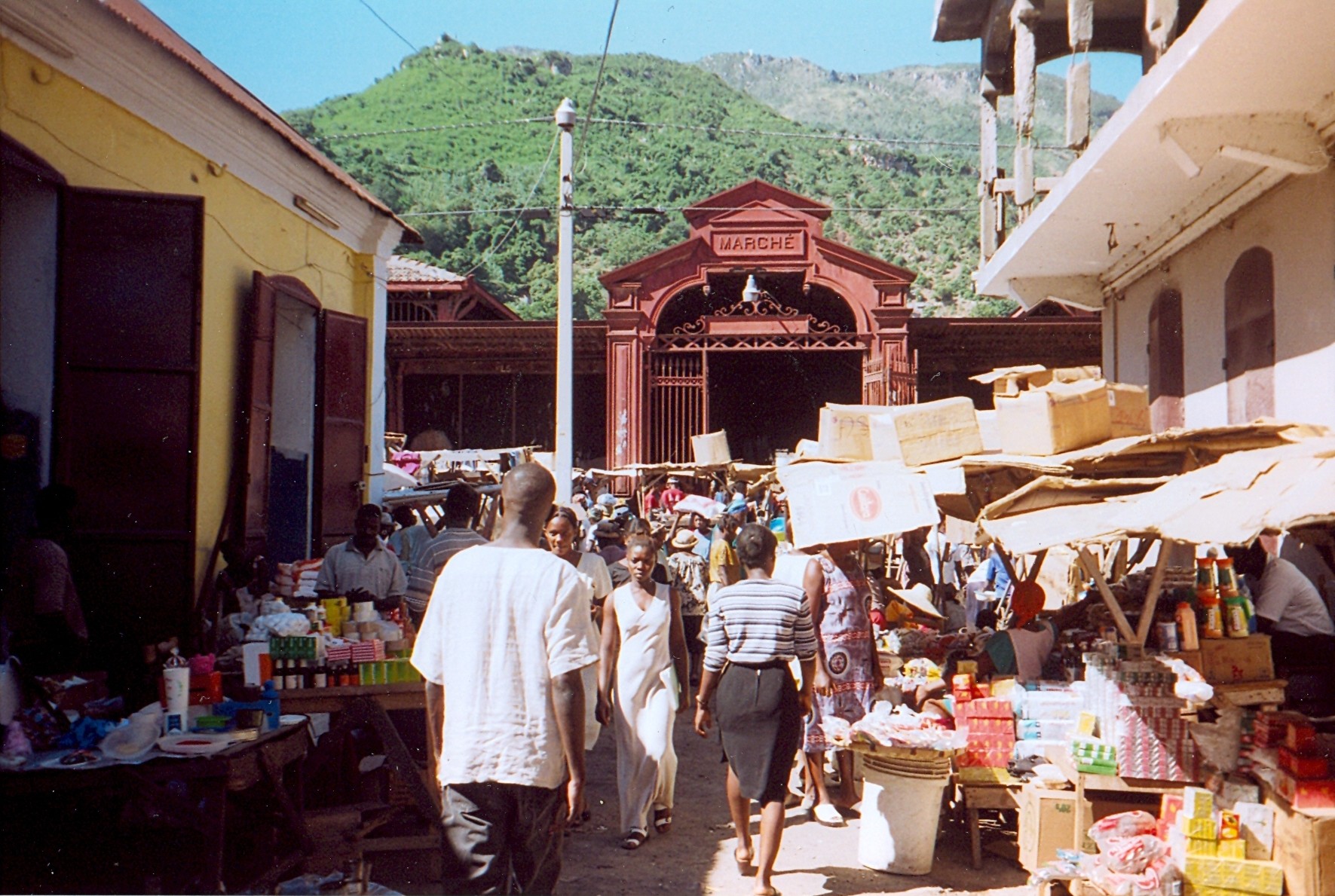
Cap-Haitien
Introduction
Cap-Haïtien sits on Haiti's north coast and serves as the capital of the Nord department. Once known as Cap-Français and later Cap-Henri under Henri I, the city earned the nickname the Paris of the Antilles for its wealth and sophistication, visible in its architecture and its artistic life. During the colonial period it was the capital of the French colony of Saint-Domingue from its formal foundation in 1711 until 1770, when the capital moved to Port-au-Prince. After the Haitian Revolution, it became the capital of the Kingdom of Haiti under King Henri I until 1820.
That layered history is the reason to come: you are visiting a place whose streets and buildings carry the marks of both the French colonial era and the early Haitian kingdom. The city's artistic life, noted since its wealthiest days, remains part of its character.
Before you go
Cap-Haïtien is generally safer than Port-au-Prince, but the general warnings that apply to travel in Haiti apply here too, so plan with that in mind. Arrange your transportation through your hotel where you can — it may be safer and easier than finding it on the street, though it will probably cost a bit more.
Getting there
Most visitors reach Cap-Haïtien by air, landing at Hugo Chavez International Airport (CAP), renamed from Cap-Haïtien International Airport in 2013. The airport sits a few kilometres southeast of the city on RN 6, only a few miles from downtown. Flying in from Port-au-Prince takes roughly half an hour to forty-five minutes. The terminal is small and has very few facilities — there is no ATM, for instance — so plan accordingly before you arrive.
Airlines serving the airport include Bahamas Air from Nassau, Sunrise Airways from Port-au-Prince, and InterCaribbean and Caicos Express Airways from Providencia. Taxi drivers may open with an inflated fare to take you into town, so agree on a reasonable price before you get in.
Getting around
Cap-Haïtien is compact, and walking is the most practical way to cover the central city. The historic core sits between the bay and the mountainsides, laid out in narrow grids, and most restaurants and bars are in this central, gridded part of town, so it makes a natural base for exploring on foot. As a legacy of the U.S. occupation, the north–south streets in the centre are named with single letters and the east–west streets with numbers; outside the central city, French street names take over. Bear in mind that the streets are generally narrow, much of the infrastructure is in need of repair, and the central area is flanked by mountainsides and urban slums, so it is worth staying oriented within the gridded core.
There is no rail, metro or tram network, and no formal public bus system a visitor can plan around, so motorised movement relies on taxis and motor-taxis, which are plentiful. There is no ticketing or pass system; you arrange and pay for each ride directly, and fares are a matter of negotiation, so agree on the fare before you set off. If you are arriving by air, Hugo Chavez International Airport (CAP) sits a few miles southeast of the city on RN 6; it is small with very limited facilities and no ATM, so bring any cash you will need. Taxis are the way into town, the transfer is short, and drivers may open with a high asking price, so negotiate before you get in.
Where to stay
Most of Cap-Haïtien's places to stay cluster along the Boulevard du Carénage, which faces the bay, or in the streets near the centre. On the waterfront, the Auberge du Picolet is a small hotel with a good restaurant and a reputation for its rum sours; breakfast is included in the bill. Nearby, the Hotel Beau Rivage occupies a big old house facing the bay and is generally described as more rustic than the Auberge, while the Habitation Jouissant sits in the hills above the city with a view over the bay and a bar, Lime Bar, that gets good reviews. Down the same boulevard you're within walking distance of Lakay and Kokiyaj, the latter a restaurant and small market stocking American and European items, and Deco Bar, a disco.
Near the centre of town, the Hostellerie du Roi Christophe is an Old World-style hotel in a former colonial mansion, set in lush grounds behind a big wall, with rooms in the mansion itself and in outlying houses, plus a bar, a restaurant and wireless internet. The Hôtel Mont Joli has a well-stocked gift shop, a bar and a restaurant. For something simpler, TheCoOp Guest House, a couple of blocks from the Christophe, is an affordable option with a meal-provided plan and special rates for volunteers. The Habitation des Lauriers overlooks the city, has a restaurant and bar, air-conditioning at night and a large jug in the lobby for filling water bottles, and can arrange taxis around the city and to the border. Hotel Le Paradis S. was renovated in early 2016. If you want the beach, Cormier Plage lies about 8 km north of the city on Route de Labadie, on a secluded white beach with ocean-facing rooms, a big restaurant and tiki bar, and breakfast included; the conch and the lobster salad come in for particular praise.
Food & drink
You'll find most of Cap-Haïtien's restaurants clustered near the waterfront or around the Hotel Roi Christophe, and seafood is the safe bet almost everywhere — lobster and conch in particular. Menus tend to mix Haitian cooking with French and American dishes, sometimes all on the same page. Wherever you eat, expect traditional Haitian food to mean rice and beans, flattened fried plantains (the savoury kind, not sweet), and pikliz, a spicy coleslaw.
- For a proper sit-down Haitian meal with some American and French options and decent pizza, try Lakay on Boulevard du Carénage; there's sometimes live music, and most seating is outdoors under umbrellas.
- Southwest of downtown, just past the gate, Croissant d'Or is a French bakery with good pastries that also does pizza and sandwiches, and next door Ti Boukan serves solid Haitian food and drinks with outdoor seating — lunch can be a little slow.
- At Rue 23 and Rue A, All System BBQ (known to everyone as Deny's) is a roadside, no-frills barbecue stand whose specialty is barbecued chicken in a tangy sauce with fried plantains, pikliz, avocado in season and macaroni salad; you can get it to go, and there's cheap Prestige beer plus a klerin stand next door.
- Auberge du Picolet on Boulevard du Carnage does good seafood, pastas and a steak sandwich, with fiercely spicy pikliz and excellent rum sours; the Hotel Roi Christophe has a restaurant in an airy old wooden building with Haitian and French specialties, pizza and burgers, plus a cosy bar.
- For a water view, Jardins de l'Ocean sits on a hill overlooking the sea, and Kokiyaj Market and Bar & Grill above the market at Boulevard de Carenage and Rue 26 serves American Creole and Haitian food; Coin du Café at Rue A and Rue 22 is a small air-conditioned spot for coffee and pastries.
Most restaurants double as drinking places. Prestige is the local beer, rum drinks are popular, and Barbancourt 5 star is the best local rum — try a rum sour made with lime, lemon and sugar. Kleren, the local moonshine, is sold on the street and in some shops, comes in flavours ranging from fruit and cinnamon to conch, and is often homemade, so drink at your own risk. For a night out, Riarmanita on Rue D near Rue 24 is a small, standing-room-only bar with friendly staff and dance music — there's no sign, so look for the open door and listen for the noise — and Decobar at Rue A and Boulevard du Carenage is a noisy, fun disco.
What to see and do
Start downtown, where the streets are lined with French colonial architecture that recalls an older New Orleans, and head for the wide promenade of Boulevard du Carenage along the bay for sea air and a view of the water. The Cathedral and the Grand Place are both worth a look, and the downtown shops and restaurants, though mostly aimed at locals, give you a feel for the city as it actually runs. The boulevard is also the place for a stroll, with bars, restaurants and craft shops along the way.
North of the city you'll find several beaches. Labadie, a walled resort compound reached by a paved mountain road, welcomes cruise passengers but is open to other visitors for a small fee, and from just outside it you can take a water taxi to Paradis, a secluded cove with a tiny tiki bar where locals will grill seafood for you on request. Cormier Plage, on the way to Labadie, has a large beachfront hotel, restaurant and bar, while Belli Beach is a small sandy cove with boats and hotels, and from there you can visit Labadie village. Inland, the nearby town of Milot is the gateway to the UNESCO World Heritage Site of Sans Souci Palace and the Citadelle Henri Christophe, both built by King Henri Christophe; the palace ruins are impressive, and the massive, renovated Citadelle is remarkable to see.
Three days in Cap-Haitien
Day one: Once you arrive at Hugo Chavez International Airport, arrange a taxi into Cap Haïtien and settle into the city before exploring on foot. Most travellers begin in the old colonial grid, where the street plan laid out under French Saint-Domingue still shapes the centre. Get your bearings along the waterfront and the main squares, and use an ATM while you are in the centre. Keep the first day unhurried: the city rewards wandering rather than rushing between sights.
Day two: Give the day to the monuments of the Kingdom of King Henri, the Haitian Revolution's northern capital. The scale of the citadel and the palace ruins above the city is the reason many visitors come to the Nord. Arrange a taxi or a guide early, since the climb takes most of a morning, and carry water. In the afternoon, return to the city and eat at a local spot in the centre.
Day three: Spend a slower day in Cap Haïtien itself, revisiting the colonial streets and the waterfront markets you passed on day one. If your flight leaves from Cap Haïtien International Airport, allow time for the taxi back. Flying in with Bahamas Air from Nassau, Sunrise Airways, InterCaribbean, Caicos Express Airways or Providencia means connections through the Antilles and the wider Caribbean, so check your onward timing before you head out.