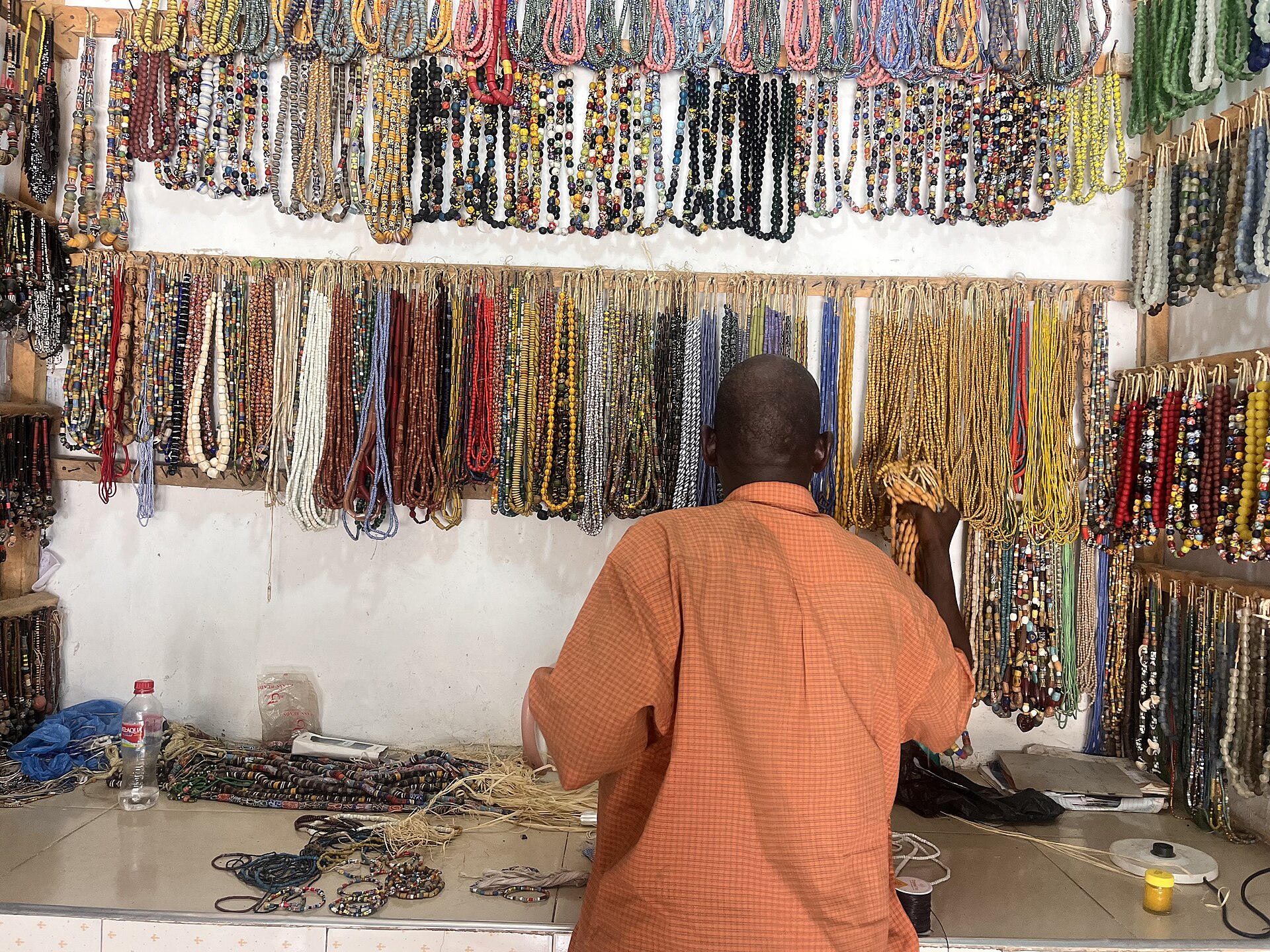
Koforidua
Introduction
Koforidua, known locally as K.dua or Koftown, is the capital of Ghana's Eastern Region. The city's streets show a blend of colonial and modern architecture, so expect older buildings and newer development side by side as you move through it.
Before you go
Koforidua is the commercial centre for Ghana's Eastern region and the New-Juaben Municipal district, so expect a busy, working town rather than a resort. Bear that in mind when planning: this is a place to base yourself for the surrounding area as much as a destination in its own right.
If you're arriving by road from the direction of Kumasi, the two-going-two-coming highway linking Adeiso to Oyoko through Koforidua serves as an alternative route, which is worth knowing when you map out your journey.
Getting there
Koforidua is reached by road, and there is no airport or harbour in the city. From Accra, the best approach is through Aburi; you can also come in from Accra via Suhum. If you are travelling from Kumasi or Accra, the route through Nkawkaw works, and from Akosombo you enter via Nkruakan. The drive from the capital, Accra, takes about two hours.
Koforidua sits within the New Juabeng Traditional Area, which has a paramount chief and many sub-chiefs. If your visit falls in the last quarter of the year, you may coincide with the Akwantukese festival, the main celebration of the people of Koforidua.
Getting around
Getting around Koforidua is easiest by vehicle rather than on foot. The city spreads across several neighbourhoods and surrounding settlements — including Effiduase, Asokore, Oyoko, Jumapo, Suhyen, Dansuagya, Betom and Srodae — so walking or cycling works only for short hops around your accommodation or the Central Business District. There is no metro, tram or urban rail service, so treat the city as a road-transport one: shared and private taxis and minibuses are the practical options. Most car transport stations cluster near the Total 2 and 3 petrol-filling stations in the Central Business District, making the CBD the natural place to start when you need a vehicle to another part of the city or to a surrounding town.
- Taxis are the most flexible way to move around and to leave the city; for longer trips a direct taxi is the fastest road option, though also the most expensive.
- Ride-hailing apps are not documented here, so arrange taxis directly rather than relying on an app.
- There is no direct public transport link to Accra. A common cheaper pattern is a taxi to Medie, then an AMA Department of Transport bus onward into the capital; driving yourself is the fastest and cheapest option overall if you have a vehicle.
- Market days on Mondays and Thursdays draw large crowds into the municipality, so expect roads and transport stations to be busier then.
- For day trips to nearby attractions such as Boti Falls, Akaa Falls, the Umbrella Rock, Obuo Tabri Mountain or the Akosombo Dam area, arrange a taxi or private vehicle rather than relying on scheduled transport.
Where to stay
Koforidua has a good spread of places to stay, from large business hotels to small guesthouses. On the outskirts of the business district, Capital View is an African-style business hotel set in tropical gardens, with standard rooms, executive rooms, suites and apartments, and restaurants, nightclubs, shops and markets within minutes. MacDic Royal Plaza, at Medical Village beneath the Obuo Tabiri Mountain and surrounded by the Akuapim range, is a deluxe hotel with air-conditioned rooms, conference and banquet halls, a tennis court, swimming pool, night club, children's playground and salon, plus an indoor and outdoor restaurant bar; its balconies look over the pool, and it suits holidaymakers after rest and relaxation close to nature, as well as walkers and botanists. Bedtime Hotel, on the slope of the Koforidua Polytechnic dual carriage road, has a swimming pool, gym, conference rooms, restaurant and executive lounge.
- St. James in Nyamekrom, near Pentecost Senior High School, offers free WiFi, an on-site restaurant, free private parking, TVs in all rooms and a 24-hour front desk.
- J. Met Hotels at Old Estate, SSNIT Junction on Nyamekrom Road, is a small hotel with 27 rooms.
- In New Akim Tafo, Echo Guest House in the Tafo Quarters Area is a five-minute walk from the Cocoa Research Institute of Ghana; rooms have ceramic floor tiles, TVs, armchairs and en suite bathrooms, and there is an on-site restaurant serving local and continental dishes, a bar, a large parking lot and security staff.
- Also in New Akim Tafo are Oak Ridge Lodge and Serene Cottage.
Food & drink
Koforidua has a handful of places to eat, spread across the town centre and the Adweso area. You'll find Leesco at the SIC building, Sophisticat at GNAT hall, Havilla at Oteng house and Chris Cafe at the SSNIT Building, while Bar 205 and The Boamah's are both out in Adweso.
For a proper local meal, try fufu with light soup or palmnut soup, or kokonte served with bush meat. To drink, you can go for palm wine or a range of soft drinks and juices, including coconut juice and mango juice alongside the usual minerals such as Fanta, malt and Coca-Cola.
What to see and do
Koforidua's natural setting gives you most of what there is to see. Obuo Tabri Mountain is the dominant feature, held sacred by local communities but also visited for its scenery. Waterfalls lie in the surrounding area, notably Akaa Falls and Boti Falls. At Boti Falls you can descend the steps down to the base of the falls, and look out for the palm-nut tree that grows with three branches from a single trunk. Elsewhere in the area you can find the Umbrella Rock and a fork-like palm tree.
Hiking is the main activity for visitors, and the hills and falls around the city make it the natural way to take in the landscape.
When to go
Koforidua is hot and humid throughout the year, so plan for warmth and moisture whenever you visit. The main rains usually fall from April to June, bringing wet, humid days and muddy going around town; this is the period most likely to disrupt outdoor plans.
In wetter years, substantial rains can also return in September and October, so a visit then can turn rainy without warning. Outside those spells, expect the city to stay hot and humid as it does year-round.
Three days in Koforidua
Day one: Start in Koforidua itself, getting your bearings in the Central Business District, where the markets and streets give you a feel for the Eastern regional capital. From the CBD you can take taxis to nearby quarters such as Betom, Srodae or Effiduase, each with its own everyday character, and use the town as a base for the days ahead. If you arrive from Accra, the road via Suhum is the usual approach, and Koftown is a handy reference point as you settle in.
- Central Business District
- Betom
- Srodae
- Effiduase
- Koftown
Day two: Head out into the wider New Juabeng Traditional Area, visiting towns and villages such as Oyoko, Jumapo, Suhyen, Asokore and Dansuagya, which sit close to Koforidua and show the surrounding countryside and community life. The area falls within the Eastern Region, and the traditional capital of the New Juabeng Traditional Area gives context to the chieftaincy and festivals, including Akwantukese, that shape local identity. Arrange your transport in advance, as taxis and shared rides are the practical way to link these places.
- Oyoko
- Jumapo
- Suhyen
- Asokore
- Dansuagya
- New Juabeng Traditional Area
- Akwantukese
Day three: Use your last day for a wider loop, choosing between routes toward Aburi, Nkawkaw, Akosombo or Kumasi depending on your onward plans, or a shorter trip to Adeiso. If you are returning to Accra, the Suhum road is the direct option. Keep the pace relaxed, allow time for the journey, and confirm transport arrangements before you set out, since distances between these towns are best covered by road.
- Aburi
- Nkawkaw
- Akosombo
- Kumasi
- Adeiso
- Suhum
- Accra