Coventry
Introduction
Coventry is a cathedral city in the West Midlands, set on the River Sherbourne. It has been a substantial settlement for centuries: founded in the early Middle Ages, its city status was formally recognised in a charter of 1345. The city is governed by Coventry City Council and the West Midlands Combined Authority.
Before you go
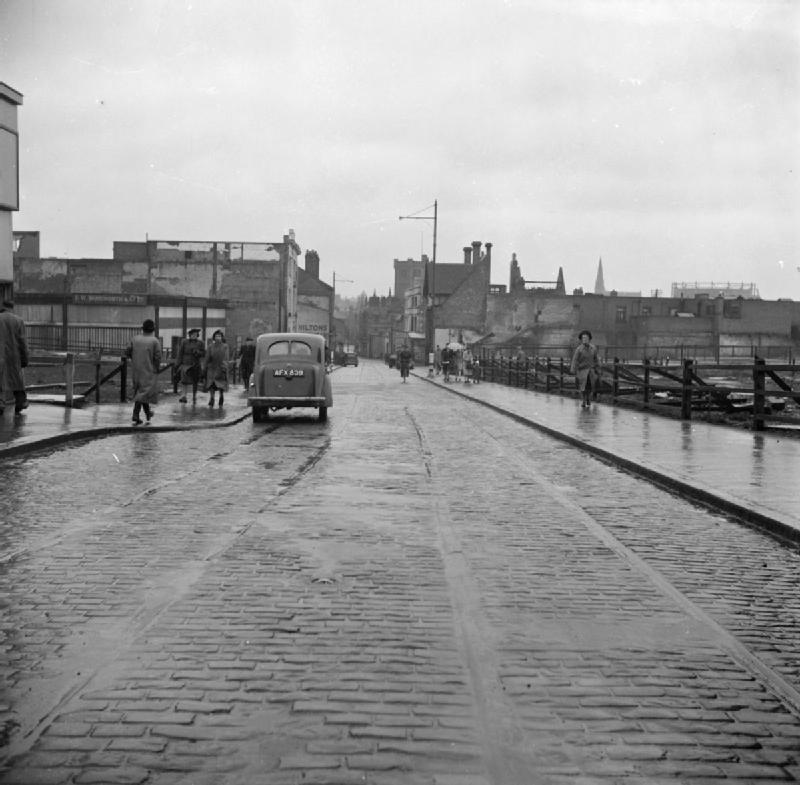
Before you go, it helps to know a little of Coventry's story, since it shapes what you'll see. The area has been inhabited for over a thousand years, and the city is tied to the legend of Lady Godiva, who rode naked through the streets to win relief from her husband's oppressive taxes on his tenants; the tale of Peeping Tom is said to come from the same story. Coventry was a hub for the cloth trade in the Middle Ages and for the automotive industry in the late 19th and early 20th centuries, and its industrial strength made it a target in the Second World War. German bombing raids from 1940 to 1942, known as the Coventry Blitz, destroyed much of the city's infrastructure, with the single night of bombing in November 1940 causing the greatest damage.
In the decades after the war, most old medieval dwellings were not rebuilt, replaced instead by modern constructions, often brutalist concrete structures. The city has since undergone extensive remodelling, most notably in the city centre, making it more pedestrian-friendly, and major regeneration projects such as the Phoenix Initiative have aimed to make Coventry a more attractive place. As in the rest of the UK, call 999 or 112 in an emergency for ambulance, fire and police services. For a city of its size, Coventry has a rather low crime rate, particularly in the city centre, helped by its well-lit pedestrian sections, but take the same general precautions you would anywhere else in the United Kingdom.
Getting there
By road, Coventry sits near the centre of the UK motorway network. The M6 passes to the north of the city, the M1 is reachable via the A45 towards London and the M69 northbound, and the M40 is accessed along the A46. For a more scenic approach, come in along the A46 and exit at Kenilworth, driving through the town centre past Abbey Fields park before turning right towards Coventry; the broad, tree-lined Kenilworth Road makes a fine boulevard into the city. A Park and Ride facility is also available. Be warned that the city's ring road can be very confusing for first-time users, with its single on/off ramps, so it is worth having someone who knows it drive you around first.
By rail, Coventry station sits on the main London Euston to Birmingham route, with trains from Euston roughly three times an hour taking about an hour, and advance tickets often much cheaper if booked far enough ahead. An alternative hourly service from Euston takes about an hour and three-quarters. Trains from central Birmingham are more frequent still, with a journey of around 25 minutes, and Birmingham International, which serves the NEC and Birmingham Airport, is about 10 minutes away. Direct trains also run to Bournemouth via Leamington in the south, and to Liverpool, Manchester and Scotland in the north. By plane, Birmingham Airport is closer to Coventry than to central Birmingham; take the free shuttle to Birmingham International railway station for frequent trains into Coventry, or drive in a little over 30 minutes. By boat, the Coventry Canal starts just outside the ring road north of the city centre and links with the Oxford Canal at Hawkesbury Junction, the Ashby-de-la-Zouch Canal at Marston Junction near Bedworth, the Birmingham and Fazeley Canal at Fazeley Junction near Tamworth, and finally the Trent and Mersey Canal at Fradley near Lichfield. Operating a boat on the canal requires a licence from the Canal and River Trust, and boats can be hired from various providers on the network.
Getting around
Buses are the main way to get around Coventry, with a large number of routes all operated by National Express. The sheer number of routes can look intimidating at first, but the network is straightforward once you know your route. Fares within the city boundary are standardised, and single journeys that stay within the ring road are cheaper still. Daysaver tickets give you unlimited travel in the Coventry area for a day, and if you plan to travel frequently, travelcards are worth considering: an adult Coventry Faresaver allows unlimited travel at any time, while an adult Coventry Off-Peak Faresaver is valid all day on Saturdays, Sundays and bank holidays, and on weekdays only during the middle of the day and from the evening onwards. Pool Meadow Bus Station, not far from the cathedral and next to the Transport Museum, is the hub for both local and national buses. If you arrive by Megabus from London, note that it drops you at Cannon Park near Tesco rather than the city centre, so factor in an onward bus or taxi.
Central Coventry is fairly flat and well suited to walking and cycling, and large parts of the central business district are pedestrianised, which makes exploring on foot pleasant but means the centre is not especially car-friendly. Cyclists can use the ring road but are best advised not to; quieter side roads cover the same journeys. If you do drive, the ring road around the city centre is quick but has a reputation for confusing first-time users, with sudden exits and single on-and-off ramps, and the suburbs suit car travel much better, though rush hours are busy. Many taxi firms operate in the city: black cabs can be flagged down on the street, but private hire taxis must be booked in advance, and booking ahead is the reliable approach at busy times. Local firms include Allens Taxis, Central Taxis, which offers student rates, Yellow Taxis Coventry, and Taxi Coventry, which runs a 24-hour service with fixed prices.
Where to stay
Most of Coventry's hotels cluster in or near the city centre. The Britannia Hotel sits on Fairfax Street right beside the cathedral, and the Ramada on The Butts is within walking distance of the centre. The Premier Inn at Belgrade Plaza on Bond Street is convenient for the Belgrade Theatre and has parking for an extra charge. If you're arriving by car from the south, the Hotel ibis Coventry South is a quiet motel set in woodland at Whitley Business Park, east of the A444.
- Britannia Hotel – city centre, adjacent to the cathedral; pets allowed
- Ramada Coventry – The Butts, walking distance from the centre
- Premier Inn – Belgrade Plaza, handy for the Belgrade Theatre, paid parking
- Hotel ibis Coventry South – quiet woodland motel east of the A444
Further out, the Royal Court Hotel occupies a Grade II-listed building in Keresley, roughly three miles from the centre, with some rooms looking over the countryside and access to an adjoining health club and gym for an extra charge. Coombe Abbey is a mid-range hotel in a fine setting within the abbey grounds, while Barnacle Hall offers bed and breakfast in a 16th-century farmhouse with just three rooms a few miles north of the city. Both Coombe Abbey and Barnacle Hall accept assistance dogs only, and Barnacle Hall does not take credit cards.
Food & drink
Coventry's eating options span cafés, restaurants and takeaways, with a wide range of cuisines from Thai to Italian on offer. Indian food is particularly well-represented, in a broad range of quality. Most places cluster in the city centre, though it's worth travelling out to the suburbs if you're after something different. For a cheap bite, the Park Bistro in War Memorial Park is locally owned and relaxed, serving coffee and refreshments, while Snax in the City is a city-centre greasy spoon with big portions, pleasant staff and a wide choice of hot and cold meals to eat in or take away — the value is the strong point, even if some dishes are distinctly average. Elsewhere you'll find bagels, pizza, fish and chips and more around Far Gosford Street and beyond.
For something more substantial, the Golden Cross serves British food, and international kitchens include the Botanist, Bombay Joe's for Indian and Bangladeshi cooking, Turmeric Gold in a stylishly themed medieval building on Spon Street, Zorbaz for Greek food with music and dancing, and Habibi for Lebanese. Expect long waits at some of these, but quality that makes up for it. At the top end, Ristorante Da Vinci sits on Earlsdon Street. Coventry's bar scene is mostly concentrated along reconstructed medieval Spon Street on the western edge of the centre, including the adjacent Skydome complex with its nightclubs. The Old Windmill is a cosy traditional pub with numerous cask ales, and the Golden Cross near the cathedral is one of the oldest pubs in the city. In the centre you'll also find the usual pub chains and bars near Millennium Place, while the eastern side near the university has pubs popular with students. The gay scene is limited, so head to Birmingham's Gay Village for more. Further out, Craven Street in Chapelfields, among Victorian-era watchmaker's cottages, has several traditional pubs, and there are canal-side options too.
What to see and do
Coventry's past is written into its streets, and the Cathedral Quarter is the place to start. The medieval Gothic Cathedral of St Michael, largely destroyed in the 1940 bombing raid, survives as a shell of tower, spire and outer walls, with the new cathedral built beside it in the post-war decades and noted for its modern design, its great tapestry of Christ enthroned, its stained glass and the sculpture of St Michael's Victory over the Devil on the façade. Nearby, remains of the monastic settlement founded by Lord Leofric are worked into the priory gardens, with an interpretive centre for the finds. A short walk away, St Mary's Guildhall is a 14th-century building where Mary, Queen of Scots was once detained, and Spon Street holds a dense concentration of the city's medieval structures, including buildings moved there after the Blitz. For museums, the Coventry Transport Museum holds a vast collection of British road transport, while the Herbert Art Gallery and Museum covers local and natural history with exhibits on Lady Godiva and the Coventry Blitz. The Midland Air Museum at Baginton features an Avro Vulcan bomber and a centre devoted to Coventry-born jet pioneer Sir Frank Whittle, and the Lunt Roman Fort nearby is a partial reconstruction with a museum of Roman life. The city's stages include the Belgrade Theatre, the first civic theatre built after the war, and the Warwick Arts Centre on the university campus. Outdoors, you can follow the Coventry Canal Art Trail, a five-mile outdoor gallery of artworks with pubs along the way, or take in the Green Flag grounds of Allesley Park, the woodland and birdwatching at Coombe Country Park, or War Memorial Park, opened as a tribute to the fallen of the First World War. In Broadgate, the Lady Godiva Statue commemorates the legend of her ride against her husband's taxes, and the Whittle Arch spans Hales Street beside the transport museum.When to go
Coventry has a temperate UK climate, with cool winters, mild summers and moderate rainfall spread across the year. Winter days are short — sunrise around 8:15AM and sunset around 3:45PM — and the cold is occasionally broken by snowfall in January or February that can disrupt travel. Summer brings long daylight, from roughly 4:45AM to 9:30PM, and mild temperatures, though rain remains possible at any time.
Because rainfall is moderate throughout the year rather than confined to one season, there is no reliably dry window to plan around. Pack for changeable conditions whatever the season, and if short daylight matters to your sightseeing, favour the longer summer days.
Three days in Coventry
Day one: Start in Coventry itself, a city in the West Midlands shaped by the River Sherbourne. Its medieval past is bound up with the story of Lady Godiva and Peeping Tom, and the city was later scarred by the Second World War, when German bombing in the Coventry Blitz of November left its mark. The Phoenix Initiative reflects how Coventry City Council and the West Midlands Combined Authority have approached renewal. Begin by getting your bearings in the city centre before deciding how to spend the rest of your time.
Day two: Use Coventry as your base for a day trip. Kenilworth is within reach, with Abbey Fields and Kenilworth Road among the places you can pass through. If you prefer to stay closer, the Park and Ride can help you move around without bringing a car into the centre.
Day three: Look outward to the wider region. London Euston is a direct rail destination, and trains also connect Coventry with Birmingham, Birmingham International, the NEC and Birmingham Airport. Direct services extend to Bournemouth and Leamington. Be sure to check times before you set out, as connections vary.