Bradford
Introduction
Bradford is a city in West Yorkshire, England, lying approximately 9 miles (14 km) east of Leeds. It grew into a municipal borough in 1847 and received a city charter in 1897; since the 1974 reform, city status has belonged to the wider City of Bradford metropolitan borough.
Today the city forms part of the West Yorkshire Built-up Area, with Leeds its nearest large neighbour to the west. The wider metropolitan borough is one of the most populous districts in England, so expect a substantial urban centre with a broad spread of surrounding towns and suburbs.
Before you go
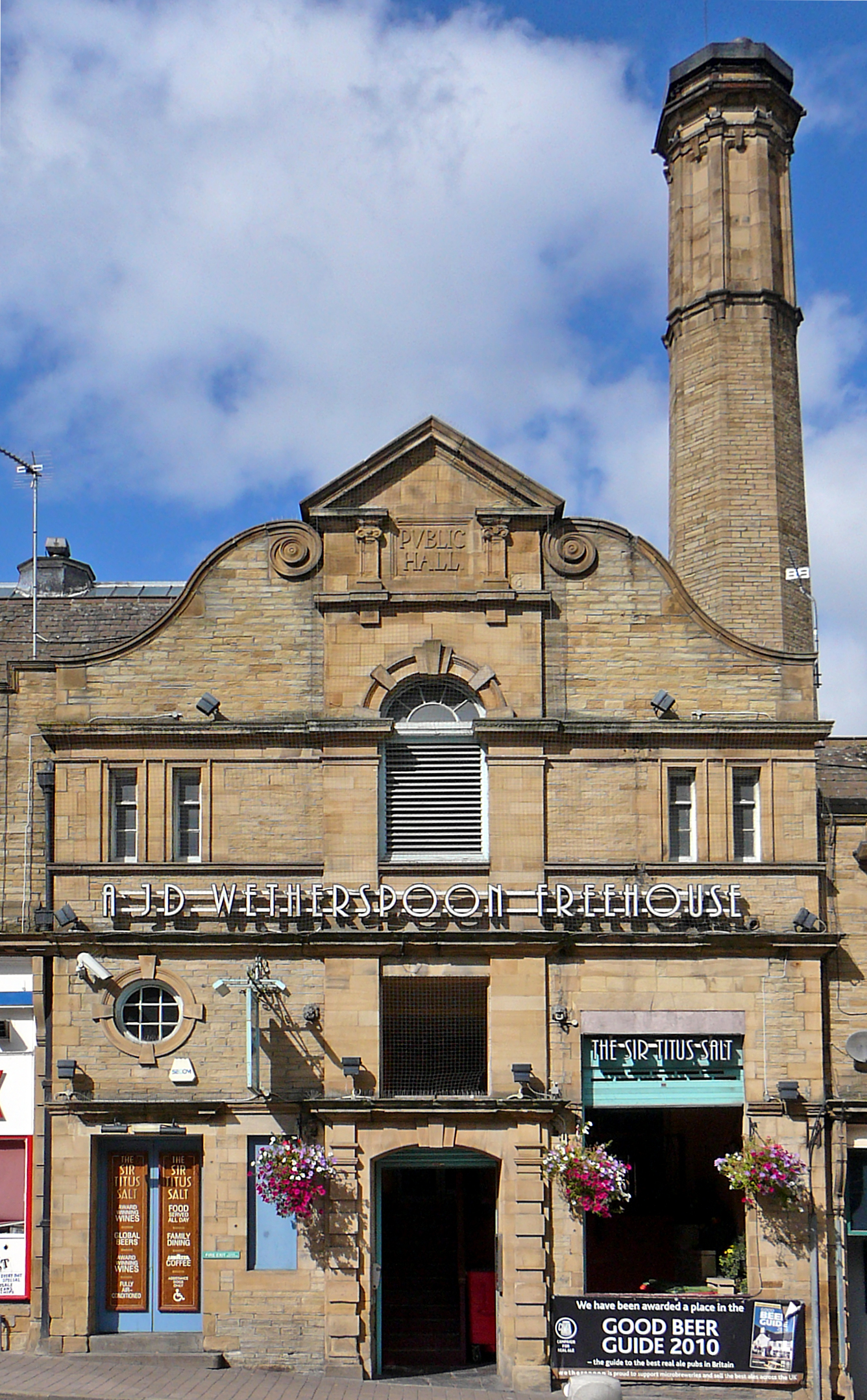
Before you go, it helps to understand what shaped Bradford. For centuries it was a wool-processing town, but it stayed small until the 19th century, when the textile industry moved from cottage weaving to mass production. Dyeing, fashion retail and metal-working grew alongside the mills, and the city drew in skills and labour from far and wide: German-Jewish wool merchants and dye-makers, Irish flax and linen workers from County Mayo, and Yorkshire people leaving agricultural life behind. The population grew ten-fold, great mill complexes and neo-Gothic public buildings went up, and the teeming streets suffered appalling squalour and pollution. One enlightened industrialist, Titus Salt, tried to improve his workers' conditions, but eventually despaired of Bradford and built a new model town at nearby Saltaire, now a UNESCO cultural site. In the 20th century, further immigration came from East Europe around the war years, but the largest group of incomers were recruited from Pakistan: traditional weavers from Mirpur, whose skills Bradford sought. They arrived in the 1950s and 1960s just as the textile trade entered long-term decline, unable to compete with cheap imports. The city became tatty, with disused factories crumbling into brownfield sites and a blighted centre. It began to turn a corner from 1983, when what's now called the National Science and Media Museum created a tourist destination; film tourism expanded, and other urban regeneration followed. There's still a lot to do. On safety, the city's crime rate is lower than that of similar large cities such as Leeds or Manchester; use common sense, avoid wandering off the beaten track, and steer clear of Lidget Green, Manningham and Low Moor after dark. The city centre is well-policed and seldom sees trouble.Getting there
Leeds Bradford Airport (LBA) sits about ten miles north-east of the city centre along the A658, with a good choice of flights from Western Europe — Paris, Brussels, Amsterdam, Düsseldorf and Dublin among them — and UK services from Southampton, Exeter, Belfast and Glasgow. There is no motorway or rail link to the airport, so road traffic can make the journey slow; buses 737 and 747 run between Bradford Interchange and the airport roughly every 30 minutes, taking about 50 minutes, with the 737 going via Shipley and the 747 via Greengates on its way to Harrogate. Other buses connect the airport with Leeds, Otley, Ilkley and Keighley, and taxis are plentiful. For long-haul flights, Manchester Airport is the better option: take any train towards Leeds and change at Huddersfield for Bradford Interchange, a journey of about 1 hour 40 minutes.
Bradford Interchange is the main railway and bus station, with trains to Manchester Victoria and Chester, Preston and Blackpool North, Leeds and York, and Huddersfield. A few direct trains run to London King's Cross, but changing in Leeds is usually quicker; change there too for Birmingham and the southwest, and for Newcastle and Scotland. Bradford Forster Square, half a mile north of the Interchange, has trains from Leeds via Shipley, from Ilkley, and via Saltaire to Skipton. By road, the M62 crosses the Pennines and the M606 spur leads into the city from junction 26. First Bus X6 runs to Leeds every 10 minutes Monday to Saturday and every 30 minutes on Sunday, taking 35 minutes, while bus 72 follows a similar route with more stops in about 50 minutes; the X11 also runs to Leeds and the X63 to Huddersfield. National Express runs direct buses from London Victoria as well as from Manchester city and airport, Liverpool, Birmingham, Oxford, Cardiff, Hull and Newcastle upon Tyne, and Megabus offers direct and change services from London Victoria.
Getting around
Central Bradford is compact enough to explore on foot, and walking lets you take in the Victorian architecture, including the grand Italianate city hall, along with the National Science and Media Museum, the city park, the Alhambra theatre and Cartwright Hall. For longer hops across the wider borough and to neighbouring towns, buses and trains do the work. Bradford Interchange combines the main railway station and the bus station in one place, making it your default hub; Bradford Forster Square sits about half a mile north and serves different lines, so check which station your service uses before you set out. From the Interchange there are trains to Leeds, York, Huddersfield, Manchester Victoria and Chester, Preston and Blackpool North, and a few direct services to London King's Cross — though changing at Leeds is usually quicker, and it is also the change for Birmingham, the southwest, Newcastle and Scotland. Forster Square has trains from Leeds via Shipley, plus Ilkley and, via Saltaire, Skipton.
West Yorkshire Metro publishes timetables and route maps for the whole network, so check there before travelling by bus. The likeliest bus trip is to Leeds: First Bus runs the X6 every ten minutes Monday to Saturday and every half hour on Sunday, taking about 35 minutes, while bus 72 follows a similar route with more stops and takes about 50 minutes. Bus X11 also runs to Leeds, and bus X63 goes to Huddersfield. National Express and Megabus both run direct long-distance coaches from London Victoria and other cities. Taxi ranks are scattered across the city centre, but it is often cheaper to call and book; Hackney Carriage white cabs can be flagged down anywhere within the city, and Metro Taxis take bookings with no call-out charge. Driving, by contrast, is a tedious business — the many terraces open directly onto narrow thoroughfares, so you are often stuck behind a van waiting to turn right against oncoming traffic, and no sooner does it succeed than a taxi darts out from the left to take its place before the lights ahead turn red. For most visits, public transport and walking will be less stressful.
Where to stay
Bradford's accommodation is concentrated in the city centre, with the main chains well represented. The Holiday Inn Express sits at the Leisure Exchange on Vicar Lane, a functional option that lacks air conditioning, so upper-floor rooms can be uncomfortable during hot summer spells. The Premier Inn is also on Vicar Lane, while the Leonardo Hotel (formerly Jurys Inn) occupies a spot on Thornton Road and the Midland Hotel can be found on Cheapside. A Travelodge operates on Valley Road, with check-in from 3PM and check-out at noon.
- Holiday Inn Express Bradford City Centre — Leisure Exchange, Vicar Lane; functional chain rooms, no a/c.
- Premier Inn — Vicar Lane.
- Leonardo Hotel (formerly Jurys Inn) — 2 Thornton Rd.
- Midland Hotel — Cheapside.
- Travelodge — 2 Valley Rd; check-in 3PM, check-out noon.
- Grand Victoria Hotel — Bridge Street, opposite Interchange station; a hotel that is showing its age.
Food & drink
Bradford's eating scene is dominated by Pakistani and Kashmiri cooking, and several long-standing places have become local institutions. Karachi Restaurant is a cheap and cheerful Pakistani spot that's BYOB and cash only, while The Kashmir on Morley Street pairs a restaurant upstairs with a cafe-style downstairs, keeps relentlessly tatty decor, and serves good food most nights at very low prices. For something more up-market, Mumtaz offers Pakistani-Kashmiri cooking in alcohol-free surroundings, and Omar's Balti House wins praise for its food and service, with a family-sized naan that's humongous and a bring-your-own-alcohol policy. Akbars, a modern curry house a couple of miles from the centre, is pricier but good value, with notably hot spices and a packed, noisy room where booking is advised at weekends. If you want a break from curry, Mamma Mia near Forster Square Station is a reliable Italian chain. For drinking, Bradford favours proper pubs over style bars. The Fighting Cock is a free house in the old style with an excellent range of real ales, bottled beers and good grub, a ten-minute walk out of the city centre but worth the trip. The Corn Dolly near Forster Square Station is another free house with plenty of guest ales, great food and several CAMRA awards. The Shoulder of Mutton is a Samuel Smiths pub pouring the regular brews at low prices, with a beer garden that's a nice sun-trap and allows smoking. The Sun is a long-established gay pub with drag nights, karaoke, quiz and cabaret.What to see and do
Little Germany is a district of Victorian buildings put up during the boom years of the wool trade, many of them listed, and now used for homes and businesses. The National Science & Media Museum on Little Horton Lane covers the history of photography, film and television with interactive exhibits and an IMAX cinema, and screens archive episodes of programmes such as Doctor Who, The Clangers and Coronation Street. Bradford Industrial Museum at Moorside Mills in Eccleshill shows early industry with working textile machinery, plus a car museum and a mill manager's house. The Peace Museum recounts the stories of people who worked against conflict, violence and inequality. Bolling Hall Museum, one of the oldest buildings in the city with parts from the 14th century, has rooms in different period décor. The Bradford Police Museum covers policing, criminal justice and punishment from the early 19th century. To the west, Thornton is where Patrick Brontë was curate and where the Brontë sisters and Branwell were born; Haworth, a few miles further northwest, is where they grew up and began their writing careers. For theatres, try the Alhambra on Morley Street, the University's Theatre in the Mill, or Bradford Playhouse on Chapel Street. Cinemas include Cineworld on Vicar Lane, the Odeon at Gallagher Leisure Park, The Light on Broadway and the IMAX in the National Science & Media Museum. Concerts are held at St George's Hall, and several pubs have live music in the evening. Bradford City play football at Valley Parade, north of the centre, and Bradford Bulls play rugby league at Odsal, with the women's team also in the top tier; the rugby season runs from February to October. Bradford Mela takes place in July in Lister Park, the Family Film Festival in August, and the Widescreen Film Weekend in late September or early October at Pictureville Cinema.When to go
Bradford has a maritime climate, so you can expect limited swings between the seasons and rain spread fairly evenly across the year. Summer is the warmest stretch, though the warmth is modest by most standards, and rain remains possible just as it does in every other month — don't count on long dry spells whenever you visit.
Winter is the coldest period, with air frost a regular feature of cold nights and the lowest temperatures historically falling in January. Because the weather station sits in an elevated suburban spot, exceptionally low temperatures are unknown here, but you should still be prepared for frosty nights if you travel at this time of year.
Three days in Bradford
Day one: Start in Bradford itself, in West Yorkshire, England, and get your bearings in the city centre. Today the city is one of the youngest in the country, but its story runs deep: it grew rich on wool, and the West Yorkshire Built Area around it was shaped by dyeing and the textile trade. Before long, German, Jewish and Irish migrants arrived, many of the Irish from County Mayo, and you can trace that layered past in the Victorian architecture, including the Gothic City Hall. One name to hold on to is Titus Salt, whose model village at Saltaire is a UNESCO World Heritage Site and an easy trip out from the centre.
- City centre and the Gothic City Hall
- Saltaire, the UNESCO-listed model village built by Titus Salt
Day two: Give the day to museums and the city's newer arrivals. The National Science and Media Museum sits in the centre, and there is plenty around it to fill your time. In the later twentieth century, migrants came from East Europe and from Pakistan, particularly Mirpur, and they reshaped whole districts. They settled in Lidget Green and Manningham, so walk those neighbourhoods and eat where the communities eat. If you need to reach the city from outside, Manchester and Leeds are close, and Leeds Bradford Airport (LBA) is the local gateway.
- National Science and Media Museum
- Lidget Green and Manningham
Day three: Use your last day for the edges of the city and a wider view. Low Moor is worth a look, and from there you can see how Bradford sits within West Yorkshire, with Leeds and Manchester within reach and Western Europe a short flight away via Paris. Before you leave, take one more walk through the centre and let the mix settle: a wool town that became a migrant city, still changing.
- Low Moor
- City centre, for a last walk