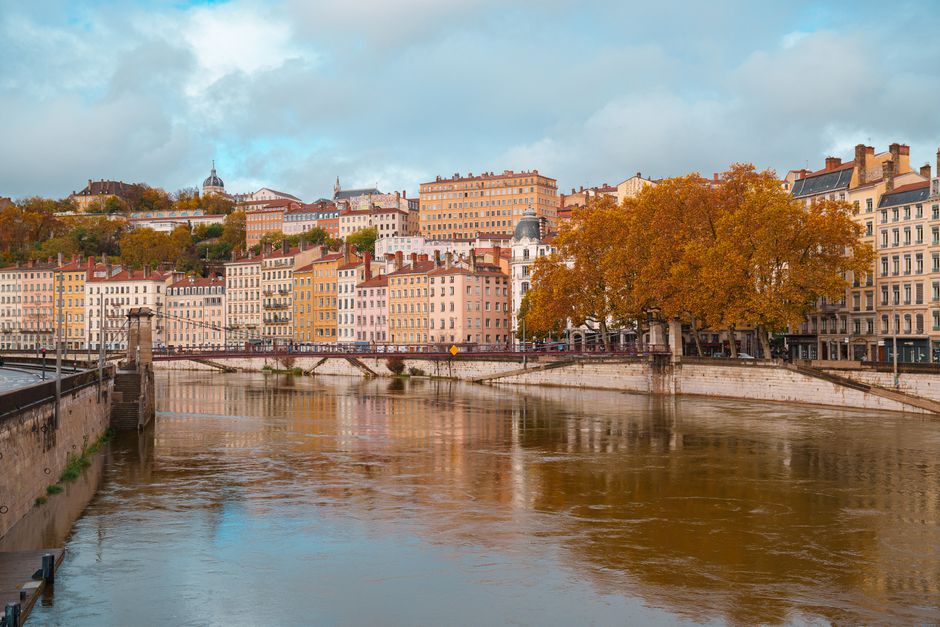
Lyon
Introduction
You will find Lyon situated in the heart of France at the confluence of the Rhône and Saône rivers. Located to the northwest of the French Alps, the city serves as a central point between major regions of the country.
Before you go
Prepare to explore a city that serves as an archetype of heritage, where your journey will take you through layers of history spanning over two millennia. Because the city never suffered a major disaster or a complete redesign by urban planners, you can experience a unique diversity of architecture in one location, ranging from ancient Roman ruins and Renaissance palaces to contemporary skyscrapers. You will find that the city's identity is deeply rooted in its role as a former capital of the Gauls and a historic center for silk weaving, printing, and early Christian communities.
- Experience the distinct atmosphere of different neighborhoods, such as the bustling Croix-Rousse with its left-wing leanings or the preserved Renaissance architecture of Vieux Lyon.
- Navigate a vibrant metropolis that balances its historical status as a center of trade and industry with a modern, growing economy and an international presence.
- Explore a landscape that continues to evolve, from the revitalized banks of the Saône to the modern business district in Part-Dieu.
Getting there
You can reach the city by plane via Lyon–Saint-Exupéry Airport, which is accessible from various European hubs and offers limited intercontinental flights. From this airport, you can take the RhônExpress light rail to the Part-Dieu station in under 30 minutes, or choose a local bus service to reach different transit points. Alternatively, flying into nearby airports like Geneva or Grenoble provides additional options, with shuttle buses or trains connecting you to Lyon. For those arriving from Paris, taking a TGV high-speed train directly from Charles de Gaulle airport to Part-Dieu station is a convenient way to bypass the local airport transfer.
Train travel is a primary way to reach the city from other regions of France and international destinations like Brussels, Milan, and Barcelona. You can arrive at Gare de Lyon-Part-Dieu, located in the heart of the business district, or at the historic Gare de Lyon-Perrache, which is conveniently situated near the city center. For those traveling by bus, international services typically stop at the Perrache station. If you are driving, several major highways connect Lyon to destinations such as Paris, Marseille, and Geneva; you can utilize park-and-ride lots located near metro or tram lines if you prefer not to navigate the city center in your car. Cyclists can also reach the area via the ViaRhôna route along the Rhône river.
Getting around
The city center is compact and easily navigated on foot, with most attractions reachable by walking. For instance, the stroll from Place des Terreaux to Place Bellecour takes about 20 minutes, and metro stations are generally located within a 10-minute walk of one another. When crossing major axes, stay alert as traffic is dense.
The TCL public transportation system is highly efficient, providing extensive coverage for central areas, campuses, and eastern suburbs. You can travel easily by tapping a contactless bank card or mobile wallet on the reader; this allows for unlimited transfers across all modes of transport. The network includes four metro lines, several tram lines, and over 130 bus routes, including specialized articulated trolley buses. For those preferring to cycle, there are numerous safe routes and a public bike-sharing service called Vélo'v with over 300 stations. If you prefer to travel by car, be aware that traffic is dense and parking in the city center is difficult.
Where to stay
You can find a wide variety of accommodations across the city, ranging from major international chains like Sofitel, Hilton, Best Western, and Accor to unique independent hotels. While finding a room is generally easy, you should plan ahead if your visit coincides with the Fête des Lumières or major trade shows such as SIRHA and POLLUTEC, as these events can result in full occupancy throughout the area.
Depending on your preferred atmosphere, you can choose from several distinct districts:
- The 2nd arrondissement (Presqu'île) is where the action is centered.
- The 4th arrondissement offers a "village" mood on the Plateau of the Croix-Rousse hill.
- The 5th arrondissement features historical sites and quiet residential neighborhoods in Vieux Lyon and Fourvière.
- The 6th arrondissement is known as the wealthiest part of the city.
- The 1st arrondissement maintains a "rebel" character as the home of former silk workers.
Food & drink
Experience the culinary heritage of Lyon by visiting a bouchon, a traditional restaurant offering hearty portions and local specialties. These establishments often feature dishes made from affordable ingredients like offal, such as salade lyonnaise with bacon and poached egg, saucisson chaud (hot sausage), or quenelle de brochet. You can also sample tablier de sapeur, andouillette, rognons de veau à la moutarde, or the creamy gratin dauphinois. While many restaurants offer a selection of local and French cuisine, be cautious in tourist areas like Rue St Jean; avoid places with large signs advertising "genuine" bouchons or extensive menus displayed outside, as these are often tourist traps. To ensure a quality experience, it is highly recommended to book a table in advance, particularly for dinner.
The city's dining scene extends far beyond traditional fare to include international flavors, bistros, and high-end establishments. For a casual bite, you can find numerous bakeries offering fresh baguettes and sandwiches, or visit kebab shops near Place des Terreaux. When dining in a bouchon or mid-range restaurant, you may choose to have wine served by the pot (a 46 cl container) or the smaller fillette (28 cl). Note that for lunch and dinner, many establishments follow local schedules, and those offering all-day service are typically found in tourist zones. In these settings, prices include bread, tap water, and service.
What to see and do
Explore the diverse neighborhoods of Lyon, where architectural marvels are hidden within a landscape increasingly welcoming to pedestrians and cyclists. You can wander through the historic Vieux Lyon district, a vast Renaissance area featuring colorful cobblestone streets and unique traboules—passageways that link two streets through buildings and courtyards. While the main axis of Rue St Jean is bustling with activity, you can find a quieter atmosphere in the St Georges neighborhood or along Rue du Boeuf. For a different perspective, visit the hilltop Fourvière basilica to take in the views, or explore the medieval spirit of Montée du Gourguillon. Other notable sites include the St Jean cathedral with its astronomical clock, the archaeological gardens nearby, and the expansive Parc de la Tête d'Or.
For a more local experience away from the main tourist hubs, you can venture into the Gratte-ciel neighborhood in Villeurbanne or visit the État-Unis area to see the Musée urbain Tony Garnier. You might also enjoy a drink on Place Sathonay or find tranquility in Parc de Gerland. Many of the city's highlights, such as churches and parks, are accessible at no cost. If you plan to visit several museums, consider a pass that includes public transport and guided tours of areas like Croix-Rousse.
- St Jean Cathedral with its 14th-century astronomical clock
- Traboules in Vieux Lyon and the Croix-Rousse district
- The Renaissance courtyards including Maison du Chamarier and Maison du Crible
- Place du Change featuring the Loge du Change and Maison Thomassin
- St Paul church and the historic Rue Juiverie
- Montée du Gourguillon
- Musée Gadagne
- St Irénée church and the St Georges neighborhood
- Statue of Monsieur Ampère and the equestrian statue of Louis XIV
When to go
You can experience a variety of seasonal shifts in Lyon's semi-continental climate. If you visit during the spring or early autumn, you will enjoy pleasant transitions characterized by moderate precipitation and cooling temperatures as the seasons change.
During the summer months, prepare for hot weather with frequent thunderstorms occurring particularly in August. If you choose to visit in winter, expect cold conditions where northerly winds create an intense freezing sensation; while snow falls occasionally, it typically only covers the streets for a few days before giving way to more continuous rain.
Three days in LyonDay one, you can begin your journey in Lyon by exploring the historic streets of Vieux Lyon. You will find traces of Roman and Renaissance history as you navigate through this ancient part of the city located near the Rhône and Saône rivers.
Day two, you can experience the local culture and landmarks. You may visit sites associated with Saint Exupéry or see the Croix de Rousse to immerse yourself in the heritage of the region beyond the influence of the Gauls.
Day three, you can prepare for your departure from the city. You can take the RhônExpress toward the airport or choose a train from Gare de Lyon-Perrache to reach other destinations such as Paris, Brussels, Milan, or Barcelona.