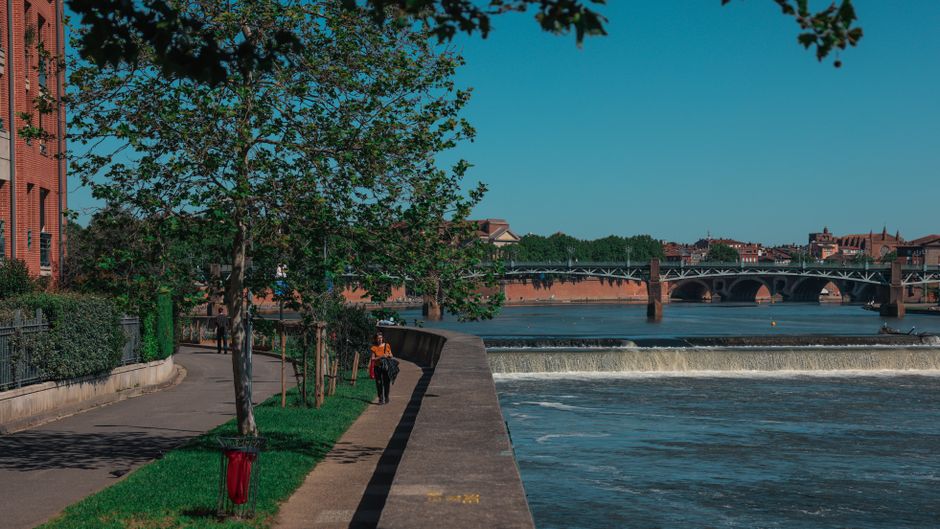
Toulouse
Introduction
You will find Toulouse situated in Southern France within the Occitania region as the prefecture of the Haute-Garonne department. Located on the banks of the River Garonne, the city sits at a crossroads between the Mediterranean Sea and the Atlantic Ocean.
Before you go
Before you explore the city, consider how its layered history shapes your experience of the urban landscape. You can trace the ancient Roman layout in the narrow inner streets, which survived long after the fall of the empire. The local architecture reflects a history of resilience; following devastating fires that destroyed timber structures, the city was rebuilt using brick. This transition to pink terracotta gave the area its nickname, La ville rose. You will also encounter the legacy of the medieval period, from the founding of the Dominican Order and the subsequent religious conflicts to the 15th-century prosperity brought by the pastel trade.
The city's evolution into a modern hub provides a unique contrast to its historical roots:
- The historic university remains one of the oldest in the world, where figures like Fermat once worked.
- The transition from a medieval center to a 20th-century stronghold for aviation and spaceflight has made it a major industrial hub.
- The local economy is now deeply tied to aerospace, with many residents working in this sector.
Getting there
You can reach the city by air at Toulouse–Blagnac Airport, located west of the city center. From here, you can choose between an airport shuttle to the main railway station, various Tisseo bus lines that connect to the tram system, or a taxi. If you are traveling with heavy luggage like ski gear, shuttles to nearby destinations such as Andorra are also available.
Train travelers will arrive at Toulouse-Matabiau Station, which connects to major French cities and international routes from Spain. For those arriving by road, the city is accessible via several motorways from Paris or the Mediterranean coast. You can also reach the city by bus from various regional hubs. If you prefer a slower pace of travel, the city sits at the midpoint of the Canal des Deux Mers, allowing for a long-boat journey that connects the Atlantic and Mediterranean coasts.
Getting around
You can explore most attractions on foot because the historical center is compact, situated between the Garonne River and Metro B Line. If you prefer other modes of transport, Tisseo operates the city's bus, tram, metro lines, and cable car. The Tram T1 starts downtown at Palais de Justice before crossing the river to Arènes, while Metro line A runs from the University through Arènes to the railway station. Metro line B travels north-south, passing both the main railway station and Palais de Justice. While buses run along all main streets, they do not enter the pedestrianized core except for a free city-center shuttle where you simply wave at the driver.
Cycling is a safe and enjoyable way to navigate the city thanks to a dense network of bike lanes and bicycle-friendly streets with minimal motorized traffic. You can enjoy a pleasant ride along the Canal du Midi, which connects important locations like the university campus and the center. If you choose to travel by car, avoid driving downtown due to limited parking and restricted streets; instead, utilize a suburban, metro, or tram station as a park-and-ride location.
Where to stay
You can choose from a variety of accommodations depending on your needs and preferred style of stay. For those seeking budget-friendly options, you can find a clean hostel with private lounge areas and open kitchens located less than 1 km from the city center. If you prefer a mid-range experience, several hotels offer reliable service in central locations, including an 18th-century building and a 19th-century hotel with a historic makeover that once hosted famous guests.
For different types of stays, you might consider:
- Serviced self-catering apartments ranging from studios to one-bedroom layouts.
- A small and stylish hotel featuring a blend of modern and classic design in a central location.
- Standard reliable chain hotels located near the railway station or metro stops.
- A convenient option near the airport that includes a shuttle bus.
Food & drink
Savor the local flavors of the region with traditional dishes such as cassoulet, a hearty stew made with white beans, pork skin, and meat like Toulouse sausage. You can also enjoy duck specialties, including roast duck leg or duck liver pate, and try local sweets made with violets. The areas surrounding Place du Capitole, Bvd de Strasbourg, and Place St Georges are lined with various cafes and restaurants where you can sample these regional delicacies.
Depending on your preference for atmosphere and cuisine, you can find a variety of dining experiences across the city:
- Experience authentic local flavors in cozy settings or at bustling markets.
- Choose from international options including Turkish, Moroccan, Argentinian, and Middle Eastern staples like falafel and kebabs.
- Find specialized vegetarian and vegan menus if you prefer meat-free options.
- Visit British-style pubs, Irish pubs, or Scots-themed pubs featuring micro-breweries and extensive whisky selections.
- Relax in a traditional Bavarian beer garden to soak up the local ambiance.
- Explore the craft scene at a brewery that hosts brewing classes or visit nearby distilleries that produce pink Pastis, vodka, gin, and Occitan Whisky.
What to see and do
Explore the compact old centre located east of the River Garonne, where many sites are easily accessible on foot. You can visit the massive red-brick Basilica Saint-Sernin, a significant stop for pilgrims, or see the collection of Roman busts and artifacts at the Saint Raymond Museum. The city's history is further reflected in the diverse architecture of Cathédrale Saint-Étienne and the neoclassical Capitole, which houses both City Hall and a main theatre. For art lovers, the Hôtel d'Assézat showcases a private collection in a Renaissance mansion, while the Musée des Augustins sits within an old monastery featuring two cloisters. Other cultural sites include the Musée du Vieux Toulouse, the fine arts at Musée Paul-Dupuy, and the specialized collections of Asian arts and Egyptian antiquities at Musée Georges Labit.
Experience the local atmosphere by walking along the river quays or crossing Pont-Neuf, where you can view a water tower used for photography exhibitions. If you prefer to venture further out, you can visit the expansive Les Abattoirs contemporary art museum, the natural history collections at Muséum de Toulouse, or the stark depictions of wartime events at the Musée départemental de la Résistance & de la Déportation. For those interested in engineering and science, explore the aircraft displays at Aeroscopia Museum, the interactive space exhibits at Cité de l'Espace, or witness unique mechanical contraptions at Halle de la Machine. You can also enjoy the tranquil atmosphere of the Jardin Japonais Pierre-Baudis or the former Carmelite friary grounds at Jardin des Plantes.
- Canal du Tour: Walk the first few kilometers of this UNESCO World Heritage site starting from the River Garonne.
- Rugby Union: Watch "Les rouges et noirs" play at Stade Ernest Wallon or Stadium de Toulouse.
- Rugby League: Catch a match featuring Toulouse Olympique.
When to go
You can visit Toulouse during any time of year to experience its humid subtropical climate. While you will encounter regular precipitation throughout every season, the atmosphere shifts from a cool winter and a transitional spring characterized by increasing warmth to a cooling autumn.
If you travel during the summer, expect warm conditions accompanied by substantial rainfall. This consistent moisture distinguishes the region's weather from the drier Mediterranean areas located further south.
Three days in Toulouse
Day one, you can begin your journey in the heart of Toulouse where you explore the historic architecture and the influence of the Dominican Order. You might wander through the city center to see landmarks associated with Fermat before finding your way toward the river.
Day two, you travel along the Garonne River to experience the local atmosphere. You can navigate the area using the Tram or the Metro Line to reach different points of interest near the water and explore the surrounding districts.
Day three, you venture further into the region of Occitania. You can take a train from Matabiau Station to see the sights beyond the city limits, exploring the landscapes that lie between the Mediterranean Sea and the Atlantic Ocean.