Strasbourg
Introduction
You will find Strasbourg situated in the historic region of Alsace within northeastern France. As a major city in the Grand Est region, it serves as both a commune and a prefecture.
During your visit, you can explore this significant location which functions as the prefecture of the Bas-Rhin department and hosts the official seat of the European Parliament.
Before you go
Prepare for your visit by noting that French is the primary language spoken throughout Alsace, though you may hear Alsatian German in the streets near the Cathedral. Due to the presence of the European Union and heavy tourism from neighboring Germany, many locals and those in the tourism sector also speak English and German.
When navigating the city, exercise standard safety precautions. Be particularly vigilant against pickpockets in the old town and near the Cathedral during peak tourist seasons. While the areas surrounding the railway station are well-lit and populated at night, you should remain aware of your surroundings to avoid looking like a lost tourist. Certain neighborhoods in the south and west have less appeal for visitors and may feel less comfortable at night.
Getting there
You can reach Strasbourg by air via its own international airport or through nearby hubs like Basel-Mulhouse-Freiburg, Karlsruhe/Baden-Baden, and Stuttgart. For those flying into Charles de Gaulle, the TGV offers a convenient rail connection to the city. If you prefer to travel by train, the city serves as an eastern terminus for high-speed lines, providing direct connections to major destinations including Paris, Lyon, Munich, and various cities across Germany and Belgium. The main station features a modern glass frontage and provides easy access to the local tram system and bus networks.
For those traveling by road, several highways connect Strasbourg to regions such as Paris, Luxembourg, and Lyon. If you arrive by car, you can navigate into the old city area, where numerous large garages are available for parking. Alternatively, you can utilize the cross-border tram link from the German town of Kehl, which allows you to cross the international border on a single urban rail service. Local bus services also provide transport from regional hubs.
Getting around
You can easily explore the historic city centre on foot within a day or two. To cover more ground, consider cycling through the flat city centre, which features numerous bike lanes and paths. You may find bicycles at vélhop sharing stations or at locations near the train station and the south bank of the Ill river. While bikes are permitted on trams, they are not allowed during peak hours.
The public transport network includes several bus lines, tram lines, and bus rapid transit lines. A single ticketing system covers both buses and trams; you can purchase tickets at newsagents, tourist offices, CTS boutiques, or from vending machines at tram stops. If you plan to use the network frequently, consider a 24-hour or seven-day Europass ticket. For those arriving by car, several Park & Ride locations offer parking combined with a tram ticket to reach the downtown area.
Where to stay
You can find a wide range of accommodations depending on your preferences for location and style. If you prefer to stay in the heart of the city, the Grande Île offers several options including self-catering apartments in the historical quarter or stylish hotels near the cathedral. For a more upscale experience, you can choose from elegant buildings in the city center or those located near Petite France. Alternatively, if you prefer a quieter atmosphere, you might consider staying in the Robertsau neighborhood near the EU Parliament.
For those seeking budget-friendly options, several hostels are available, including one in a leafy suburb near the Rhine and another just outside the city center with its own restaurant and bar. While there are many international chains located around the train station, be aware that quality can vary in this area. Because rooms often fill up during the Christmas Market period and when the EU parliament is in session, you should book your stay in advance to ensure availability.
Food & drink
Savor the rich culinary traditions of Alsace by sampling local specialties in traditional restaurants throughout the city and surrounding neighborhoods. You can enjoy hearty portions of choucroute (sauerkraut), which often features an array of meats, or opt for a fresh fish version of the dish. Other regional staples include Alsatian pork-butcher's meat, Fleischnackas—mixed beef presented as spirals served with salads—and Baeckeoffe, a slow-cooked stew of beef, pork, potatoes, and carrots. For a lighter bite, try Flammeküche (or flams), which are wafer-thin pizzas topped with an onion-cream sauce.
The local beverage scene is defined by its deep ties to brewing and viticulture. As the primary beer-producing region of France, the area offers various styles, including well-known local brands. You can also explore Alsatian white wines such as Gewürtztraminer, Riesling, and Pinot Gris, which are known for their floral notes and pair well with both meat and fish dishes.
What to see and do
Explore the architectural highlights of the Grand Île, where you can admire the Gothic Cathédrale Notre Dame and its astrometric clock. Nearby, the Maison Kammerzell showcases intricately carved half-timbered frames from the late 16th century. You can also visit the Palais des Rohan to view collections of fine arts, archaeology, and applied arts, or explore the Musée Alsacien to see artifacts of daily life ranging from the 13th to the 19th centuries.
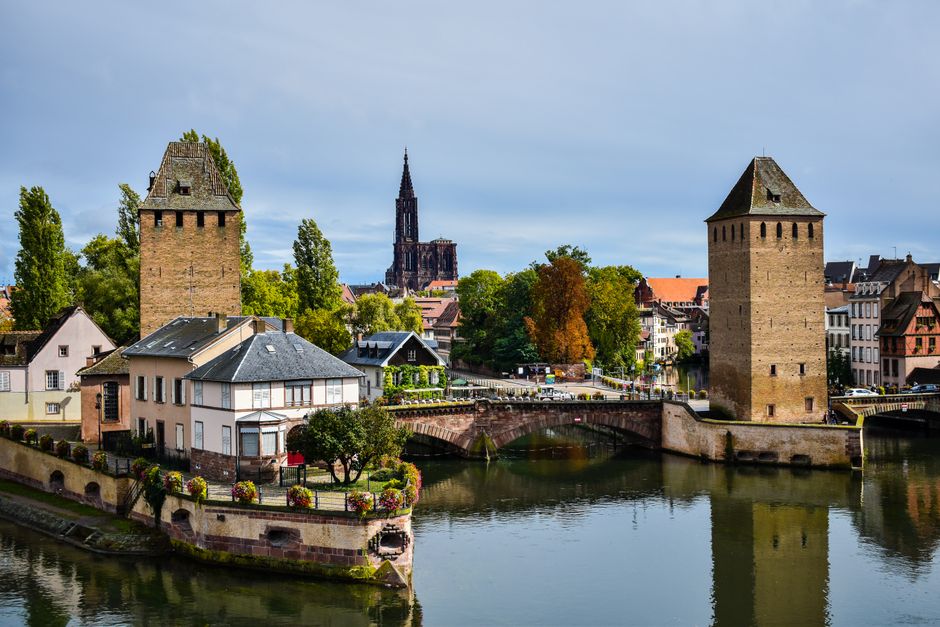
Wander through Petite France, a picturesque area featuring half-timbered townhouses and narrow cobbled streets. Nearby, you can view the medieval towers of the Ponts Couverts or visit the Barrage Vauban, which features a viewing terrace overlooking the district. For a different atmosphere, head to the European district to see the seats of the Council of Europe, the European Court of Human Rights, and the European Parliament. If you prefer the outdoors, stroll through the classical Parc de l'Orangerie or visit the nearby Stockfeld garden city.
- Musée de l'Oeuvre Notre Dame
- Museum of Modern and Contemporary Art
- Historical Museum
- Zoological Museum
- Museum Tomi Ungerer
- Le Vaisseau science center
- Lalique Museum in Wingen-sur-Moder
Three days in Strasbourg
Day one, you can explore the heart of Strasbourg and immerse yourself in the local culture of Alsace. You can admire the architecture of the Cathedral as you wander through the historic streets.
Day two, you can travel toward the border regions to experience the influence of neighboring areas like Baden or nearby cities such as Mulhouse and Freiburg. You can appreciate the blend of French and Alsatian German traditions in this part of France.
Day three, you can visit the European Parliament area where the European Union is based. From here, you can consider your next journey toward other destinations like Munich or Luxembourg.