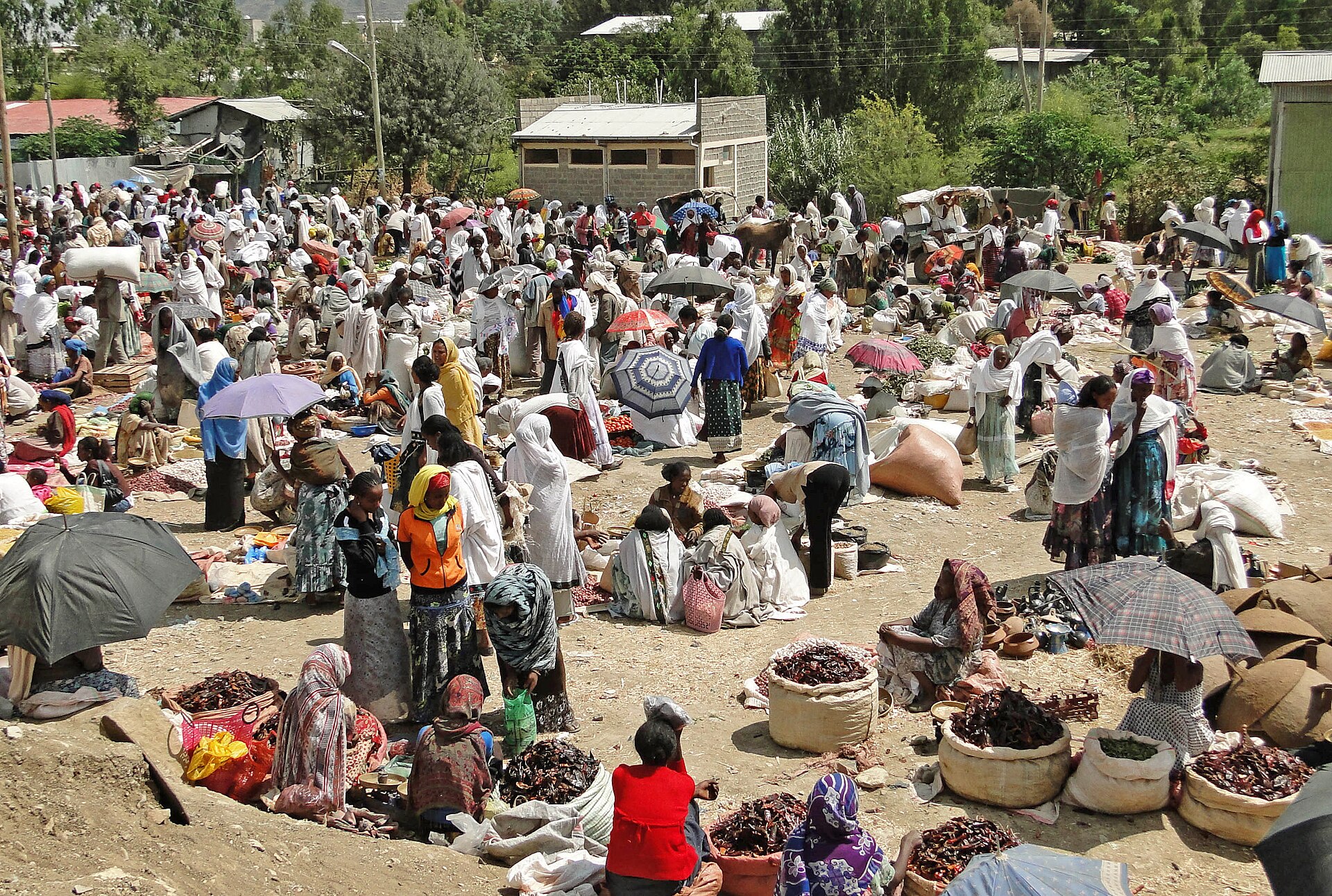
Mek'ele
Introduction
Mekelle is the capital of the Tigray Region and the economic, cultural and political hub of northern Ethiopia. It sits at an elevation of roughly 2,250 metres above sea level, about 780 kilometres north of Addis Ababa, and was formerly the capital of the Enderta awraja.
Administratively the city is a Special Zone, divided into seven sub-cities. Use it as your base for exploring the north of the country.
Getting around
Mek'ele has no rail, metro, or tram service, so every local trip is by road. The workhorses of short urban travel are shared minibuses and the blue three-wheeled bajaj. Minibuses run throughout the day and leave when full: on busy routes you will wait around fifteen minutes at most, while on quiet routes the wait can stretch to a couple of hours. Bajajs can be used two ways — as a shared service along a trunk road, which is the cheapest option, or as a charter to a specific destination, which costs considerably more. Always negotiate the fare before you set off, and remember that bajaj drivers usually ask less than taxi drivers. Taxis work on the same charter logic. No ride-hailing app is described for the city, so arrange transport directly through your hotel, a driver you have used before, or by flagging a vehicle on the street. For sites within about 20 km of town, chartering a taxi or bajaj is often the best approach, and many visitors opt for an organized tour with a 4x4 and a driver-guide. Hiring a vehicle and driver privately is not recommended, and self-drive rental is not viable given roads shared by cars, buses, horse carts, livestock, and pedestrians.
Walking is a normal way to get around, but two things shape it. The city sits at an elevation of 2,254 metres, so the altitude is noticeable and you will tire more quickly than at lower elevations. Traffic is mixed, so stay alert. Western-style street addresses are unfamiliar and few towns outside Addis Ababa have proper street names, so give directions by landmark — a bus station, a church, a well-known hotel — or by neighbourhood rather than by road name, and navigate the same way on foot. From the airport, no dedicated rail link, shuttle, or express bus is described; onward transport is by road, so arrange a pickup in advance through your hotel or tour operator, or take a taxi or bajaj and agree the fare first. For longer intercity journeys, buses fall into luxury, ordinary, and minibus categories. Ordinary buses have haphazard schedules and on busy routes leave only when full; most departures are before 8am, and the last bus leaves early enough to reach its destination before nightfall. Luxury operators run a more limited network with departures around 5–6am and seats bookable the day before. An extra charge is customary for luggage that will not fit on your lap, and night travel is not recommended. If you are unsure what a fare should be, ask your hotel.
When to go
Mek'ele stays moderately warm all year, so the main thing to plan around is rain rather than temperature. The year splits clearly into a wet season and a dry season.
- Wet season: This is the rainy stretch, when downpours and muddy roads are common. Travel can be slower, and some rural tracks become difficult to pass.
- Dry season: The rest of the year is dry, with little to no rain. Skies are generally clear and conditions are reliable for visiting, though dust can build up on unpaved roads.
If your plans include rural tracks or long road journeys, the dry season is the more dependable choice. In the wet season, allow extra time for getting around and expect mud on the roads.
Three days in Mek'ele
Day one: Start in Mekelle, the capital of the Tigray Region in northern Ethiopia. Get your bearings on foot in the city centre, where walking lets you take in the streets at your own pace. Minibuses and bajajs cover the main routes, and taxis are available if you prefer to ride. Note that traffic in the city is ordinary rather than heavy, so getting around is straightforward.
Day two: Head out to Enderta, the district around Mekelle, to see the wider countryside of the Tigray Region. Administratively, the area forms part of the region's Special Zone, so it sits close to the city while feeling distinctly rural. Arrange your transport in advance, since hiring a vehicle is the practical way to reach outlying spots.
Day three: Use the day to travel further afield, perhaps towards Addis Ababa if you are continuing your journey south. The climate here divides into a wet season and a dry season; in the dry months the skies are clear, while the wet season brings rain. Pack accordingly, and always allow extra time for the drive.