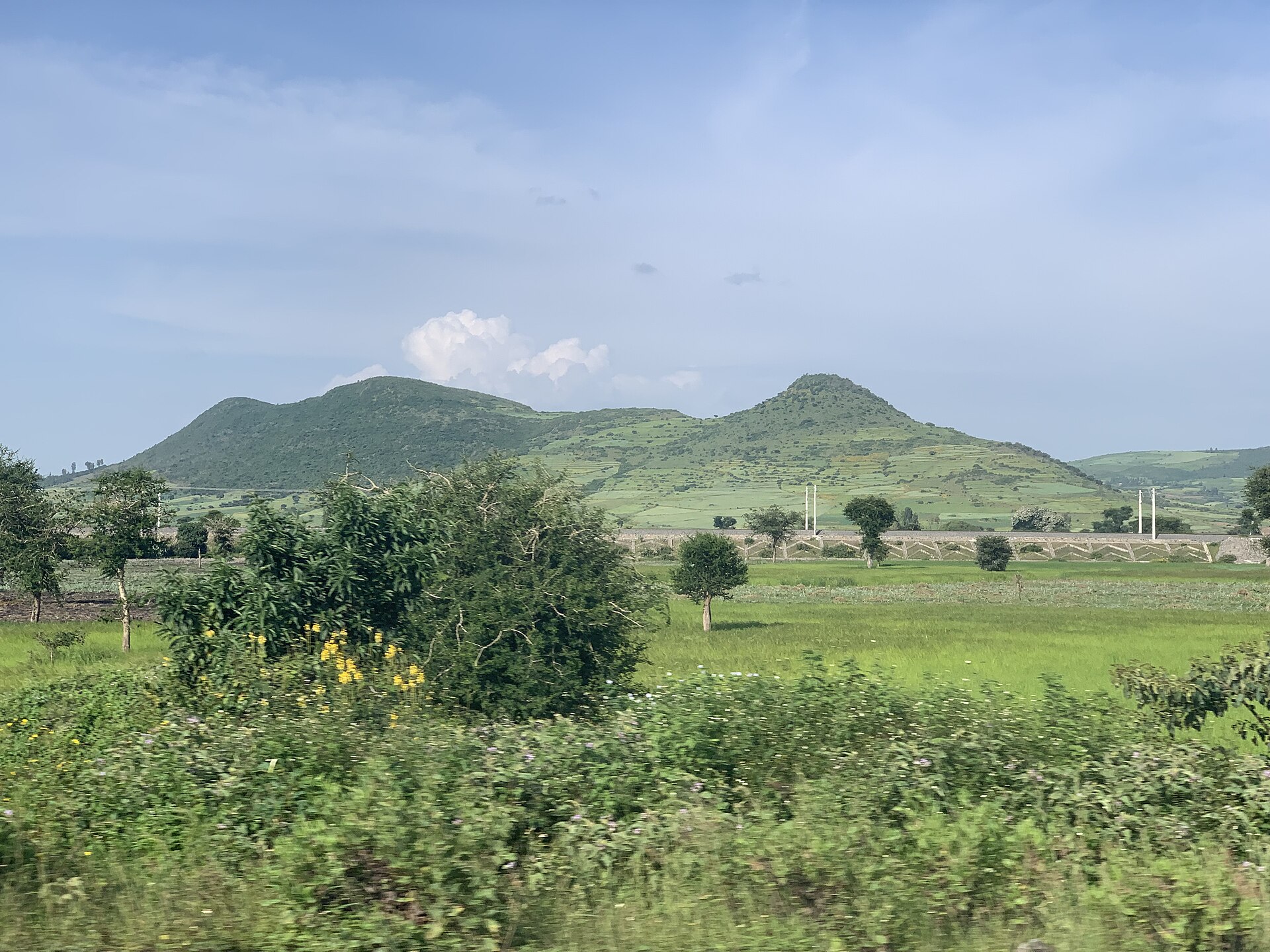
Bishoftu
Introduction
Bishoftu, formerly known as Debre Zeyit, is a city in central Ethiopia, set in the central Oromia Region at an elevation of 1,920 metres. The name Bishoftu comes from the Bible and refers to a location east of Jerusalem's Old City, separated from it by the Kidron Valley.
The city is also the primary airbase of the Ethiopian Air Force, a role that shapes its identity within the region.
Before you go
Bishoftu sits on the road between Addis Ababa and Adama, close enough to the capital to make it an easy getaway. The town's several lakes are the main draw, and it is popular with Ethiopians and tourists alike, so expect company rather than solitude.
Because it is reached by the same road that continues on to Adama, it works well as a stop rather than a destination in itself. Plan around the lakes, which are the reason most people come.
Getting there
Buses leave regularly for Bishoftu from Addis Ababa's Kality bus station, at the south of the city and roughly a fifth of the way to Bishoftu. Kality is inconvenient to reach by public transportation and expensive by taxi, so ask locally — for example, where you're staying in Addis — about the best option from your location, as there may be services from other, more conveniently located bus terminals around the city.
Bishoftu also has a station on the Addis Ababa – Djibouti Railway. The train runs every four days, on the 1st, 5th, 9th, 13th, 17th, 21st, 25th and 29th of each month, and takes 15½ hours to complete its trip between the two capitals.
Getting around
Bishoftu is compact and built around its crater lakes, so getting around is less about mastering a transit network and more about picking the right option for each leg. There is no metro or tram, and the railway station on the Addis Ababa–Djibouti line is a long-distance national service rather than a local commuter one, so treat the train as a way of arriving or leaving as part of a longer overland trip, not as city transport. Buses are the main intercity link to the capital, leaving regularly from Addis Ababa's Kality bus station; reaching Kality is awkward by public transport and expensive by taxi, so ask at your accommodation in Addis Ababa about other, more convenient departure points before defaulting to it.
Within the city, walking is a reasonable way to reach the waterfront and nearby points of interest, though the altitude of around 1,920 metres is worth respecting when you are newly arrived, and there is no described pedestrian infrastructure, so keep walks to short local trips. Taxis are the practical fallback for the awkward legs, including the run out to Kality, but specific operators, fares and ride-hailing apps are not documented, so confirm what is available locally and agree on a price before setting off. Bishoftu is home to Harar Meda Airport, associated with the Ethiopian Air Force airbase, and construction has begun on a new Bishoftu International Airport; passenger services, terminals and ground transport links are not described at either, so do not assume scheduled commercial flights or airport transfers. In practice, most travellers arrive overland from Addis Ababa by bus or taxi, or by the railway if the timing suits.
Where to stay
< p >Most of your options line the main road, where hotels of every kind sit within easy reach of the town's services. For a quieter stay, look to the rim of Bishoftu Lake, where a couple of resorts trade the bustle of the road for water views. < /p >Food & drink
The source material for Bishoftu's food and drink scene is too thin to write a grounded section. The only content provided is the empty headings "Eat" and "Drink," with no named dishes, venues, neighbourhoods, or culinary traditions to draw on. Rather than invent details, this section should be left unwritten until source material is available.What to see and do
Bishoftu is a town of small lakes, and the closest to the main road is Bishoftu Lake, whose rim holds a few resorts with good views over the water. Beyond it lie Lake Hora, a base for watersports that also draws many water birds and hosts an annual festival, along with Lake Bishoftu Guda, Lake Koriftu and the seasonal Lake Cheleklaka. In the surrounding area you can head for Mount Yerer or visit Green Crater Lake.When to go
Bishoftu has a temperate highland climate, and the main thing to plan around is rain rather than heat. The rainy season runs from June to September, bringing frequent showers that keep the town lush and green. Expect wet conditions and a vibrant landscape, but temperatures stay mild thanks to the elevation, so it remains comfortable despite the rain.
The dry season stretches from October to May, with clear skies and warm, sunny days. Temperatures stay comfortable and rarely reach extremes, making this a pleasant time to enjoy the lakes and rolling hills without rain interruptions. Whichever season you choose, the highland setting keeps conditions comfortable year-round.
Three days in Bishoftu
Day one: Arrive in Bishoftu, also known as Debre Zeyit, a town in the Oromia Region of Ethiopia. Settle in and take an easy walk to Bishoftu Lake, the town's namesake, to get your bearings. In the evening, eat and drink at one of the local spots near the water, where Ethiopians gather for fresh fish and coffee.
Day two: Devote the day to the crater lakes. Beyond Bishoftu Lake, you can visit Lake Hora, Lake Bishoftu Guda, Lake Koriftu and Lake Cheleklaka, each with its own character and birdlife. Rather than rushing, plan to spend time at two or three of them, walking the shorelines and watching the water change with the light.
Day three: Head out toward Mount Yerer and the Green Crater Lake for a change of scenery, especially if you are visiting in June, when the surroundings are green. On your way back, consider the town's position between Addis Ababa and Adama, with the Addis Ababa–Djibouti Railway and Harar Meda Airport nearby, making onward travel straightforward.