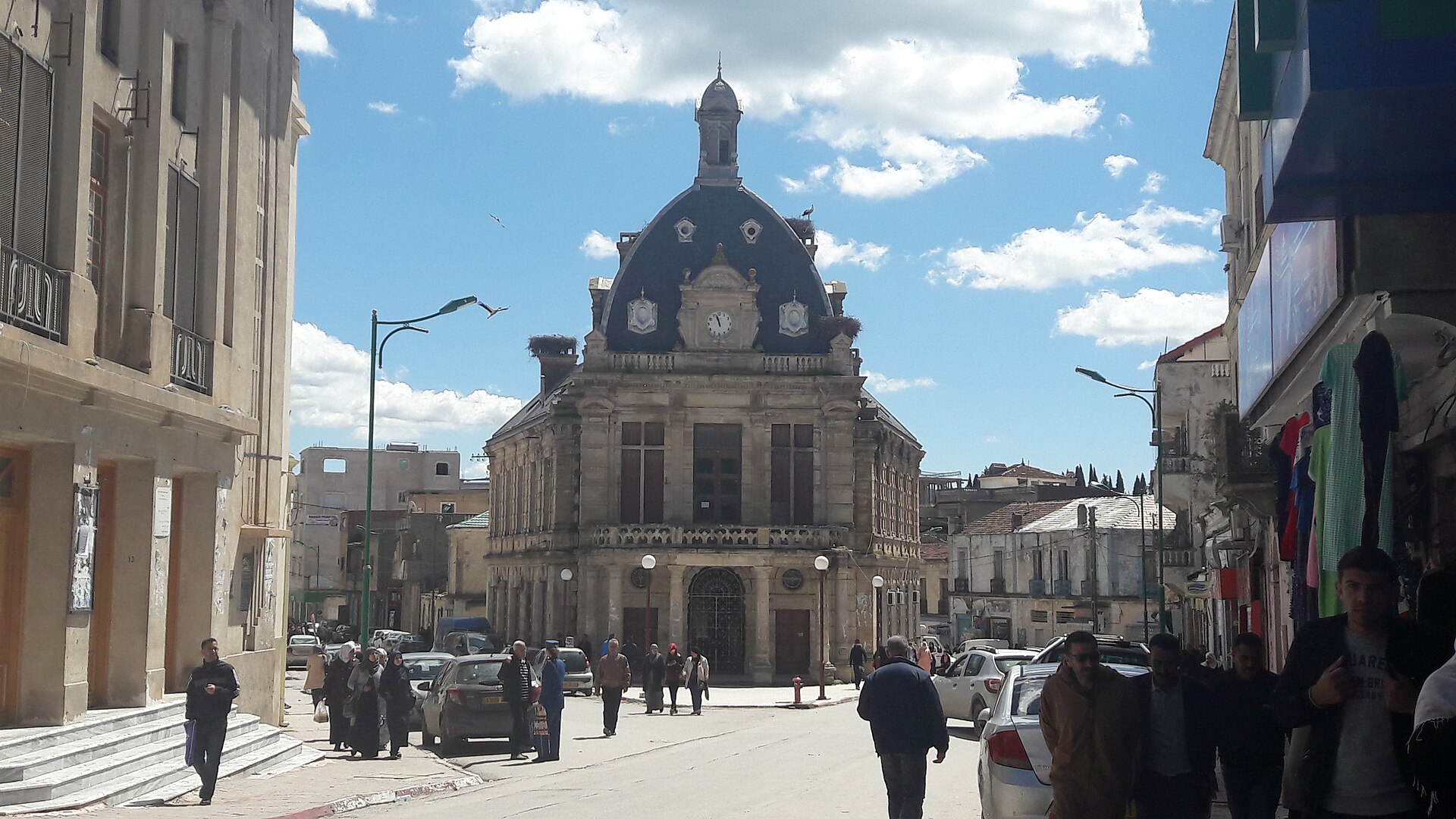
Souk Ahras
Introduction
Souk Ahras is a municipality in Algeria and the capital of Souk Ahras Province. The city was built on the ruins of the Numidian city of Thagaste, which stood on the same site and was a center of Berber culture.
Thagaste is best known as the birthplace of Augustine of Hippo, and that heritage is the deepest layer of the city you encounter here: a modern provincial capital resting on a Numidian past.
Getting around
Souk Ahras is the transport hub for its province, but getting around is overwhelmingly by road. There is no metro or tram network, and the rail line is best treated as a way to arrive in or leave the province rather than as local transport: trains run westward toward Annaba and Constantine, and the line historically continued to the Tunisian frontier. Check current schedules locally, since service patterns can change. Souk Ahras itself has no major airport; the practical air gateway is Annaba, roughly 90 km away, from which you continue overland by road or by rail, arranging your onward transfer in advance if you arrive late in the day.
Within the province, intercity buses and shared taxis — the collective, louage-style taxis common in Algeria — connect the capital with main towns including Sedrata, Taoura, M'Daourouch, and Oued Keberit, departing from the town's transport stations. Buy your seat at the station or directly from the driver. Distances are modest, so bus and shared-taxi hops between towns work well for day trips. Within the city, taxis and hired cars are the most flexible way to move between districts and reach specific sights such as the Al-Aman mosque, the Thagaste bridge, the olive tree of St. Augustine, the corner of Sidi Massoud, and the cultural centre. The compact centre is walkable, and strolling between central landmarks is pleasant, but beyond it the city spreads across many districts over hilly terrain, so treat walking as a way to explore one area rather than to cross the whole city. For remote archaeological sites such as Khemissa, scheduled public transport to the ruins is limited, so a private car or hired taxi is the easiest approach. Roads through the forested hills are scenic but winding, so allow extra time for any journey leaving the basin.
When to go
Souk Ahras has a hot-summer Mediterranean climate, which shapes the year into two fairly distinct halves. Rain is concentrated between October and April, so if you travel in that stretch, plan for wet weather and pack accordingly. Winters within this period stay mild, moderated by the nearby Mediterranean Sea, and the city avoids the extreme temperatures found in the adjacent interior deserts.
Summers are dry, with little of the year's rainfall arriving in these months. They are warm rather than extreme, since the Mediterranean's proximity keeps the city cooler than the desert interior nearby. If you prefer dependable dry conditions and warmth without harsh heat, the summer months suit you best; if you don't mind rain and want milder temperatures, aim for the wetter half of the year.
Three days in Souk Ahras
Day one: Begin in Souk Ahras itself, a city in Souk Ahras Province, Algeria, whose roots reach back to the Numidian era and to Thagaste, the Berber town where Augustine was born. Walk the streets with that layered past in mind, then look toward Hippo, the see Augustine later served, and toward Annaba and Constantine, the larger cities within reach. Check the distances before you commit to a day trip, and keep in mind that roads toward the Tunisian border and the Mediterranean are part of how this region connects.
Day two: Head out to the surrounding towns and sites. Sedrata, Taoura, Daourouch, Oued Keberit, Khemissa and Sidi Massoud all lie within the province, and each gives you a different face of the interior. Buy what you need before you set off, since services thin out along the way. Al Aman and St are among the names you may come across on your route. If you push toward the Mediterranean Sea, plan for the drive rather than treating it as a short hop.
Day three: Give the day to the climate and the rhythm of the place. Rain falls mainly from October to April, and winters can be cold, while summers are warm. They say the Mediterranean influence softens the edges, but the interior still swings hard between seasons. Use your last hours to revisit whatever drew you most, whether that is the Augustine connection, the Numidian traces, or simply the quiet of a province that sits between the coast and the highlands.