Sidi Bel Abbes
Introduction
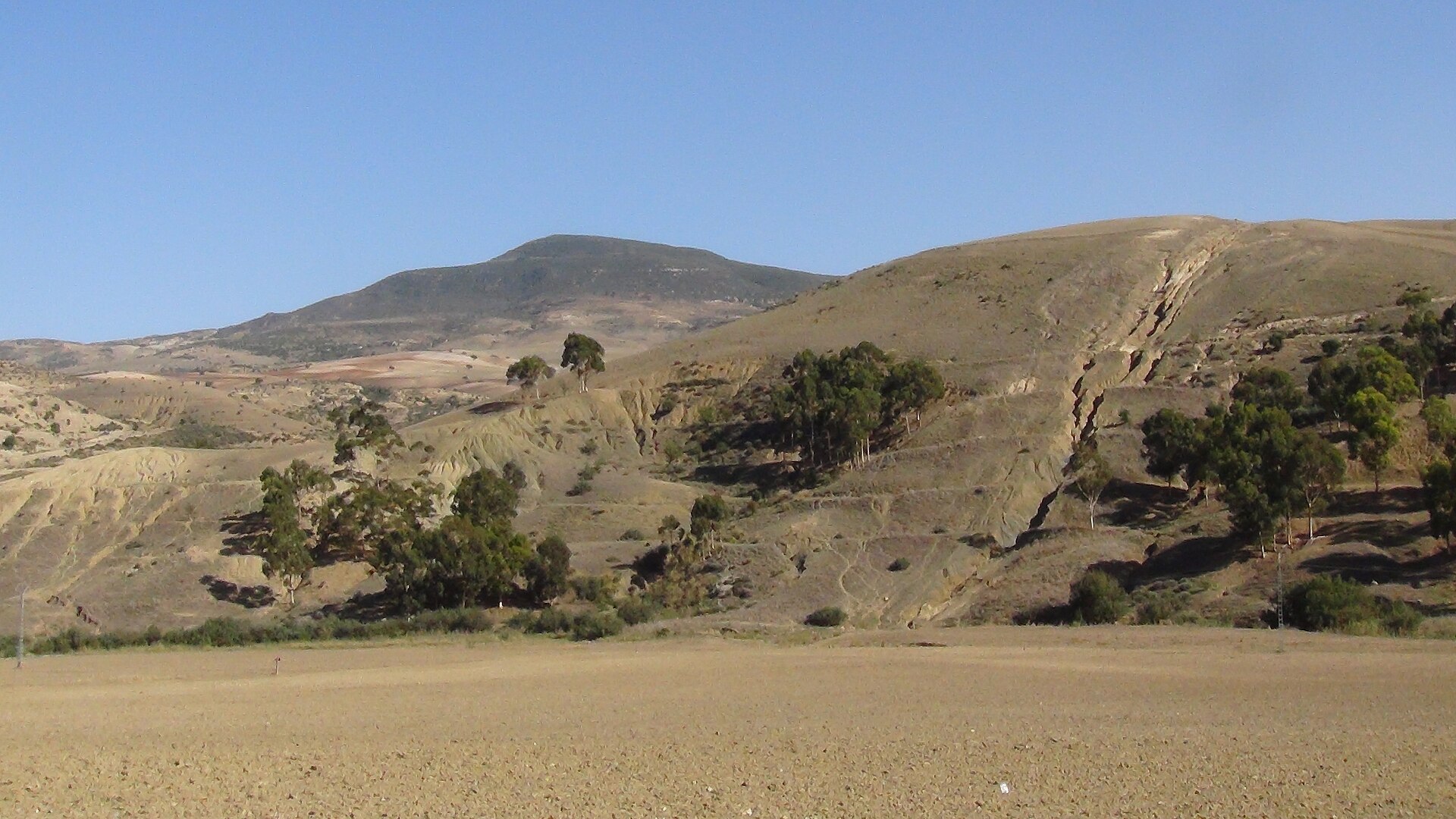
Sidi Bel Abbès, often shortened to Bel Abbès, is the capital of its wilaya in Algeria and takes its name from Sidi bel Abbass, a Muslim marabout buried in the city. It sits roughly 75 kilometres inland from the Mediterranean, and the surrounding countryside is given over to vineyards, market gardens, orchards and grain fields — a productive landscape that has made the city a commercial hub for the area.
The old town was once enclosed by a wall pierced by four gates, and today the city is also home to a university. Come here to understand a working Algerian provincial capital shaped by its agricultural hinterland and its marabout heritage rather than by tourism.
Before you go
Before you go, it helps to know what kind of place Sidi Bel Abbes is: the commercial centre of a surrounding area of vineyards, market gardens, orchards and grain fields, rather than a coastal resort. It sits some distance inland from the Mediterranean, so plan your expectations around an agricultural and university city with a working character, not a beach stay. The city's past is bound up with the French Foreign Legion, and it was once walled, with four gates. That history, together with the university and the markets that serve the surrounding farmland, is the backdrop to a visit here. The wider province is divided into districts and communes, so if you intend to travel beyond the city itself, think of the area as a spread of small administrative centres and rural communities rather than a single built-up strip.Getting there
Sidi Bel Abbès is well connected to other Algerian cities by road and rail. The city sits within easy reach of two major regional centres: Oran lies about 70 kilometres to the north, and Tlemcen about 90 kilometres to the west. If you are arriving by train, you will pull into Sidi Bel Abbès railway station.
- By air, the closest airport is Es Senia Airport in Oran, which you can reach before continuing overland to Sidi Bel Abbès.
Getting around
Central Sidi Bel Abbès is compact and walkable in the areas you are most likely to spend time. The historic core was reshaped in the 1930s, when much of the old city walls came down and wide boulevards and squares replaced the traditional quarters, and those broad streets make strolling the centre comfortable. Place 1er Novembre (formerly Place Carnot) is a natural orientation point for a walk, and the town hall, built in the historical French pattern and formerly a cathedral, is another central landmark to fold into a stroll. The city sits astride both banks of the Sig River, so expect to cross the river if you move between sides of town. For anything beyond the centre — the university campus, the bus stations or the outer neighbourhoods — use the tram or a taxi rather than walking.
- Tramway: The Sidi Bel Abbès tramway, opened in July 2017, is the most modern piece of public transport in town and the easiest way to move between the main points of interest without negotiating road traffic. It covers most of the city's main points, including the bus stations, the Daira, the university campus, the downtown area and the Public Garden. It does not serve the west or the south of the city, so check whether your destination falls inside its coverage before relying on it. Because it links the bus stations with the centre and the campus, it is a practical option if you arrive by coach or are staying near the university.
- Train: The railway station is your link to the wider region, with trains to Oran, Tlemcen, Béchar and Saïda. Oran lies to the north and Tlemcen to the west, making both feasible as day trips or onward legs of a longer journey. A rail link toward Morocco passes through the city but has been discontinued for political reasons, so it is not a usable border crossing.
- Buses: The tramway connects to the city's bus stations, making the switch between bus and tram relatively simple. Long-distance coaches are a normal way in and out, and the West-East Route passes near the city. Within the city itself, buses are best thought of as the link to the bus stations and to destinations beyond the tram's coverage.
- They are particularly useful for the gaps the tramway leaves: the west and south of the city, outlying neighbourhoods, and trips at hours when you would rather not wait. Agree on the fare or confirm the meter before setting off, as you would in any Algerian city.
- Arriving by air: Sidi Bel Abbès Airport (IATA: BFW) is the city's own airport but is not for public use, so you cannot book a commercial flight into it. Fly instead into Oran Es Sénia near Oran to the north, then continue by road or rail; the railway station is your arrival point if you take the train.
Where to stay
< p >Accommodation in Sidi Bel Abbès is straightforward rather than varied, with the Metropole chain being the main option for visitors. The chain operates three separate locations across the city, so you can choose the one that best suits where you plan to spend your time. < /p >Food & drink
The source material for Sidi Bel Abbès offers no details on where or what to eat and drink, so there is nothing specific to recommend here.What to see and do
In the centre of town, look for the Château Vilumbrales on the corner of Rue de Medine and Boulevard Col Amirouche, also known as the Chateau du Roi d'Espagne. The architecture is the draw here, and local accounts hold that it once served as a residence for Spanish royalty. On Boulevard Emir Abdelkader you'll find the Municipal Palace, a fine piece of French château-style building; directly across from it stands the Mosquée Abou Bakr Essedik, which is sometimes lit up in a striking green at night. Beyond these two landmarks, the source material offers no further sights or activities, so plan your time around a walk through the central streets taking in the architecture and the mosque's evening illumination.Three days in Sidi Bel Abbes
Day one: Arrive via Es Senia Airport near Oran, then take the train east to Sidi Bel Abbes. Settle into central Sidi Bel Abbès and orient yourself around Place Carnot and Place du 1er Novembre, the main squares where the city's daily life unfolds. Walk the streets of the old French-built centre, cross the Sig River, and take in the Public Garden. In the evening, eat Algerian standards in the centre.
Day two: Use Sidi Bel Abbes as a base for the wider west. Head to Tlemcen for its Muslim architecture and Andalusian past, or go north to Oran for its Mediterranean port character. Both are reachable by train or bus. If you stay in town, look into the city's association with the French Foreign Legion, whose history is bound up with Sidi Bel Abbès.
Day three: Travel south toward Saïda or Béchar, or west toward Morocco, using the long-distance buses and trains that pass through the city. Before leaving, return to the Daira and the Public Garden for a last look at central Sidi Bel Abbès. Come back through Oran and Es Senia Airport for your onward flight.