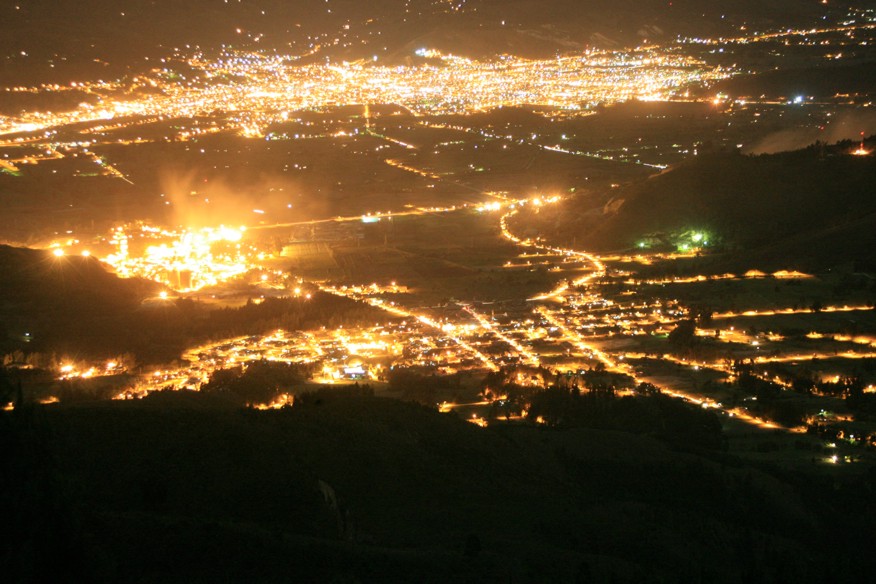
Sogamoso
Introduction
Sogamoso sits in the department of Boyacá, high on the Altiplano Cundiboyacense in the Eastern Ranges of the Colombian Andes. The city is the capital of the Sugamuxi Province, named after the original Sugamuxi, and its altitude makes the air cool, so pack layers for exploring on foot.
Known as the "City of the Sun", Sogamoso draws its nickname from the Muisca tradition of pilgrimage and worship of their Sun god Sué at the Sun Temple. Keep that heritage in mind as you plan your time here: this is a place whose identity is bound up with the Muisca past.
Getting there
Sogamoso is reached by road, with the main approach from Bogotá by bus: catch one at the Portal Norte terminal, and expect a journey of around four and a half hours. From Tunja there are frequent buses, and the trip takes about an hour and a half.
Getting around
Sogamoso has no metro, tram or passenger rail network, so getting around the city and the surrounding region is done by road — on foot, by bus or by taxi. The compact urban core is made up of dozens of neighbourhoods, with the Centro among them, and many of the city's historical sights are clustered in and around that centre: the Central park, the 6 September square, the Archaeology Museum with its reconstruction of the Sun Temple, and the Pile-Mochacá can all be combined on foot. Bear in mind that the altitude is high, so take your first day or two gently and expect to tire faster than you would at sea level, and that the subtropical highland climate brings mild days and cool nights — carry a layer for the evening even if the afternoon feels warm.
Buses are the standard public transport option within the city, but local routes are not easy to work out on your own, so ask at your accommodation or at the terminal which route serves your destination. Taxis are a straightforward choice for short trips between neighbourhoods, for reaching the bus terminal or the airport, and when you are carrying luggage; agree on the fare or confirm the meter is running before you set off, and have your destination written down if your Spanish is limited. For longer journeys, buses connect the city to Bogotá (catch one at the Portal Norte) and run frequently from Tunja, and the nearby municipalities — Nobsa, Tópaga, Monguí, Aquitania, Cuítiva, Iza, Tibasosa and Firavitoba — are close enough that short regional hops by bus are a normal way to reach nearby sights and villages. If you arrive by air at Alberto Lleras Camargo Airport, taxis are the practical way to cover the final leg into town, and the same applies in reverse when you leave. If you are in town in September, note that the city's anniversary falls on 6 September, and that July brings the Festivities of the Sun and of the Steel — busy periods when transport and accommodation fill up faster.
Where to stay
Sogamoso’s sleeping options are small-scale and family-run, and it pays to book directly with the place you choose. On the edge of town, Hostel Finca San Pedro is a newly opened posada on a two-hectare farm, with a fully self-contained cottage as well as dorm beds and camping space. Breakfast with coffee, aromatic tea, toast and fruit is included, along with internet and Wi-Fi, hot water, laundry service, a safe and a personal sauna; massage, aromatherapy, music and fire therapy are also available. Email ahead to confirm prices and availability. A taxi from the bus terminal is the simplest way in, or take the local bus heading to Aquitania, which runs straight past the finca — watch for the yellow archway.
- Hotel Cristal — a family-run hotel nicely placed between the bus terminal and the city centre. The building and interior are old enough to have come full circle into character, and rooms are clean; staff are friendly and helpful. Doubles with private bathroom are available, and direct bookings are welcome.
- Hostal Cazahinita — a family-run hostel close to the main square and the archeological museum, with a calm host, a shared living room and kitchen, and clean, tidy rooms in a very quiet area. Booking directly with the hostel gets you the best rate.
Food & drink
For a local drink, try refajo, a mixture of beer, apple soda and malt. Beyond that, the source material offers little on where or what to eat in Sogamoso, so plan to explore the town's food scene on arrival rather than relying on pre-trip research.
What to see and do
Start at the Museo Arqueológico de Sogamoso Eliécer Silva Célis, where the indoor displays cover finds from the Chibcha civilization and the mummies are the highlight. Outside, a reconstruction of an indigenous village spreads across the grounds, with several houses and the striking two-storey Templo del Sol. Elsewhere in the city you can seek out the cathedral of San Martín, the archaeological park, the chapel of El Oratorio, the Arco de Monquirá and the hill and chapel of Santa Bárbara.
For a day out, head to Lago de Tota, a high-altitude lake ringed by villages and reached easily by bus. Around the water are Aquitania, known for its trout, plus Tota and Cuitiva; at Restaurant Don Lucho, to the right of the cathedral, you can try fresh rainbow trout with refajo, a mix of beer, apple soda and malt. Between Aquitania and Tota lies the white-sand Playa Blanca, with a restaurant and barbecues. In Iza, thermal pools and a sauna let you soak in water of varying temperatures. Other easy bus trips take you to whitewashed Tibasosa, where cafés serve the feijoa fruit as juice, sweets, ice cream and alcohol; to Monguí, set high among mountains with a magnificent cathedral and adjoining monastery; to Firavitoba for good bread; and to Nobsa for ruanas and wool handicrafts. You can also join weekend yoga workshops in Spanish or English at the Agama school on Finca San Pedro, or visit the Marqués de Puntalarga winery in its sunny valley between Duitama and Nobsa.
Three days in Sogamoso
Day one: Arrive in Sogamoso, the City of the Sun, set in the Altiplano Cundiboyacense of the Eastern Ranges of the Colombian Andes. Settle into the Centro, the central district, and get your bearings on foot. The Archaeology Museum is the essential introduction to the city's Muisca heritage and the legacy of the Sun Temple, and it anchors your understanding of the Sugamuxi Province. In the evening, eat in the Centro and rest ahead of a full day out.
- Archaeology Museum
- Centro
Day two: Use Sogamoso as your base for the surrounding Sugamuxi towns. Head out to Nobsa, Tópaga, Monguí, Aquitania, Cuítiva, Iza, Tibasosa and Firavitoba, each with its own character and crafts. Buses and taxis connect the towns, so you can link several in a day without a car. Return to Sogamoso in the evening.
- Nobsa
- Tópaga
- Monguí
- Aquitania
- Cuítiva
- Iza
- Tibasosa
- Firavitoba
Day three: Take a longer excursion toward Tunja, the departmental capital of Boyacá, or head to Bogotá via Portal Norte if you are continuing your journey. From Tunja you can connect onward, and buses and taxis serve the routes. If you are flying out, Alberto Lleras Camargo Airport is the regional option. Keep the pace easy and leave time to revisit the Centro before you go.
- Tunja
- Bogotá
- Portal Norte
- Alberto Lleras Camargo Airport