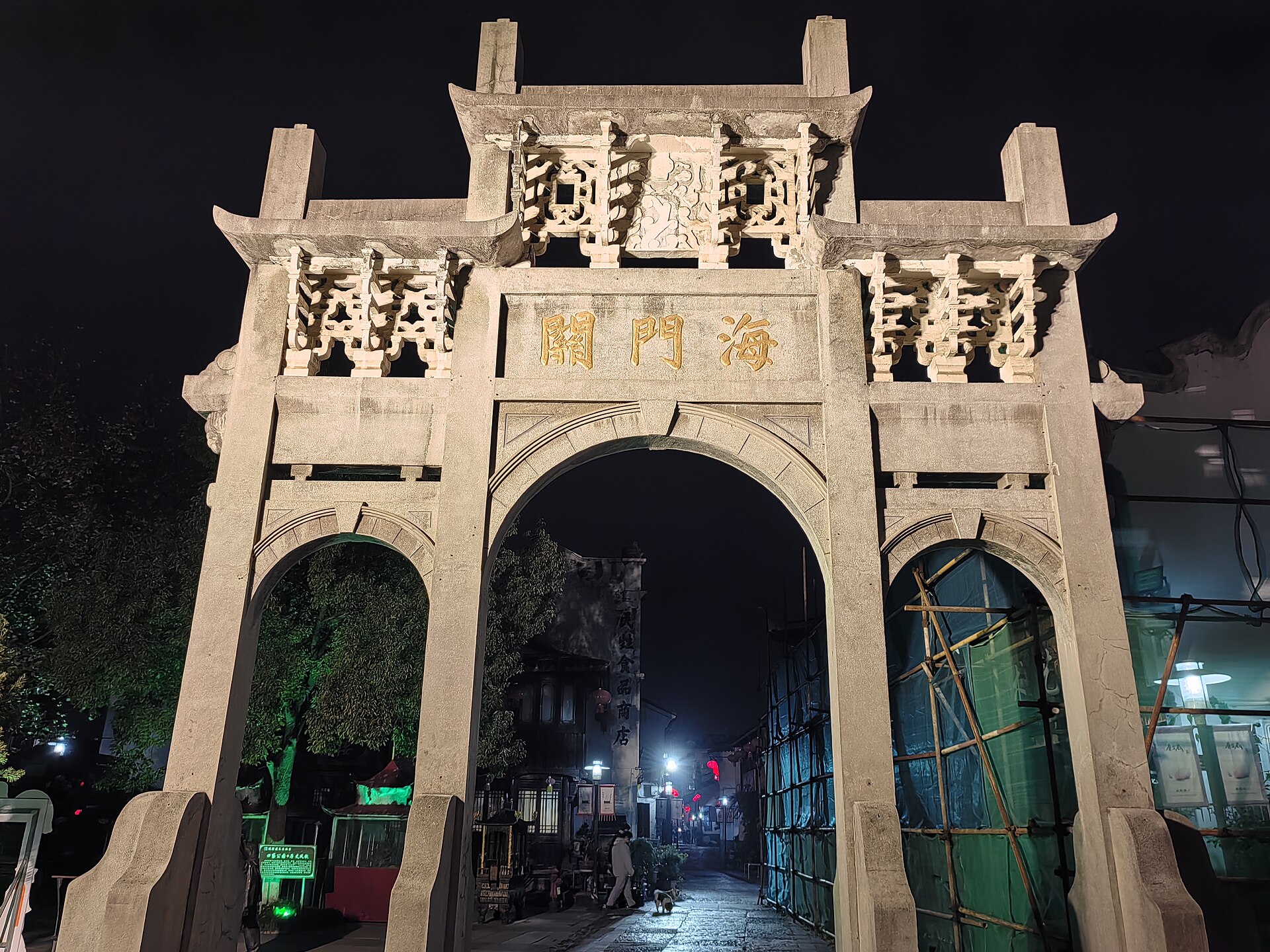
Haimen
Introduction
Haimen is a coastal town in Chaoyang District, Shantou, in eastern Guangdong province, set on the South China Sea. It administers 16 villages, and its territory takes in a stretch of ocean as well as land, so the sea is part of the town's everyday geography rather than a distant backdrop.
Beyond its administrative makeup, Haimen drew wider attention in December 2011, when thousands of demonstrators gathered to speak out against plans to expand a coal-fired power plant in the town. That episode is part of the town's recent story, and it shapes how Haimen is often described.
Getting around
Haimen has no metro or tram network of its own, so getting around within the district means relying on local buses, taxis and ride-hailing. Buses are the main form of public transport and connect the towns and villages spread across the district, which is divided into twenty-one towns and one township. Taxis are readily available for short trips or to reach the railway station and bus terminals, and ride-hailing apps work in the area as a fallback when you cannot flag a taxi on the street. In the central urban areas, walking is practical for short errands, meals and local sightseeing, and the largely flat terrain makes strolling comfortable; for anything beyond the immediate neighbourhood, you will want motorised transport.
Haimen's own railway station is an intermediate stop on the Nanjing–Qidong line, giving you a direct rail link to Nantong and onward along the line. Nantong Railway Station, which handles high-speed bullet trains, is about a 40-minute drive away and is a useful alternative for longer journeys, so check whether your service stops at Haimen itself or at Nantong and plan your transfer accordingly. For intercity travel, direct long-distance buses run from Shanghai General station and Shanghai South station to Jiangsu Haimen at roughly half-hour intervals through the day, with tickets bookable through chinabusguide.com; fares are inexpensive, and a taxi is an option if you prefer a door-to-door transfer, though it costs considerably more. If you need to book a taxi in Shanghai for the trip to Haimen, operators serving the route include Shanghai Dazhong, Shanghai Haibo, Shanghai Jinjiang Taxi Service and Shanghai Qiangsheng. Haimen has no commercial airport: Nantong Xingdong Airport is about a 40-minute drive, while Shanghai Pudong International Airport is less than two hours away by car, and from either you can take a taxi or ride-hailing transfer or connect into Shanghai or Nantong and continue by bus or train. Crossing the Yangtze is part of many journeys in and out of the district, with the Sutong Yangtze River Bridge providing a road crossing and ferry services also available; multiple entries onto the national highway system, including the G40 Expressway, make driving viable if you have access to a car.
When to go
Haimen has a humid subtropical climate with four distinct seasons, so plan your trip around the extremes rather than expecting mild coastal weather year-round. Summer is hot and rainy, with July the hottest month and the rainiest stretch of the year; the summer rains usually bring flooding, so expect wet conditions and possible travel disruption. Winter is cold, with January the coldest month, so pack for genuinely chilly weather.
Three days in Haimen
Day one: Base yourself in Haimen and get your bearings in the Chaoyang District, the city's central neighbourhood and a good starting point for understanding how Haimen sits within Guangdong. Take your time settling in rather than rushing between sights, and use the day to orient yourself toward the South China Sea and the wider region. Buses and taxis make it easy to move around, and if you arrive by air, Nantong Xingdong Airport and Shanghai Pudong International Airport are the main gateways serving the area.
Day two: Look outward from Haimen toward the Yangtze and the crossings that link this part of Jiangsu with Shanghai. The Sutong Yangtze River Bridge and the expressway network make day trips feasible, and you can reach Nanjing, Qidong, Nantong and Nantong Railway Station by road or rail. Shanghai is also within reach, with services from Shanghai General, Shanghai South and connections onward. If you prefer to stay local, simply explore Haimen's streets and waterfront at an unhurried pace.
Day three: Use your final day to connect Haimen with the broader Jiangsu and Shanghai region before you leave. Shanghai-based taxi services such as Shanghai Dazhong, Shanghai Haibo, Shanghai Jinjiang Taxi Service and Shanghai Qiangsheng are useful for onward transfers, and the rail links via Nantong Railway Station keep the area well connected. Weather shapes the experience here: summer, particularly July, is warm and humid, while winter, especially January and December, turns cold, so plan your pace accordingly.