Jincheng
Introduction
Jincheng is a prefecture-level city in the southeast of Shanxi province, China, sharing its border with Henan province to the south and southeast. It is known as an industrial hub, with coal mining standing out as one of its key industries.
Before you go
Jincheng sits in the southeast of Shanxi Province, a city whose history reaches back more than four thousand years and which long served as a geostrategic hub between North China and the Central Plains. Its name refers to its position on the southern frontier of the State of Jin, and it passed through many names and roles over the centuries — Hedong County under the Qin, Zezhou in the Tang, Zezhou Prefecture in the Ming — before coal drove its modern growth into one of the country's energy bases. Plan your trip around the seasons: summers are hot and humid with July the peak of the heat and frequent thunderstorms, winters are bitterly cold, dry and snowy, and spring and autumn are the most comfortable windows, with autumn especially sunny and dry. Spring and winter can bring strong winds, and the air is generally dry, so pack accordingly.
As in most Chinese cities of its size, English is not commonly spoken, even in large hotels and restaurants, and many locals speak a local dialect or standard Chinese with a strong local accent. If you speak standard Chinese you will manage most of the time, but expect occasional difficulties in being understood.
Getting there
Jincheng has no commercial airport of its own, so most travellers fly into Zhengzhou or Changzhi and continue overland. From Zhengzhou Airport you can pick up a high-speed train for the onward leg into the city.
- Jincheng Railway Station (晋城站), 98 Yingbin Street, Cheng District — serves regular-speed trains only; reached by bus nos. 2, 13, 19 and 31.
- Jincheng East Railway Station (晋城东站), Danhe Expressway, Zezhou County — serves high-speed trains only and is now the city's busiest station, since most trains arriving these days are high-speed. Trains from Taiyuan take about 1.5 to 2 hours; from Zhengzhou about 1 to 1.5 hours, a little longer if you board at the airport station. Bus nos. 110, 111, 112 and 319 serve the station.
- Jincheng East bus station, opposite Baishun Logistics Information Center on 207 National Road, Zezhou County — the intercity bus service links Jincheng with many cities and towns across Shanxi, including Changzhi, Yangcheng and Taiyuan. It is known for punctuality and value for money, and some buses have air conditioning and onboard Wi-Fi. Buy tickets at the station or book through the mobile app.
Getting around
Jincheng's main urban area sits in the centre of the Zezhou basin, and the terrain is flat enough that getting around on foot or by bike is realistic. The city has an extensive local bus network that is cheap and straightforward to use; most city buses are inexpensive, while longer-distance services running to and from the suburbs and neighbouring towns and villages cost a little more. Jincheng East Bus Station is the hub for intercity services, connecting the city with destinations across Shanxi including Changzhi, Yangcheng and Taiyuan. Intercity buses are known for punctuality and good value, and some have air conditioning and onboard Wi-Fi; tickets can be bought at the station or booked through a mobile app.
Taxis usually run on the meter, so there is no need to negotiate a fare, but do not expect drivers to speak English or standard Chinese — it helps to have your destination written down in Chinese characters. Cycling is a viable option given the flat ground, and bicycles remain common even as electric bicycles and scooters increasingly replace them. On large streets, bicycles ride in a separated one-way road running parallel to the main road; on some streets, cyclists have been pushed into smaller bike lanes paved into the sidewalk, where sidewalks are used for parking and cars frequently come and go across the lane. Bicycles do not have the right of way, and it is common to see motorcycles driving the wrong way down the bike path, sometimes at high speed. Walking can cover the city in a reasonable amount of time, but stay alert: a green pedestrian signal is not a guarantee that it is safe to cross, cars turning right rarely slow down, and cars parked on the sidewalk often force pedestrians out onto the street. Drivers are used to this, but pedestrians should not expect to have the right of way. As in many Chinese cities, manhole covers are sometimes missing, so watch carefully where you step.
Where to stay
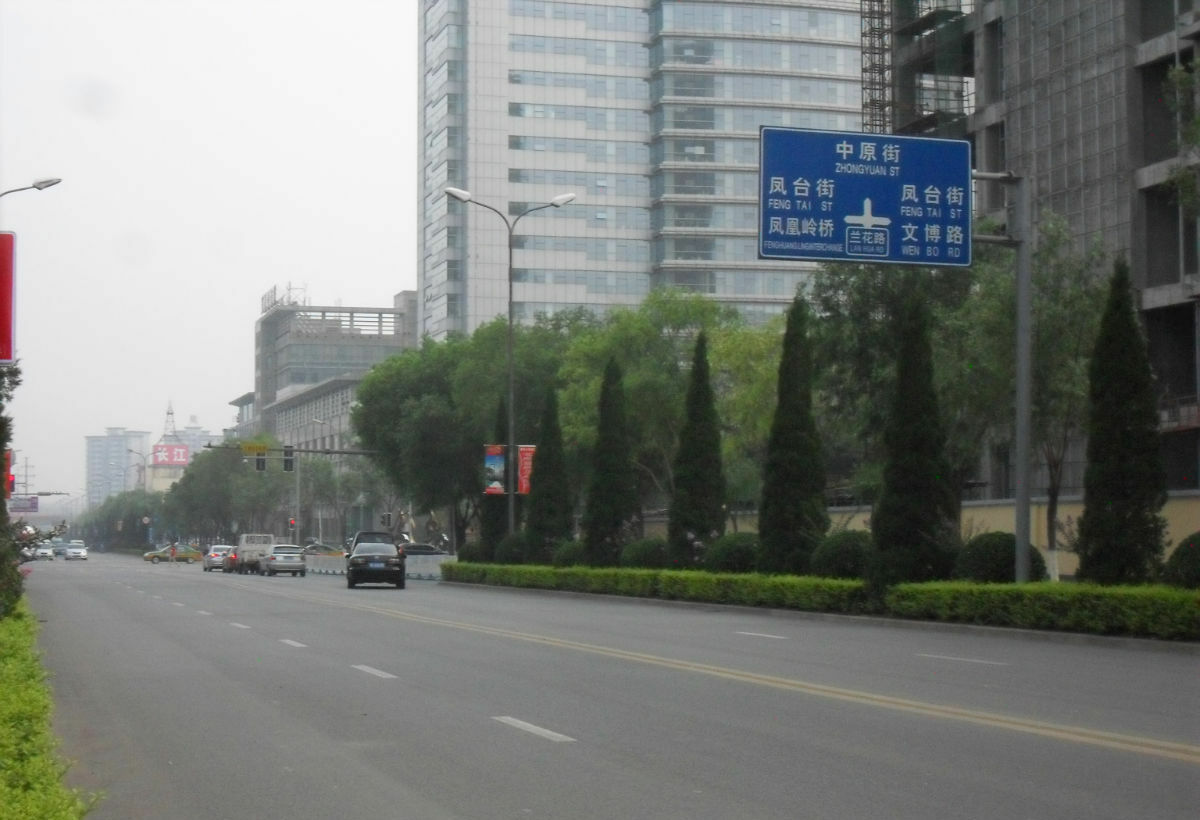
Jincheng's accommodation is spread along the main commercial streets rather than concentrated in a single district. You'll find the largest cluster of hotels on and around Fengtai Street, which runs east–west through the city centre: the Jincheng Grand Hotel and the Pacific Hotel both sit on Fengtai West Street, while the Lanhua Hotel is further out on Fengtai East Street. Zezhou Road, running north–south, is the other main axis, with the Sunshine Hotel on the northern stretch and the Jinnian Hotel down on Zezhou South Road.
- Yibin Grand Hotel — Qianjin Road
- Sunshine Hotel — Zezhou Road
- Lanhua Hotel — Fengtai East Street
- Jinnian Hotel — South Zezhou Road
- Jincheng Grand Hotel — Fengtai West Street
- Pacific Hotel — West Fengtai Street
All of these are full-service city hotels rather than guesthouses or hostels, so expect the usual range of rooms and on-site dining. Booking ahead is sensible if you're arriving around a public holiday, when the Fengtai Street properties in particular fill up quickly.
Food & drink
Jincheng's table leans on pork, noodles and slow, layered cooking. Yangcheng roast liver is the dish many visitors seek out: fresh pork liver is treated with a secret seasoning blend and put through several stages of frying, steaming and deep-frying, which gives it a distinctive taste. Jincheng fried cold noodles are a traditional snack with a long history behind them — the cold noodles are cut into pieces, fried in oil and finished with minced garlic in vinegar, leaving them soft, tender and spicy. Jincheng kuoyourou is a classic local dish of lean pork cooked with water starch, carrots and black fungus; it comes out bright in colour with tender meat.
To drink, look to the traditional Shanxi preparations. Oil tea is made mainly from flour, peanuts and sesame, roasted and boiled into water — it tastes strong and is known for warming the stomach. Plum soup combines dark plum, hawthorn and licorice for a sweet-and-sour drink that quenches thirst, cools you down and cuts through grease. Apricot tea uses ground almond as its base, boiled with water for a delicate taste said to moisten the lungs and ease coughs, while jujube tea is brewed from the region's red jujube and is sweet and nourishing.
What to see and do
Jincheng rewards travellers who head out of the city into the surrounding hills and villages. In Zezhou County you can visit the Yuhuang Temple, a large Taoist complex dating from the Song Dynasty, noted for its old sculptures and especially its figurines representing the 28 mansions of Chinese astronomy. The Jincheng Museum, in the southeast corner of Zezhou Park, is the city's main museum and holds a large collection of artefacts. Also in the city is the Confucian Temple, built in the Tang Dynasty or earlier, whose architecture, inscriptions and artefacts show the influence of Confucianism on local society; treat it as a working cultural and religious site and do not touch the relics or disturb temple activities.
Further afield, the House of the Huangcheng Chancellor in Yangcheng County is the area's best-known historic site, and the walled Ancient City of Guoyu, with its Ming and Qing residences, lies only a short distance away. In Qinshui County, Xiangyu Castle is another fortified village, built in the early 17th century by the Sun brothers, with unusually designed walls. For nature, the Manghe National Nature Reserve protects a river valley, while Jue Mountain, part of the South Taihang range, combines dramatic scenery with Taoist heritage, and the Wangmangling Scenic Area offers rock formations, greenery, Taoist temples and hiking trails. In autumn, head to Lingchuan County for the red maples, best seen along the road between Huaishuling Village and Duohuo. If your visit coincides with a festival, look out for the Jincheng temple fairs, held around temples and ancestral halls through the year and especially lively at the Spring Festival, Qingming, the Lantern Festival and the Dragon Boat Festival, with folk performances, food stalls and handicrafts; the "Eryue Er" or Dragon Head Raising celebrations, when farmers pray for a good harvest with dragon dances, sacrifices and fairs; and local opera festivals showcasing Jin Opera.
- Buy rope crafts from the Jincheng area, woven accessories and daily goods made with distinctive techniques.
- Look for Shanxi ceramics - dishes, vases and decorative pieces make good souvenirs.
- Pick up local specialties such as Shanxi apples and dried fruits.
- Try market and street-stall snacks like fried dough and tofu pudding.
When to go
Jincheng has a temperate continental climate with four distinct seasons, so what you pack and plan depends heavily on when you come. Autumn is the standout: temperatures fall steadily, precipitation tapers off and the air turns dry, leaving sunny skies that make it the most pleasant season to visit. Spring is another comfortable option, warming steadily through the season with moderate humidity that suits time outdoors, though occasional strong winds blow.
- Summer: Hot, with July the hottest month and occasional spells of extreme heat. This is the wettest part of the year, when precipitation is concentrated and thunderstorms are frequent, some bringing gusty winds; the air turns slightly humid.
- Winter: Cold and dry, with January the coldest month and snow and frost common. Precipitation is low and falls mainly as snow, and strong winds occasionally occur.
Three days in Jincheng
Day one: Arrive in Jincheng, a city in Shanxi Province, North China, with roots reaching back through Hedong County, Zezhou, and Zezhou Prefecture. From Zhengzhou Airport or by train to Jincheng Railway Station or Jincheng East Railway Station, make your way into the city and settle in around Yingbin Street in Cheng District. Spend the afternoon getting your bearings on foot, noting how the Central Plains meet the hills of Shanxi, and eat a simple local meal before an early night.
Day two: Take a bus or train from Jincheng East toward Zezhou County, or head out along the Danhe Expressway and National Road toward Yangcheng. The day is for the older layers of the region, from the State of Jin and the Qin and Tang through the Ming, when this was Zezhou Prefecture. Plan around the seasons: spring and July both shape what you can do, so check conditions before setting out.
Day three: Use your last day for the practical side of Jincheng, including Baishun Logistics Information Center if you need transport connections, and a final look at the city before leaving. Trains run to Taiyuan and toward Henan and Zhengzhou, so you can exit via Jincheng Railway Station or Jincheng East Railway Station. If you have time, revisit the part of town you liked most, whether around Yingbin Street or out toward Zezhou County.