Chongzuo
Introduction
Chongzuo sits in the south of Guangxi Zhuang Autonomous Region, close to the border with Vietnam. It is one of the places where Zhuang culture is most strongly represented, with a Zhuang population among the largest in China.
Before you go
Chongzuo sits in southern Guangxi near the China–Vietnam border, a subtropical monsoon city with long summers and short, mild winters. Expect hot, humid and rainy conditions in summer, when heavy downpours and thunderstorms are common and the combination of heat and humidity can feel intense. The drier, cooler months of autumn and winter are generally the most comfortable for travel and outdoor activities, while the dry season runs from November to February.
This is one of the birthplaces of Zhuang culture, with a strong ethnic minority presence, and it is also a major sugar production centre. Its border location has long made it a hub for trade and cultural exchange, and it holds a significant place in modern Chinese history: in the late 1920s and early 1930s it was an important frontier area for revolutionary activity, with leaders such as Deng Xiaoping carrying out mobilization and organizing work here. Memorial halls, former residences and former meeting sites from that period are preserved around the city, and knowing this background will deepen what you see.
Getting there
< p >Chongzuo is served by two railway stations, both in Jiangzhou District. Chongzuo Station sits in Taiping Town and dates back to 1952, handling both passenger and freight service on the Xianggui Railway. The newer Chongzuo South Railway Station, opened in 2020, lies between Nanyou Expressway and Luoyue Avenue and serves the high-speed line running south. < p >By road, long-distance coaches connect Chongzuo directly with Nanning and other surrounding cities from the bus terminal. If you are driving yourself, the highway from Nanning brings you into the city in roughly an hour and a half.Getting around
Chongzuo's built-up area is compact enough to cover on foot, with local buses filling in the longer hops between the main districts. Buses run on several lines across the city and are the cheapest way to move around; you pay a flat fare and signal the driver to stop by waving, so keep an eye out rather than waiting only at marked stops. Taxis are plentiful and affordable, with a meter that starts low and then charges by the kilometre, which means most trips within the urban area come to a modest sum. If you have a complaint about a taxi, there is a dedicated complaint line.
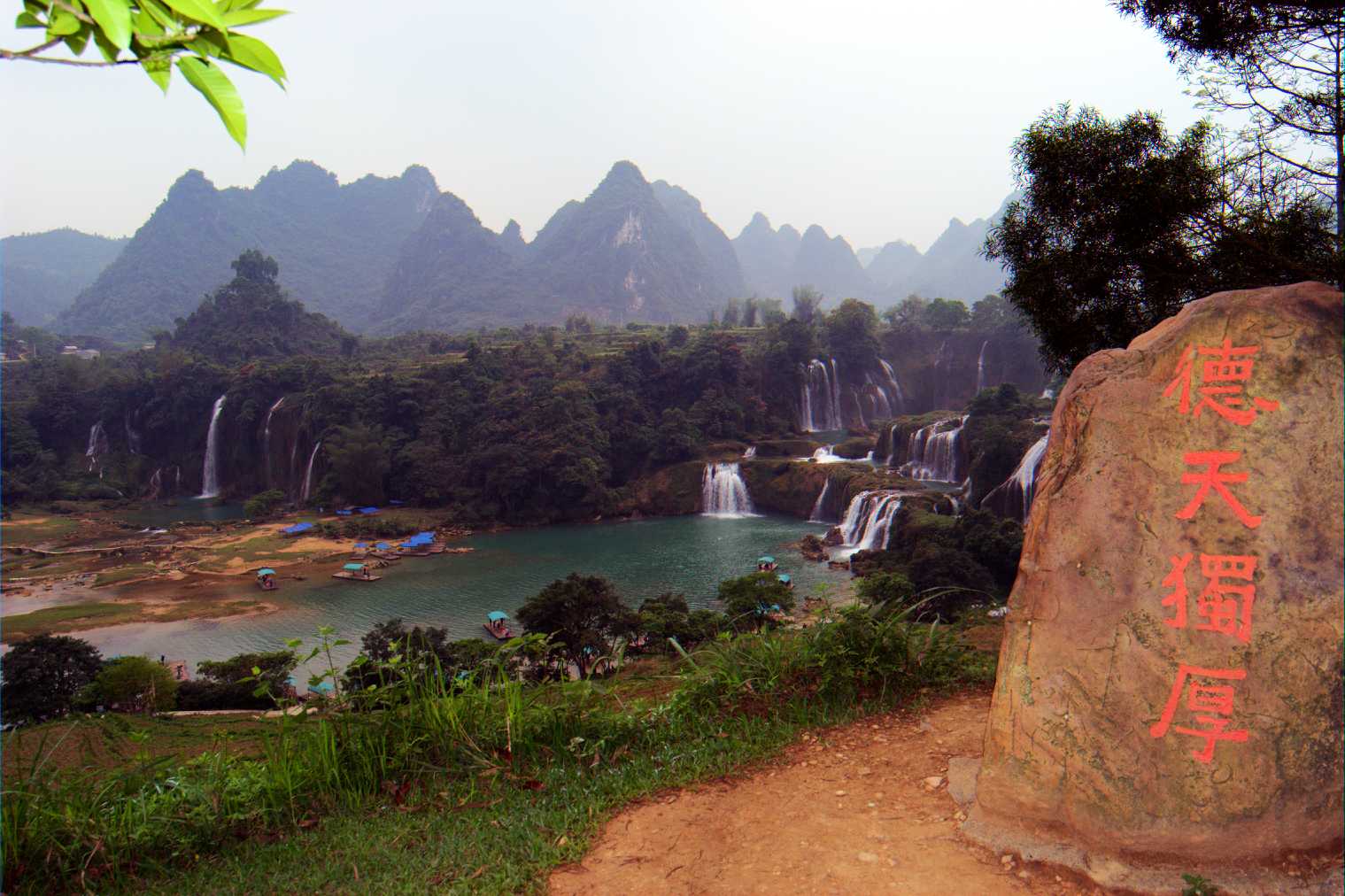
For the region's headline natural attractions, which sit well outside the city, you will need road transport. Direct tourist buses run to scenic spots such as Detian Falls, with fares varying by itinerary and a reduced round-trip option available — often the simplest choice for a day trip. Alternatively, you can rent a car or an electric car and drive yourself, which suits visitors who hold a driver's licence and are comfortable with local road conditions; the distances between attractions are long, so a car saves time and adds flexibility. If you are arriving from elsewhere, the documented routes in are high-speed rail to Chongzuo South, conventional rail to the older Chongzuo Station, or a long-distance coach from Nanning and nearby cities, with onward travel into the city by taxi or local bus.
Where to stay
Where you sleep in Chongzuo depends on whether you want to be in the middle of the city or out among the scenery. In Jiangzhou District, the Chongzuo International Hotel sits on the east side of Youyi Avenue Middle Section, with a restaurant serving Chinese and Western food, meeting rooms, fitness areas and free parking — a practical base for business travellers and for anyone planning to explore the Zuo River and the local markets. Also in Jiangzhou District, on the southeast side of the ASEAN Avenue and Chongwen Road intersection, the Chongzuo Zuojiang Hermit Hotel is a smaller boutique option in the city centre, known for cosy rooms and friendly service, and convenient for the food streets, shopping areas, public transport, parks and downtown plazas.
If you would rather trade the urban bustle for natural surroundings, head out to Mingshi Village in Longgantun, where Lux Chongzuo, Guangxi Resort & Villas offers spacious rooms and villas within a luxury resort complex with leisure facilities. It suits a relaxing getaway, with rural tourism and nature walks among the activities nearby.
Food & drink
Chongzuo's food scene centres on Zhuang and Guangxi cooking, with rice noodles, barbecue and steamed regional dishes appearing across the city. For a concentrated taste of local eating, head to Chongzuo Food Street at the intersection of Kam Siu Road and Wu Yi Road, known for its local cuisine including Zhangji Rice Noodles, Laos Zhao Bulgogi and various barbecue snacks. In Jiangzhou District, Lao Chongzuo Specialty Restaurant on Friendship Avenue serves authentic Guangxi and Zhuang-style dishes, praised for steamed regional specialties, generous portions and homey flavours such as passion fruit spare ribs and glutinous rice creations. For something simpler, Longzhou Flavor Rice Noodle Restaurant on Detian Road offers hand-pulled noodles, spicy broths and savoury condiments — a good option for a quick, authentic lunch or dinner. No.93 Small Kitchen, near the main street, is another spot for regional Chinese home-style meals and daily favourites, valued for its authentic local taste and friendly service.
To drink, 8090 Milk Tea & Cool Drinks in Jiangzhou District is a casual stop for bubble tea, fruit drinks, iced tea and other cool refreshments — welcome during the hot subtropical summers of Guangxi, with fruit teas, classic milk teas and seasonal cold drinks on the menu. Zhuang oil tea is a traditional northern Guangxi beverage prepared with roasted tea leaves fried in oil with spices, sometimes served with peanuts and puffed rice; rather than a branded shop, it's found in small local tea houses and market stalls near downtown Chongzuo markets. Around busy market streets, especially near the food streets, you'll also find stalls selling freshly squeezed longan sugar water, sour plum drink, bitter gourd juice and seasonal tropical fruit juices made from local pineapple, watermelon and longan.
What to see and do
In Jiangzhou District you can seek out the Leaning Pagoda, a whitewashed structure perched on a large rock in the middle of the river; when the water is low, a small boat can ferry you across so you can climb it, though crossing becomes impossible during the spring and summer rainy season. The Chongzuo Ecology Park, reachable by minibus, is a research centre for the white-headed leaf monkey — the animals leave their caves each morning for the hilltops and return around sunset, and observation points are set up near the caves, so daytime sightings are unlikely. The Stone Forest on Shijinglin Road is a compact karst landscape arranged around natural stone formations, quieter than its better-known counterparts in Yunnan. For context on the region's past, the Chongzuo Zhuang Nationality Museum devotes most of its three floors to the Huashan rock paintings, created along the nearby Zuojiang River some two thousand years ago. If your visit coincides with the third day of the third lunar month, you can join the Zhuang People's Sanyuesan Festival, a song fair with folk singing, bamboo pole dances, traditional costumes, ancestor worship and ethnic markets. Rural and mountainous Zhuang communities also hold the Nongzhang Festival, centred on agricultural worship with sacrificial rituals, communal feasts, songs and dances. In border areas such as Pingxiang and Youyiguan, the China–Vietnam Border Folk Culture Festival brings together folk performances, music, dance, ethnic costumes and trade. For organised sport, the centrally located City Stadium hosts football, athletics and community fitness activities, while the Fusui County Gymnasium and the Sports Center Gymnasium offer indoor facilities for basketball, badminton, table tennis and larger regional competitions. Two cinemas, Cinema China Film in a shopping and entertainment complex and the neighbourhood Municipal Cinema, show current domestic and international releases.When to go
Chongzuo has a subtropical monsoon climate, with long hot summers and short, mild winters. Most of the rain falls from May to September, when heavy downpours and thunderstorms are common and the heat combines with humidity to produce very hot, sticky conditions. The landscape is at its lushest then, but you will want to plan around the wettest spells.
The drier, cooler months from late autumn through winter are the most comfortable time to visit, with no prolonged or severe cold, making this the best period for outdoor activities. The shoulder months on either side of the wet season are transitional: warm, with rainfall building toward the May–September peak and easing again by October.
Three days in Chongzuo
Day one: Base yourself in Jiangzhou District, the urban heart of Chongzuo, and use it to get your bearings. The Zuo River runs through this western Guangxi landscape, and the city sits close to the border with Vietnam, so the mix of Zhuang and Chinese influences is part of everyday life here. Start gently: walk along Youyi Avenue Middle Section, where the Chongzuo International Hotel gives you a central landmark to orient around, and take in the streets of the Jiangzhou District. If you have time in the afternoon, head to the Deng Xiaoping Memorial, a reminder of the region's modern history. In the evening, eat where the locals do and try dishes rooted in Zhuang cooking.
Day two: Give the day to Detian Falls, the reason many travellers come to this part of Guangxi. It sits on the border with Vietnam, so the scenery is as much about the river and the surrounding karst as the falls themselves. Getting there takes planning: you can travel by road from Chongzuo, and buses and taxis are the usual ways to cover the distance. Alternatively, use Chongzuo South Railway Station or Chongzuo Station as your starting point if you are coming from Nanning or elsewhere in the region. Expect a full day out, and bring what you need for warm, humid conditions.
Day three: Slow down and look at how Chongzuo connects to the wider region. The Xianggui Railway and the Nanyou Expressway both pass through this area, and Taiping Town is a good place to see a quieter side of Jiangzhou District. If you are heading onward, Chongzuo South Railway Station and Chongzuo Station are your main departures, with direct services toward Nanning and beyond. The best months to visit are November through February, when the weather is milder and easier for walking. Before you leave, spend a last hour by the Zuo River and take in the western Guangxi light.