Maroua
Introduction
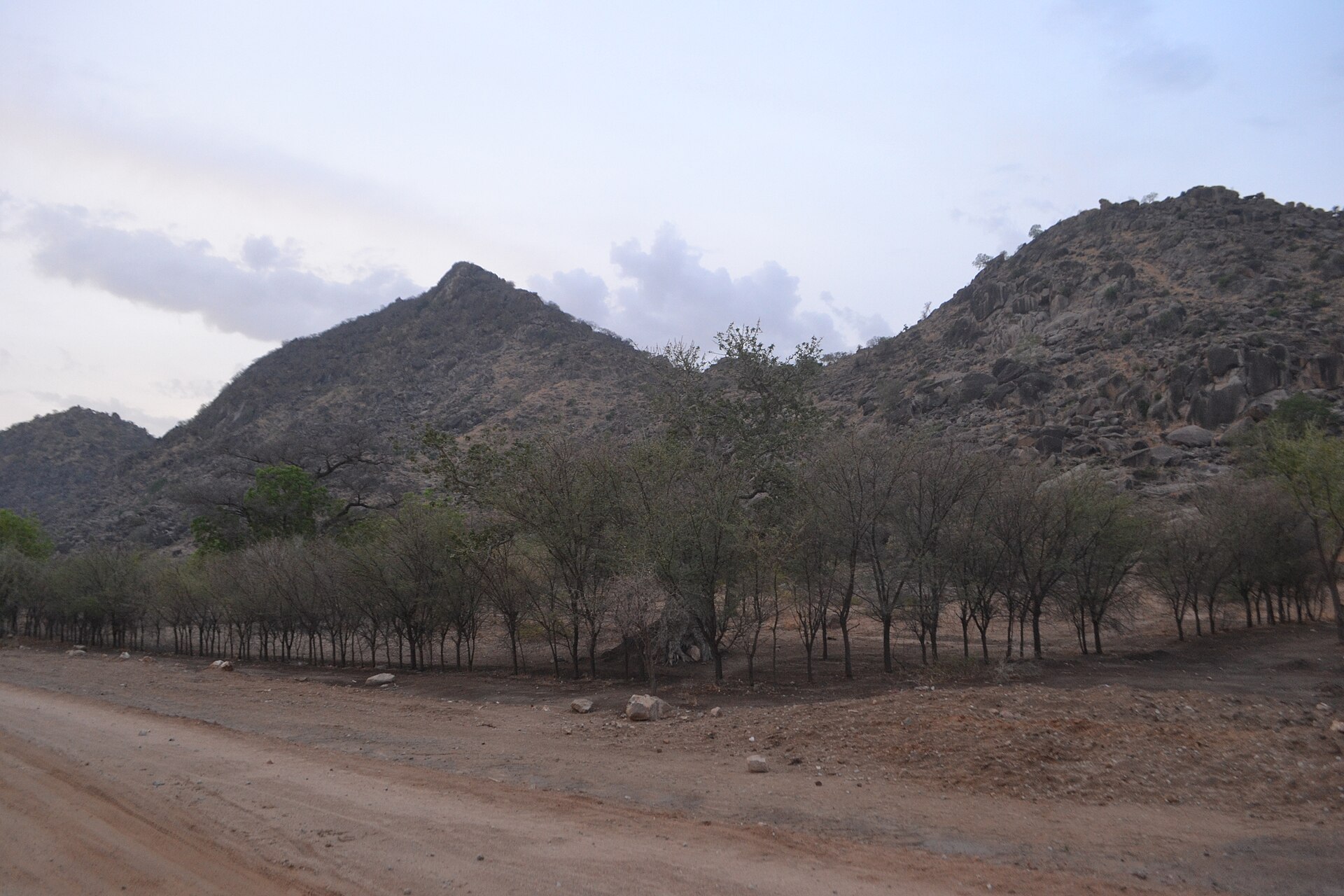
Maroua is the capital of the Far North Region of Cameroon, set along the banks of the Ferngo and Kaliao Rivers in the foothills of the Mandara Mountains. The city's population is made up mainly of the Fulbe, also known as Fulani.
Before you go
Before you go, it helps to know what Maroua is known for: artisanal activity and its market, where tanners, potters, tailors, weavers and blacksmiths gather daily. The craft centre at the entrance to the market brings together around fifty artisans, whose shelves hold embroidered or hand-woven tablecloths, leather rugs, slippers, and handbags made from crocodile or snake skin. A second, more modern craft centre stands at the entrance to the city. The city is also known for its imposing ginger fields and for the manufacture of ginger liqueur, so plan your time around the market and the craft centres if you want to see the work of the artisans firsthand.Getting there
Maroua sits close to the N1 Highway, which links the city with Garoua, Kousseri, N'Djamena and Maiduguri. Be prepared for slow going if you travel by road: the highway is in bad condition, and the poor surface can double your journey times. If you arrive by air, Maroua Salak International Airport (MVR) is at Salak, about 15 km southwest of the city.Getting around
The easiest way to get around Maroua is by motorbike taxi, known locally as a benskin — a local English expression meaning "trembling skin." These motorcycle taxis are the workhorse of city transport, and there are thousands of them, making them a very economical option. You do not share a motorcycle taxi with other passengers; each ride is for you alone. A trip within the city costs between 100 and 300 FCFA, and more if the distance is significant. A "deposit" — an unshared motorbike taxi hired for a longer period — varies with the duration, starting at 500 FCFA and going up to 2000 FCFA. Always discuss and confirm the fare before getting on the vehicle. Be aware that this mode of transport is dangerous, and many accidents involve motorcycle taxis, so ride with care and use your judgement.
Maroua has no rail, metro, or tram network, and there is no described bus or formal public transport network within the city, so plan on road-based transport. Hiring a car at the airport or in town can be a pleasant way to get around, and it is a good option if you prefer to avoid motorcycle taxis, want more comfort, or plan to move at your own pace. Walking is best treated as a way to cover short local distances rather than a primary means of transport, and you should be mindful of the hot, dry Sahelian climate. If you arrive by air at Maroua Salak International Airport, note that it sits outside the city at Salak, southwest of Maroua, so arrange your onward transport — a hired car or a taxi — rather than assuming you can walk into town. The N1 Highway runs nearby and connects Maroua with Garoua, Kousseri, Ndjamena, and Maiduguri, but the road is in bad condition, which can double journey times, so allow generous extra time for overland travel.
Where to stay
Maroua's hotels cluster around a few comfortable options, several of which share the same set of amenities: a pool, free parking, free Wi-Fi, and air-conditioned rooms. Among these are Maroua Palace, Mizao Hotel, and Hotel du Sahel. If you would rather have food on site, Relais de la Porte Mayo in Domayo offers fast food alongside the same free parking, free Wi-Fi, and air-conditioned rooms.
A handful of other hotels are spread across the city's neighbourhoods, including Fabrik Hotel, Hotel Mizao in Quartier Baouliwol, Hotel Saphir at Pont Rouge, Hotel Maroua Palace on Boulevard du 20 mai, and Hotel Savano in Quartier Pitoaré. With options in Domayo, Baouliwol, Pitoaré, and along the main boulevard, you can choose a base that suits how you plan to get around.
Food & drink
Maroua has no shortage of places to eat, with restaurants spread across the city and its neighbourhoods. Several sit along or near Avenue de Kakatare, Avenue des Banques and Boulevard de Renouveau, while others are found in Sekandé and the P2 area. A number of them stay open around the clock, so you can find a meal at almost any hour, and many are reachable by phone if you want to check ahead. For drinks, you'll find bars scattered through the city as well, including spots near the Stade Annexe and around the Eglise baptiste UEBC in Palar. Some bars keep daily hours, a few stay open 24 hours, and others close on Sundays, so it's worth planning around the day you're out.What to see and do
In Maroua you can hike Mont Maroua, the city's hilltop hiking area, and visit the Place des Fêtes de Maroua, a historical landmark in town. For local culture, head to the Village artisanal de Maroua, where you'll find a collection of artworks, particularly pieces reflecting the region's traditions. If you want to stay active, the Maroua Sports Complex is the place to go.Three days in Maroua
Day one: Start in Maroua itself, getting your bearings in the Far North Region of Cameroon. The city sits between the Ferngo and Kaliao Rivers, and its character is Sahelian, shaped by the Fulbe (Fulani) presence. Ease into things by walking rather than hiring a vehicle, and keep in mind that English is not the main language here. If you have flown in, you will likely have arrived at Maroua Salak International Airport (MVR) at Salak.
Day two: Use Maroua as your base for the surrounding area. The Mandara Mountains are the obvious draw, and the city is also a natural stopover on routes tied to Garoua, Kousseri, Djamena (Ndjamena) and Maiduguri. Among the places to stay are Maroua Palace, Mizao Hotel, Hotel Sahel, Relais Porte Mayo, Domayo and Fabrik Hotel. Wi-Fi is not something to count on, and you will need FCFA for day-to-day spending.
Day three: Slow down and take in the neighbourhoods before you move on. Always allow extra time for transport, since distances in this part of the country are long. Before you leave, sort out your onward plans, whether that means heading toward Garoua or across toward Kousseri, Djamena or Maiduguri.