Bamenda
Introduction
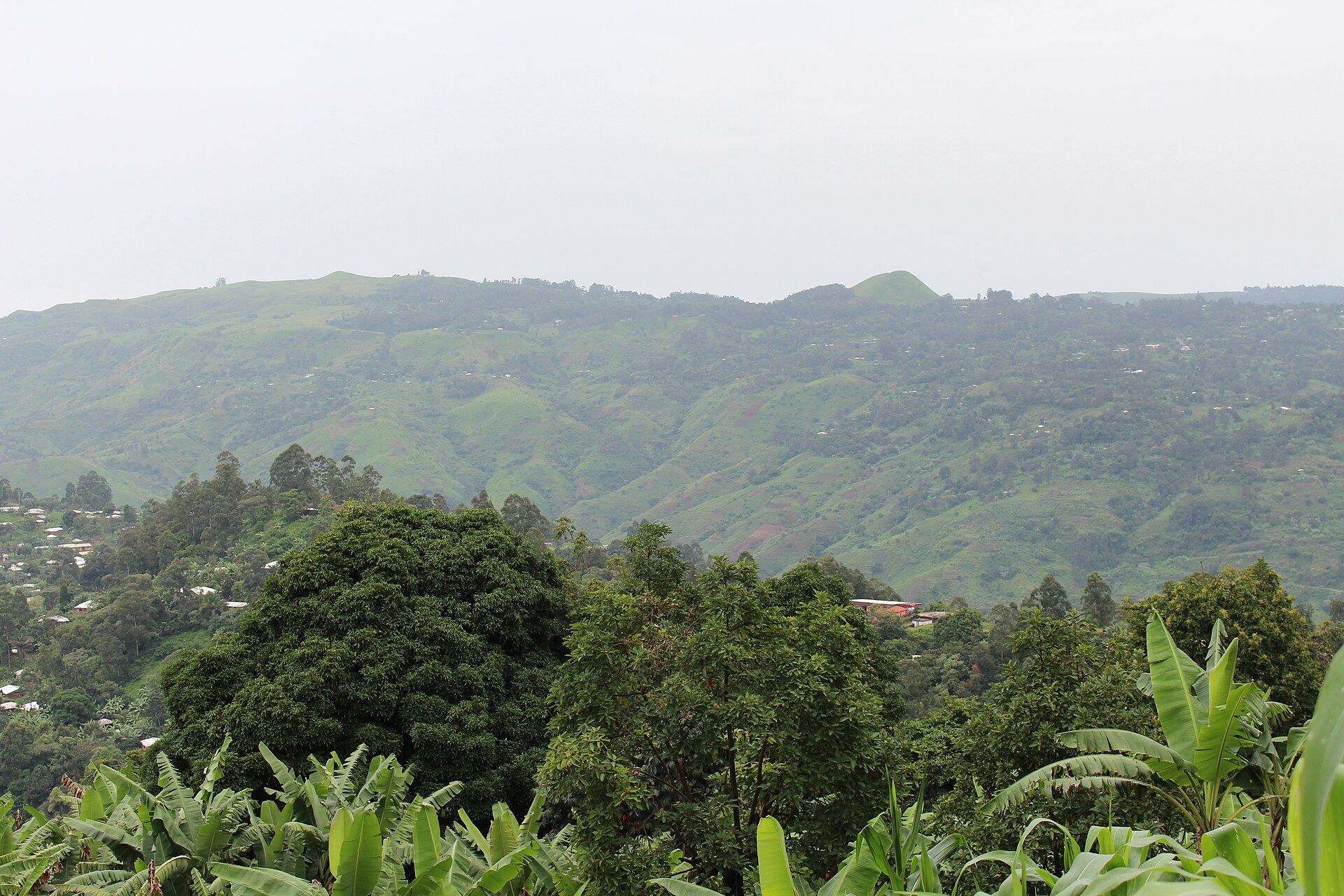
Bamenda, also called Abakwa and Mankon Town, is the capital of the Northwest Region in northwestern Cameroon. Set among hills, the city is known for its cool climate and its scenic hilly setting, and it lies well to the north-west of the national capital, Yaoundé.
Before you go
Bamenda is also known as Abakwa or Mankon Town, and its history runs from the Tikar people through German colonisation in 1884 to later French and English administration. Knowing this helps you read the city's character before you arrive.
The city sits against hilly backdrops, so plan for walking and views rather than flat, easy terrain. Bamenda is also home to the Bamenda University of Science and Technology, which gives part of the city a student feel.
Getting there
Bamenda has its own airport, but it handles charter flights only, with no daily scheduled service, so most travellers arrive overland. The main routes come from Douala and Yaoundé, both of which have major airports; from either city you continue by road on highways that are generally in good condition, though you should expect some large potholes along the way.
Allow roughly six hours by car from Douala, or about eight hours if you take a bus.
Getting around
Bamenda is a road city, and you will get around it on wheels rather than on rails. There is no practical passenger railway station, metro or tram network here, so plan every local trip around shared taxis, private taxis, moto-taxis or shared minibuses. The central reference point you will keep returning to is Bamenda City Main Market on Commercial Avenue, the main pickup area and the easiest place to orient yourself and your drivers. The city is hilly and spread across Bamenda I, II and III, with neighbourhoods such as Nkwen, Mile 4 Nkwen and Sonac Street in Ntamulung that you may pass through or stay in. Nkwen and Mile 4 are major transport neighbourhoods, so if your hotel is out that way, allow a slightly longer ride to and from the centre. Walking suits short local stretches, such as around the main market and Commercial Avenue, but for anything beyond a short stroll take a taxi or moto-taxi, and choose a taxi if you are carrying bags.
- Shared taxis are the standard way to move around town; the fare is shared, not a private hire, and rises at night. A private city taxi costs considerably more, and more again with luggage, hotel pickup or evening travel.
- Moto-taxis are everywhere and cheap, but agree the price before you ride. They are not recommended with luggage or for late arrivals, and helmets are rarely provided, so bring one or insist on one.
- Ride-hailing apps such as Yango and Allo Transport operate in Douala and Yaoundé but are not established for Bamenda, so arrange your rides directly instead of counting on an app.
- For everyday local movement, shared minibuses and bush taxis depart from central motor parks (gare routière) once full. Buy your ticket at the motor park counter, where seat numbers are included, and ignore touts outside and "VIP seat" offers, which are often just a regular minibus at double the price.
- Intercity road travel is agency-driven, so the company, its office and its pickup point matter more than any generic bus station. Vatican Express has a bus station on Sonac Street, a short ride from the main market, while operators such as Amour Mezam use Nkwen, central streets, Mile 4, roadside offices or their own company stands. Before you travel, record the company name, the exact agency or bus-park name, the neighbourhood, the departure time and boarding deadline, the luggage rules and fees, the arrival point in your destination city, and the agency phone number, and ask the agency or your hotel to name the drop-off point in advance.
- Allow large buffers for Bamenda–Douala and Bamenda–Yaoundé journeys, since road conditions, security controls, loading delays and urban traffic all eat into the schedule. Bamenda–Bafoussam is shorter but still worth planning in daylight. On the Bamenda–Douala corridor there is also a night bus, which stops at Nkongsamba for a break.
- When giving directions or negotiating a fare, always state your final neighbourhood, for example Commercial Avenue, rather than just "Bamenda."
- Bamenda Airport on Airport Road in the Bamenda 2 area handles charter flights with no daily scheduled flights, so most visitors will not arrive here; a hotel pickup or a known driver is advised when arriving with bags. The main flight gateways for the region are Douala International and Yaoundé Nsimalen, both reached by long-distance road legs by bus or pre-arranged car rather than an ordinary airport taxi. At those airports, use the official taxi rank outside arrivals or a marked taxi, and be wary of freelance drivers inside the terminal who quote high.
- The cleanest arrival in Bamenda is by road, in daylight, with a known drop-off point and either a hotel pickup or an agreed taxi. If you are arriving after dark, arrange the pickup before you depart, and avoid negotiating with random drivers while carrying luggage.
Where to stay
Bamenda has only a handful of hotels, and the largest, the Ayaba Hotel on the eastern side of town, is also the most faded: it was clearly smart when it was built, but now shows peeling paint, cold water and furniture that is falling apart. Rooms do have air conditioners and there is wireless internet in reception, and there is a swimming pool, though the water does not look too clean. Given this, the various other commercial places in town may be better options.
- Hotel Mondial
- Pelican Hotel Bamenda, in Ntarikon about 200 m from Ntarikon Market on Wum Road, with lodging, a restaurant and a bar; a budget option.
- Top Star Hotel on Cow Street, with a restaurant and close to a busy road.
- Blue Pear Hotel at S bend mile, 3 Nkwen, off the N11.
- Mawa Hotel at Mile 6 Nkwen on the northeast edge of town, a multi-floor hotel with a bar, a pool and wifi; the pool may not be that clean.
- Admiralty Serviced Apartments off New Road GRA, with a bar and clean quarters and dining area.
Food & drink
For eating out, the listings are thin: New Century Restaurant, near the main market, is the one sit-down option the guide records. Plan your meals around the market area and treat everything else as a bonus rather than a sure thing.
Drinking is where Bamenda's listings are densest. Bars are scattered across the city and along its main roads: Dreamland Snack Bar, Watson Bar, Le Biberon at the Funcha Street junction on the N11, Awesome Quiet Bar, Dreamland Nkwen, Nganda bar, a bar on the Buea-Bamenda road along the N6, Behindche Tap, Akebe Bar and Blue Bar Jonction. Several keep long hours, with Dreamland Nkwen, Behindche Tap and Akebe Bar noted as open around the clock, so a late drink is easy to find.
What to see and do
Bamenda makes a good base for exploring the traditional kingdoms of the surrounding region. In the city itself, the Mankon Museum holds art and cultural collections telling the history of the Mankon fondom, a traditional kingdom, and is housed in the former royal palace. The Nkwen Fon's Palace is a newer cultural heritage museum and venue space.
The classic way to see the wider area is the "Bamenda Ring Road", a loop that takes in the Bafut Palace in Bafut, the Menchum Waterfalls near Wum, the volcanically active Lake Nyos, the Kings Palace in Misaje, the crater lake of Lake Oku, Mount Kilum Ijim, the palace museum in Babungo, pottery in Bamessing and the Sabga Hills on the way back to Bamenda. It covers roughly 465 kilometres and road conditions can be unimproved at times, so plan it as a multi-day excursion; in return you get a detailed look at Cameroonian landscapes and kingdoms.
When to go
Bamenda has a tropical savanna climate, and the timing of your trip makes a real difference to how easily you get around. The long wet season sets in over the summer months, bringing frequent rain and damp conditions. Expect wet weather to shape your daily plans, and be prepared for muddy roads that can slow travel and outdoor activity.
Winter is the drier stretch of the year, with considerably less rainfall than summer. Without the long wet-season rains, travel and outdoor activity are easier, making this the more straightforward time to explore the city and its surroundings.
Three days in Bamenda
Day one: Start in Bamenda itself, getting your bearings in Abakwa and Mankon Town, two neighbourhoods that show different sides of the city's character. Walk Bamenda City Main Market and the stretch of Commercial Avenue, where you can buy produce and everyday goods, then continue to Nkwen and Ntamulung to see more of how the city spreads across its hills. For getting around, use shared taxis or moto taxis, or call on Yango, Allo Transport or VIP for longer runs.
- Abakwa and Mankon Town
- Bamenda City Main Market and Commercial Avenue
- Nkwen and Ntamulung
Day two: Give the day to Bamenda University of Science and Technology, then take in more of the Northwest Region's character around the city. The region's history runs through German, French and English influence, and Tikar heritage is part of the wider story of this part of Cameroon. Use the afternoon to wander Sonac Street and the Mile II and Mile III areas, and sort out onward transport for the next day.
- Bamenda University of Science and Technology
- Sonac Street, Mile II and Mile III
Day three: Plan a longer excursion or the journey onward. Intercity options such as Amour Mezam, Vatican Express and Set run services toward Douala and Yaoundé, so confirm your departure point and timing before you set out. If you have time before leaving, return to the main market for last purchases and a final walk through the neighbourhoods you have come to know.
- Amour Mezam, Vatican Express and Set for Douala and Yaoundé
- Bamenda City Main Market