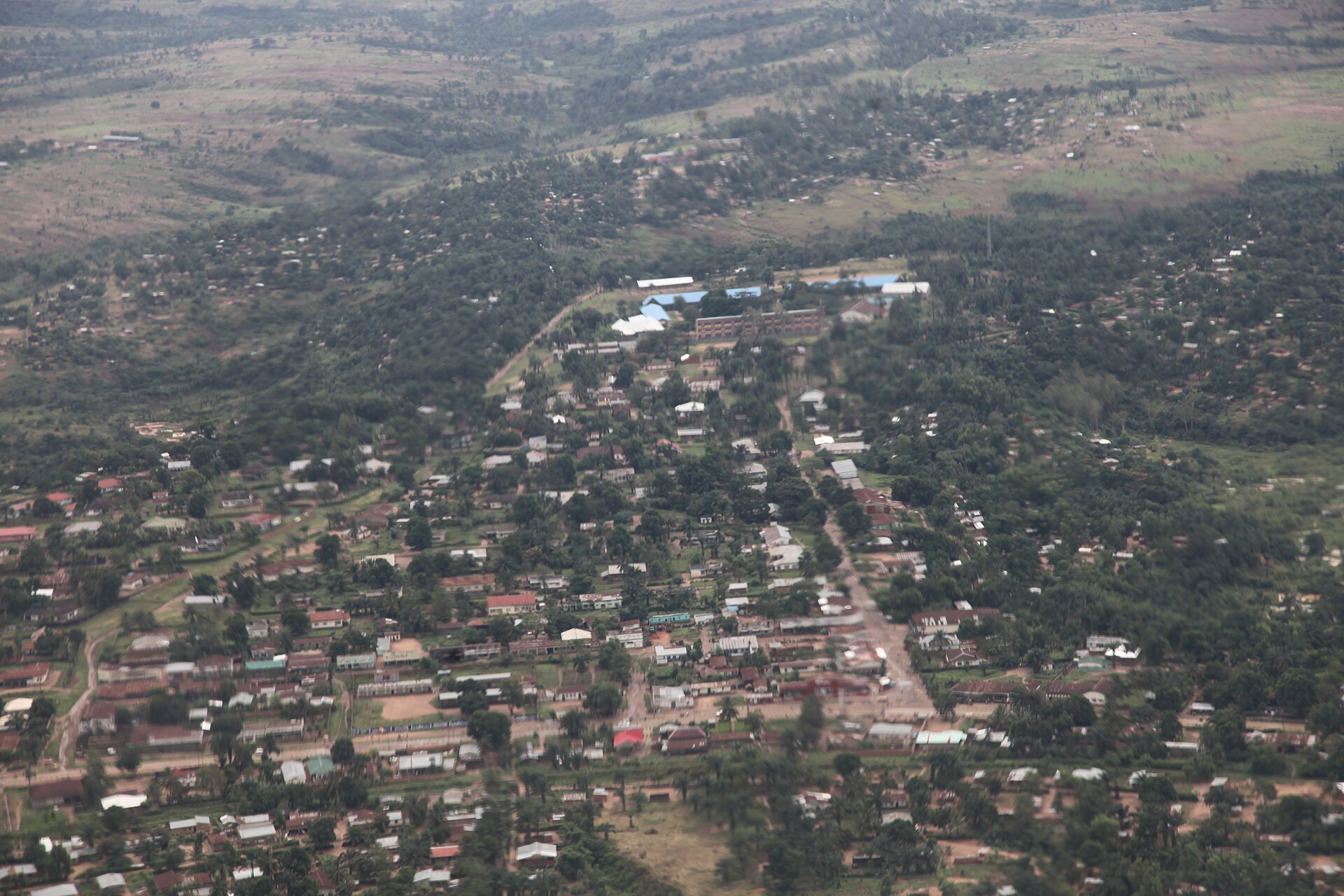
A City Built for Peace: Where Kasai's Heart Still Beats
Kananga sits at a crossroads where the Lulua River flows nearby and colonial memory meets African renewal. Named in 1966 for a Tshiluba word meaning "a place for peace or love"—itself derived from pre-colonial gatherings of chiefs settling disputes and discussing treaties—the city remains a working administrative and trading hub largely untouched by the tourist trail. Few foreigners arrive here, which means you will move through streets where your presence is noticed, where transactions happen at local pace, and where what you see is not arranged for you. The city lies in the heart of the Kasai region, near the railway line that connects Ilebo to Lubumbashi, and near enough to the diamond-trading networks that once made this place strategically essential. Come expecting slowness, authenticity, and the particular reward of being genuinely elsewhere.
What to See: The Layers of Luluabourg
Kananga's colonial past surfaces in the older quarters of the city centre, where French-era buildings still stand with their stained-glass windows and faded facades, now flanked by newer structures. The Cathédrale Saint Clément, a colonial-era cathedral built in 1935, remains active and draws worshippers to its services and seasonal festivals. The Gare de Kananga—the railway station—functions as a genuine working transport hub and a window into the city's role as a regional junction; standing there you will see the trains and the movement that keeps the place connected to the wider Congo.
The Lulua River runs near the city. Walk down to its banks and you will find pirogues moored among river traffic, fish being dried in the sun, and riverside markets where vendors sell the catch of the morning. Fishermen work from shallow-bottomed boats; the water moves with purpose. This is not a scenic lookout but a living riverfront, and sunset here carries the weight of daily labour.
The municipal stadium occasionally hosts football matches that draw crowds whose rhythmic chanting and drumming can be heard from blocks away. These are social gatherings as much as sporting events, and they show how Kananga's people gather and celebrate together. The Palais du Gouvernorat serves as the civic centre where local ceremonies take place; the Palais de la Culture and community cultural centres host music and dance performances—check noticeboards for upcoming events, and expect modest venues with low entry fees. The Université de Kananga campus pulses with student energy in its cafés and lecture spaces.
Markets and Craft: The Artisan Quarter
The Marché Central de Kananga occupies the heart of commercial life. It opens early and stays crowded through mid-morning: fresh produce arranged in pyramids, river fish still cold from dawn deliveries, textiles including cloth in Kuba styles, and carved pieces—masks, figures, household items—that reflect the Luba and Kasai artistic traditions. Haggling is expected; prices begin high and settle toward fairness through conversation. Street food is prepared at market stalls; fufu, the cassava flour paste eaten with your hands and dipped in peanut sauce or spiced herb broths, is a staple. The Place de l'Indépendance nearby offers colorful textiles and handmade crafts.
Seek out the artisan quarters and woodcarving workshops where craftspeople work in small open-air studios. Watching a mask emerge from a piece of wood, or a figure take shape under a carver's knife, gives you a sense of how these objects come into being. Buying directly from makers supports them more fairly than purchasing in markets.
When to Come: The Dry Season and Festival Time
Kananga has a tropical savanna climate with a lengthy wet season from September to May and a dry season entered upon June and July. June and July bring the clearest weather of the year with the best conditions for travel and outdoor activity, though humidity remains present; by August the air offers drier conditions as well. The wet months from September through May bring regular rainfall—particularly November, when precipitation can be significant—that churn roads to mud and disrupt transport.
June and July, when the climate is most manageable and local festivals bring music and cultural events to public spaces, offer the best window for visiting. Accommodation and transport cost slightly less during the wetter months, but at the expense of comfort and reliability. Pack light cotton clothing, a raincoat even in the dry season, sunscreen, closed-toe shoes that can handle mud, and insect repellent; yellow fever vaccination is mandatory and antimalarial medication is recommended.
Food and Daily Rhythms
Food in Kananga centres on cassava, corn, and fish pulled fresh from the Lulua. Fufu—cassava flour paste—is the foundational carbohydrate, eaten communally by tearing off pieces and dipping them into sauces. Pondu, cassava leaves stewed with spices and oil, appears at nearly every meal as an accompaniment. Fish from the river arrives grilled over charcoal, fried, or stewed with vegetables and served aromatic and simple. Street vendors along the markets sell these dishes in the early morning and again at midday. Palm wine, a traditional beverage made from the sap of palm trees, can be found at local drinking establishments alongside local beer and tropical fruit juices—papaya, mango, pineapple—that are refreshing in the heat.
The rhythm of the city runs early: vendors appear before dawn, markets reach their peak energy by 7 a.m., and most commerce winds down by early afternoon before the tropical downpours that arrive, particularly in wet season. Street-level coffee culture sustains the morning; vendors with small charcoal braziers sell cups of strong local coffee to people beginning their day.
Neighbourhoods and How to Stay
The Centre Ville pulses with activity: markets cluster here, vendors call from every corner, and the noise level reflects the concentration of commerce and administrative offices. It is walkable, costs are moderate, and you will find budget accommodations mixed in among the bustle. This is where the city's heartbeat is loudest.
Nganda, a quieter neighbourhood, offers a slower pace and lower prices. It is less touristed, which means fewer services but also fewer expectations placed on you as a visitor. Transport to the centre is available but not immediate; this neighbourhood suits longer stays where you can settle in and meet people in local cafés and on the street.
Kasai has emerged as an artistic neighbourhood with creative character: workshops where painters and craftspeople work, a slightly higher cost of living, and a subdued nightlife compared to the centre. Walking here, you sense a different energy—less purely commercial, more oriented toward making and conversation.
Practical Matters: Money, Language, and Movement
Cash is essential; the Congolese franc is the currency, and small US dollar denominations can be useful, but credit cards and ATMs are unreliable for international travellers. Bring cash and exchange it carefully. French is spoken widely; Tshiluba, the local language, is also in daily use. English is rarely understood. Learn a few phrases in French or use an offline translation app; locals appreciate the effort even when communication remains partial.
Transport within the city relies on taxis arranged through your hotel or trusted local drivers. Avoid overcrowded minivans during peak hours. Morning is the best time to accomplish important tasks—obtaining permits, buying tickets, arranging laundry—before afternoon rains disrupt traffic and routines. Mobile phone coverage is available through local SIM cards purchased at markets or the airport.
Petty theft is a street-level concern; use street smarts rather than fear, keep valuables secure, and avoid drawing attention. Do not photograph government buildings, bridges, military personnel, or police; the consequences are real. Always ask permission before photographing residents. Yellow fever vaccination is mandatory for entry; antimalarial medication is recommended. Drink only bottled water and avoid ice.
Begin in the Morning
Start your days early, when the city is coolest and markets are most alive. Walk the colonial quarter in the first light. Sit at a café in the Centre Ville and watch the street settle into its rhythm. Take a taxi to the Lulua riverbank and watch the fishermen work. Visit the Marché Central when it is full, taste fufu from a street vendor, and allow conversation to happen slowly. Kananga will not rush you, and you should not rush it. What emerges from sustained attention to a place this unguarded—this genuinely itself—is a kind of understanding that faster travel cannot reach.