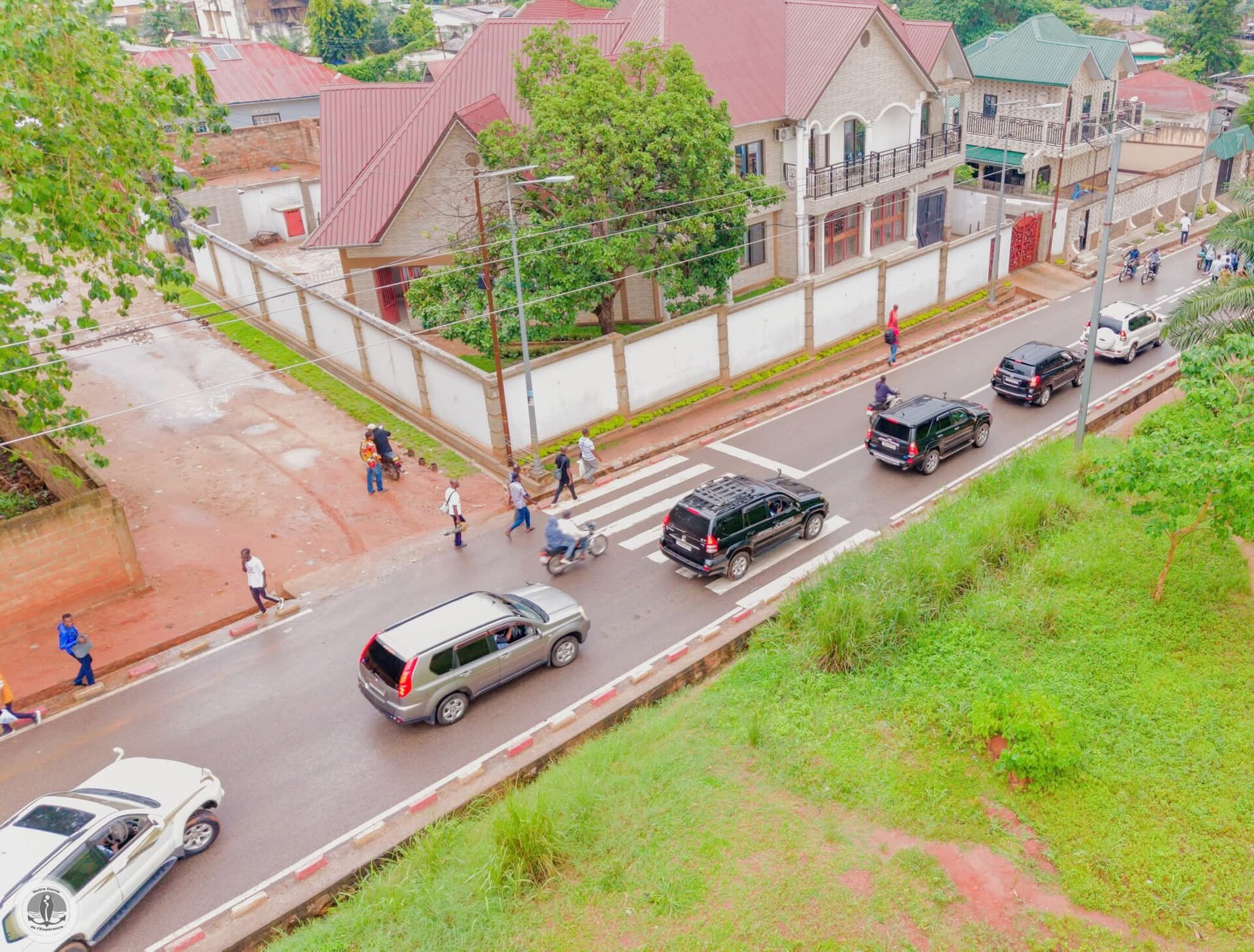
A City Built on Diamonds, Rooted in Luba Heritage
Mbuji-Mayi sits in the south-central Democratic Republic of Congo as a place where geology and history collide. The city rises on top of one of the world's largest known diamond deposits, and that subterranean wealth has shaped everything visible above ground—the layout of streets, the rhythms of work, even the name itself. In Tshiluba, the local language, Mbuji-Mayi means "Goat-Water," a reference to the goats that once grazed in abundance here. Today, the city pulses with a different kind of presence: remote from the rest of Congo, self-contained, with its own logic and urgency. This is not a place built for tourism, and that authenticity is precisely what draws you in.
The Shape of a Company Town
To understand Mbuji-Mayi is to grasp how a single industry can remake a place. The Belgian mining company MIBA designed the city from scratch, dividing it into distinct zones for miners' labor camps, mining operations, and living quarters. That rigid planning has never fully dissolved. Today the city comprises five communes—Bipemba, Dibindi, Diulu, Kanshi, and Muya—each still bearing the imprint of that colonial-era compartmentalization. Walking through different sectors, you feel the legacy of controlled urban design: areas where infrastructure remains relatively robust because MIBA invested there; neighborhoods beyond the company's sphere where roads disintegrate with the rains and electricity comes and goes.
The city's relationship with the diamonds beneath it remains visceral. Buildings have been demolished to reach the ore below. In earlier decades, diamonds were collected not just from controlled mines but from streams and waterways throughout the area, turning ordinary citizens into prospectors. That possibility—that wealth might surface anywhere—still animates the place.
A Luba City, Born in Independence
Mbuji-Mayi transformed after Congo's independence in 1960, when members of the Luba ethnic group immigrated here in waves, making it their center. The city was then still called Bakwanga, after the clan that once owned the land. In August 1960, the Luba chief Albert Kalonji declared himself ruler of the secessionist Mining State of South Kasai and crowned himself emperor in April 1961 in a ceremony that drew cheering crowds and four days of dancing outside his royal palace. That independence lasted barely a year—the central government's forces retook the city by October 1962. Soon after, Bakwanga was renamed Mbuji-Mayi, a deliberate gesture toward intra-ethnic reconciliation.
That history lives in the city's identity. Mbuji-Mayi is a Luba place, and Luba culture, language, and social networks remain central to how the city functions. If you spend time here, you move within that web of kinship and history that goes back centuries before diamonds were ever found.
Infrastructure, Power, and Daily Rhythms
What you encounter in Mbuji-Mayi depends on where you are and what day it is. During the 1980s and 1990s, the central government largely abandoned the city, leaving MIBA to act as de facto administrator—repairing roads, supplying water and electricity, funding schools and hospitals. MIBA's power station once ran the city. When it went offline in 1990, an 11.8 MW hydroelectric plant became the main source of electricity, but power outages are frequent. Residents rely on wood and charcoal for heat and light, practices that have driven deforestation in the surrounding region.
Roads in sectors controlled by MIBA remain better maintained; elsewhere they vanish into mud during rains. In 1991, the entire city had only about 19.7 kilometers of paved roads, all in poor condition. Water access is precarious—some residents draw from local rivers, a practice that has sparked disease outbreaks. Travel here demands patience and adaptability; you move at the pace of infrastructure rather than against it.
What to See and Do
- Visit the Mbuji-Mayi River, the water feature that gave the city its name and remains central to daily life and local subsistence.
- Observe the architectural legacy of MIBA's company-town planning—the contrast between organized sectors and more organic neighborhoods reveals how mining shaped urban form.
- Engage with Luba cultural traditions and language; local guides and residents offer insights into the ethnic and social history that animates the city beyond its mineral wealth.
- Explore the University of Kasai, created in the early 1990s through a joint sponsorship of MIBA and the Catholic Church, a symbol of the company's investment in the region's intellectual life.
- Fly into and out of Mbuji Mayi Airport, the city's main air link to the rest of Congo—a transit hub that underscores the city's geographic isolation from surrounding provinces.
When to Go
The rainy season presents challenges: roads deteriorate, and water-related health risks increase. The dry season offers better conditions for movement through the city and fewer obstacles to exploring its different communes. Consider the city's remoteness and limited external connections when planning; regular flights operate through Mbuji Mayi Airport, but services can be unreliable. Travel here requires flexibility and acceptance of uncertainty—conditions that reward the visitor willing to move slowly and pay attention.
Begin Your Journey
Mbuji-Mayi will not offer you the comforts or spectacles of more touristed African cities. What it offers is encounter with a real place, shaped by geology, colonialism, independence, and the daily persistence of people building lives in a remote and resource-rich landscape. If you want to understand Congo's complexity—its mineral wealth, its ethnic cultures, its infrastructural realities—Mbuji-Mayi insists on being seen. Arrange your travel, find a guide who knows the city's neighborhoods and history, and prepare to spend time in a place that resists easy summary.