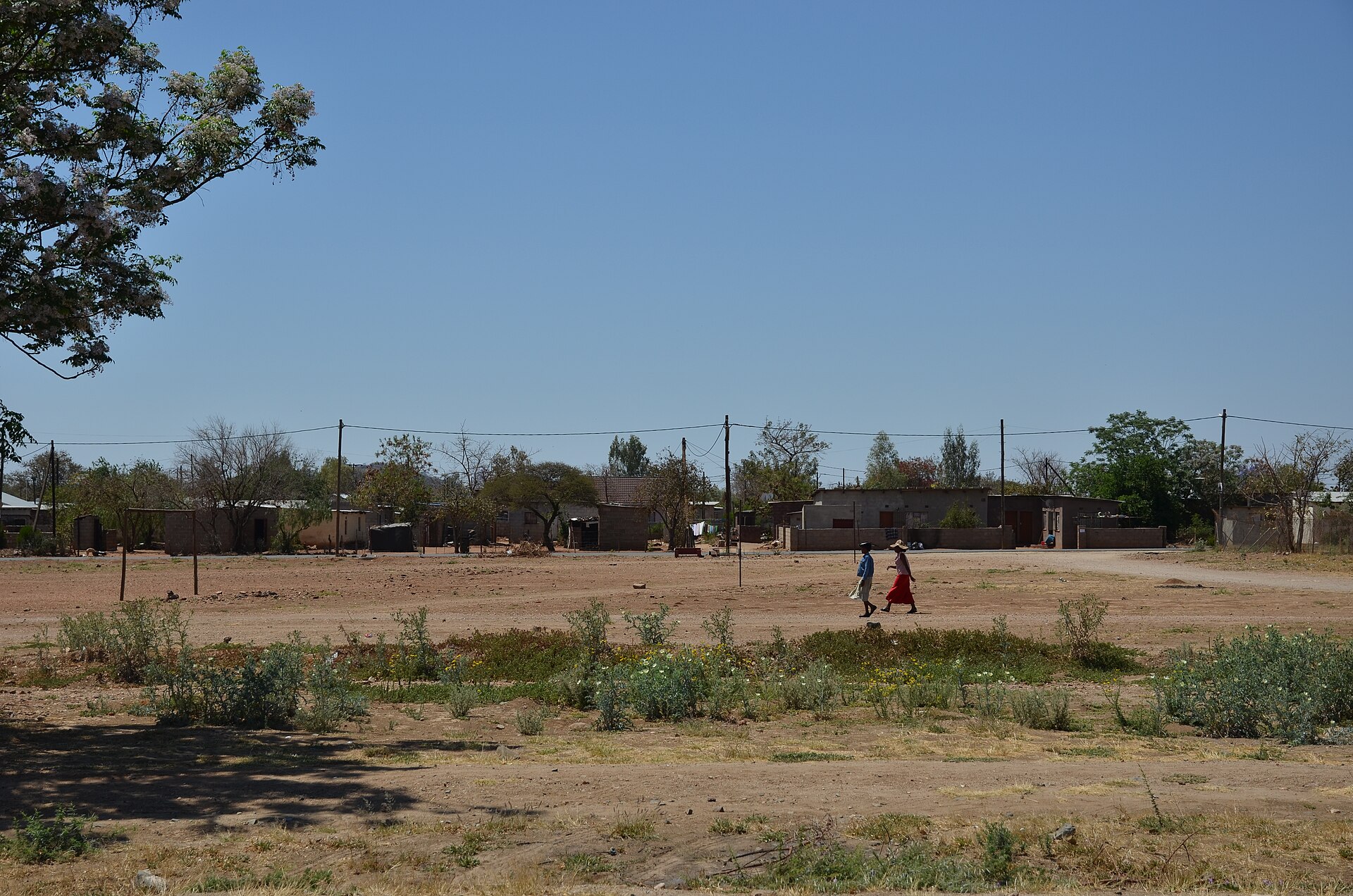
Francistown
Introduction
Francistown sits in eastern Botswana, roughly 400 kilometres north-northeast of the capital, Gaborone, and about 90 kilometres from the international border with Zimbabwe. The city lies at the confluence of the Tati and Ntshe rivers, with the Shashe River also nearby, so its setting is defined by water and by the proximity of the border.
Getting there
Francistown is a major transport hub for northeastern Botswana and the gateway to the north of the country, so you can reach it from several directions. By road, the A1 runs south to Gaborone and north towards Zimbabwe, while the A3 heads west to Nata and Maun. Buses leave roughly every hour from Gaborone, with the trip taking five to seven hours, and services also run from Kasane via Nata. Because the city is a hub, it connects to most other towns and villages in the north, and direct buses serve tourist destinations such as Maun and Kasane. Several buses arrive daily from Bulawayo and Harare in Zimbabwe, and Khanda Express runs services from Johannesburg via the Martins Drift border post.
By air, Francistown has its own international airport, served commercially only by Air Botswana, which offers two daily flights from Gaborone and flights from Johannesburg on Tuesdays and Thursdays. By rail, trains once ran nightly from Lobate near the South African border via Gaborone, a journey of about ten hours arriving early the next morning, and a daily cross-border train from Bulawayo ended in 2020; note that as of March 2024 all passenger rail services in the country are suspended, so check with Botswana Railways before planning a journey by train.
Getting around
Getting around Francistown is almost entirely road-based: there is no metro, tram or light-rail system, and you should plan as though passenger trains are not an option, since domestic services have been suspended for extended periods and only freight runs. The city sits astride Botswana's main road and rail corridors, which makes it a practical base for reaching Nata, Maun and Kasane, but for day-to-day movement you will rely on minibuses, buses and taxis.
- Combis: White minibuses with blue license plates and windshield signs showing the zone or route depart from local ranks on fixed routes. There are no posted schedules — they leave once full or nearly full, so waits are short at peak hours and long on secondary routes or off-peak. Fares are regulated and paid in cash on board to the driver or conductor, with no day passes or subscriptions, so carry small change. Hail one with your arm extended at shoulder height, palm down, fingers waving; to get off, tell the driver verbally, naming a landmark if it helps. Expect crowding, noise, poor ventilation, and varying maintenance and driving standards.
- Intercity buses: Private operators, best known Seabelo (also spelled Seabalo), run regular services to Gaborone, Maun, Kasane and other major towns, with direct services to tourist destinations in the north. Scheduled departures are officially assigned and generally respected, but complete timetables are rarely online, so inquire at the bus rank the day before or on the day. Buy tickets with cash at the rank or on board and arrive well before departure to secure a seat; comfort is basic, with tight seats and air conditioning that may be missing or faulty. International services arrive from Bulawayo and Harare, and Khanda Express runs from Johannesburg via the Martins Drift border post.
- Taxis: Useful early in the morning, late in the evening, or anywhere combi routes do not reach. Most taxis have no meters, so agree the fare before getting in and expect some room for negotiation. At night, taxis are considered significantly safer than walking or taking a combi, and your accommodation or a restaurant can usually call a trusted driver — a good way to avoid unregistered vehicles. Ride-hailing apps such as Uber, Bolt, inDrive and the local Mpitsa are emerging in Botswana but concentrated in Gaborone, so do not count on them here.
- Walking: Realistic for short trips in the immediate centre, but not for covering the city as a whole, and a poor choice after dark.
- From the airport: Francistown's international airport is served by Air Botswana from Gaborone and Johannesburg on selected days. Airports in Botswana are generally connected to city centres only by taxi or private shuttle, so arrange a pickup through your accommodation or with a driver whose fare you have agreed in advance.
Carry small change in pula for combi fares, ask at the bus rank for intercity schedules rather than relying on online timetables, and confirm the rail situation locally before you travel if it matters for your plans.
Where to stay
Camping with your own tent is the most economical way to stay in Francistown. Woodlands Stop Over, on Gerald Estates about 10 km north of town, offers shaded campsites on pleasant grounds with a swimming pool. Closer in, roughly 2 km from the centre on the old Gaborone Road, Tati River Lodge Campground sits on the banks of the Tati River, with lush greenery around a pool and bar, camping with water and open fire facilities, and a restaurant at the far end of the hotel that serves good food.
- Woodlands Stop Over — camping with your own tent, swimming pool, nice grounds and shaded pitches.
- Tati River Lodge Campground — riverside camping with water and open fire facilities, pool, bar and restaurant.
- Abrama Bed & Breakfast — one of the cheapest guesthouses in town.
- Lee Bed & Breakfast — A/C single or double room with private bathroom, free wifi and flat-screen TV, in Tatisding about 9.5 miles from the centre.
- Eros Guesthouse — budget single or double room with private bathroom, TV and wifi, on Gerald Estate about 3.5 miles from the centre.
Food & drink
For a sit-down meal, head to Barbara's Bistro at the Sport Club, or try Spur Restaurant, which serves decent burgers and steaks. Nando's Chicken is worth knowing about for its excellent chicken, and Calabash Coffee Shop on the corner of Baines and St Patrick is the place to go for coffee. The source lists no bars or nightlife, so plan your evenings around eating rather than drinking out.What to see and do
The source material for Francistown provides no information on sights or activities, so there is nothing to describe in this section.When to go
Francistown has a hot semi-arid climate, so your plans should hinge on two things: the short wet season and the long dry one. The rains come between December and March, bringing the year's rain to a hot setting. If you visit during this window, expect wet weather and build your outdoor activities around it rather than committing to a fixed schedule.
The long dry season dominates the rest of the year. Its June-to-August core is the coolest and driest stretch, with rain almost absent and average lows routinely cold enough that you should pack for cold nights; the days are parched and dusty. Outside that core, the remaining dry months are dry but warm to hot, typical of the city's summers.
Three days in Francistown
Day one begins in Francistown itself, Botswana's second city, where you can get your bearings around the Tati and Ntshe rivers before heading out to the Shashe River. Buses run from Francistown to Nata, Maun and Kasane, so use the first day to sort onward travel and to get a feel for the city's busy centre.
Day two takes you across the border into Zimbabwe. Buses and combis connect Francistown with Bulawayo and Harare, and several operators, including Khanda Express, serve the route. Because the crossings can be slow, expect to spend much of the day in transit, and plan to return to Francistown rather than pushing on.
Day three heads south towards South Africa. Buses run to Johannesburg via Martins Drift, and Air Botswana also links Francistown with Gaborone and Johannesburg on Tuesdays and Thursdays. Botswana Railways and Intercity services give you alternatives, and private operators such as Seabelo and Seabalo run scheduled departures. Fares vary, so buy your ticket early and confirm times before you set out.