Paranagua
Introduction
Paranaguá is a city in the Brazilian state of Paraná and the state's oldest settlement, founded in 1648. Its identity is bound up with the Port of Paranaguá, which serves as the sea link for Curitiba, the state capital, about 110 kilometres to the west, and ranks among Brazil's largest ports.
Come here to see a historic coastal city shaped by its working harbour rather than a resort town.
Before you go
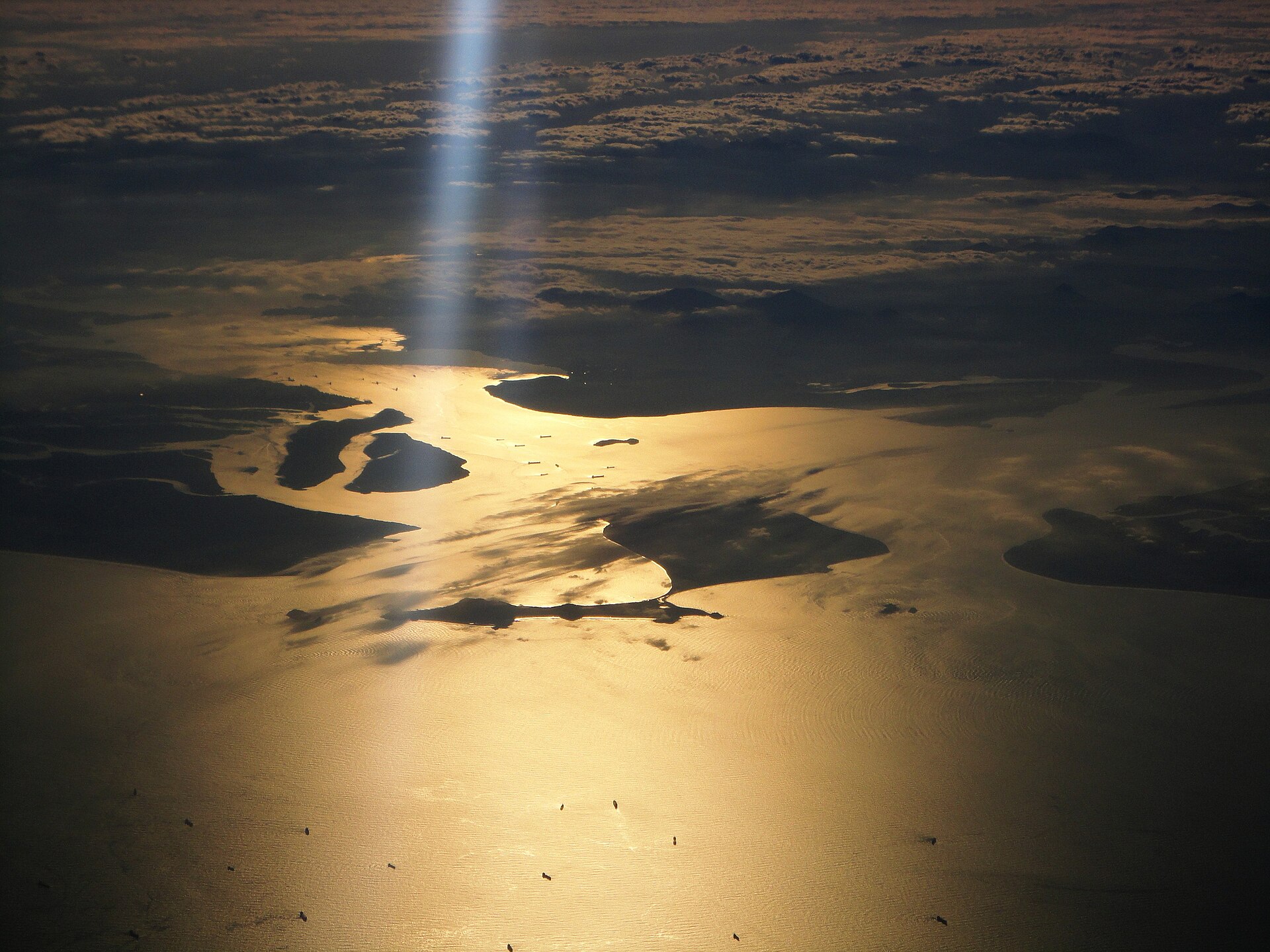
Paranaguá takes its name from the Tupi language, meaning "big round sea" — a reference to the wide bay that gives the city its natural advantage as a port. The city was founded around 1550 on the island of Cotinga and later spread onto the mainland, so expect a settlement shaped by the water from its earliest days.
Keep that history in mind as you plan: the bay and the port are central to how the city works and how it grew, and the island of Cotinga is part of its story. Beyond this, the source offers little practical detail, so check current conditions and arrangements before you set out.
Getting there
Paranaguá is served by passenger launch services, which connect the city with Guaraqueçaba, Ilha do Mel and Ilha do Superagui, the last lying within Superagüi National Park. These boat links make it possible to arrive by water rather than by road, and to continue onward to the islands and coastal communities around the bay.
Getting around
Paranaguá is a compact, walkable city rather than one with an extensive urban rail network — there is no metro, tram or urban rail service, so getting around on the ground means walking, buses, taxis and ride-hailing. Buses are the main form of public transport within the city; you pay on board, so carry small change or a rechargeable transit card if one is available locally. Routes tend to be short and straightforward, and the historic centre, the port area and the waterfront are all within easy reach of one another. Taxis are convenient for short hops around the centre, for reaching the port area, or for getting to the waterfront where the launches depart, and ride-hailing apps also operate in the city — useful if you are travelling with luggage or arriving late, though it helps to have a local SIM or data connection so you can book and track a ride.
Walking is a good way to cover much of what interests a visitor, since the historic centre, the riverside and the port surroundings are concentrated and reachable on foot. The climate is humid subtropical, with hot summers and very mild winters, and the city is notably rainy, so a compact umbrella or light rain jacket is worth carrying year-round; the wettest stretch tends to fall in summer and the driest in winter, though rain is possible at any time. For longer trips along the coast, passenger launches are the key connection: Paranaguá is linked by launch to Guaraqueçaba, Ilha do Mel and Ilha do Superagui, part of Superagüi National Park, and these boat services leave from the city's waterfront. If you are arriving by commercial flight, you will most likely land at Afonso Pena International Airport near Curitiba and continue overland by road — by long-distance bus, transfer or shuttle, or taxi — since there is no passenger rail link and the city's own airport handles only general aviation; bus schedules are worth checking in advance, as services are less frequent at night.
Where to stay
Most of your options are concentrated in the Centro, where a cluster of hotels sits along Rua Julia da Costa — the San Rafael, Lider and Monte Líbano among them — with the Palácio on Rua Correia de Freitas and the Camboa on Rua João Estevão. All are straightforward, reasonably priced places to base yourself for exploring the historic centre on foot.
If you'd rather wake up near the water, there's a hostel right on the waterfront beside the passenger boat ticket office, handy if you're arriving or leaving by boat. The Ibis on Avenida Coronel José Lobo is another option slightly away from the centre.
Food & drink
Seafood is the thing to seek out here, and you can count on it being fresh daily. As elsewhere in Brazil, the best value comes from the "por quilo" places, where you pay by weight, and the all-you-can-eat restaurants; both are scattered throughout the downtown area, so you can wander and pick one that looks busy.
For a taste of the region, look for a restaurant specializing in the local version of barreado, the slow-cooked meat dish associated with this part of the coast. To drink, artisanal cachaças — sugar cane liquor — are increasingly coming to market in Paranaguá, and are worth trying if you're interested in the local tipple.
What to see and do
Paranaguá's historic centre rewards a slow walk, especially along the beach road downtown, where you'll find the densest cluster of colonial remnants: the Elfrida Lobo House, the Cecy House, the Monsenhor Celso House and the former Customs House. Nearby stand the Mathias Böhn Palace, built in the late 18th century and renovated in the late 19th, and the Visconde de Nácar Palace, a former governor's residence from around 1840. The churches carry real age: Nossa Senhora do Rosário, raised by slaves in 1578 and the first church in the state, and São Benedito, built by slaves between 1600 and 1650. The Old Fountain, dating from the 17th century, is among the oldest constructions in the city, and the Padroeira do Paraná Sanctuary in Rocio was finished in 1813.
For museums, the Paranaguá Archeological and Ethnological Museum occupies a former Jesuit college completed in 1755 and holds archeological finds and items from the area's indigenous peoples, while the Museum of the Historical and Geographic Institute of Paranaguá displays weapons, instruments, furniture and other objects from the 17th and 18th centuries. Across the water on Cotinga island, the hilltop Church of Nossa Senhora das Mercês, first built in 1677, demolished and reconstructed in 1955, is reached by a long flight of steps that opens onto a view of the city and the sea. To get out on the water, you can rent kayaks and stand-up paddleboards in town, and ferries from the waterfront run to Superagüi National Park, a coastal nature preserve and UNESCO World Heritage Site.
When to go
Paranaguá has a humid subtropical climate, so rain is plentiful year-round and you should plan for wet weather whenever you visit. Summers are hot, wet and cloudy: Atlantic tropical masses bring frequent rain, high humidity and the year's cloudiest skies, with temperatures climbing higher at low altitudes and a little inland. Pack light, breathable clothing and rain gear if you come in this season.
Winters are very mild and drier, under the influence of the polar mass, though precipitation stays relatively high. Skies are clearer then than at any other time of year, making winter the most rewarding season for time outdoors. Frost is not unknown but is not expected in a normal winter. September is the month most likely to feel breezy, as winds are most favourable then, and it sits between the clearer winter and the wetter summer months.
Three days in Paranagua
Day one: Start in the Centro, where the old streets around Rua Julia da Costa and Rua Correia de Freitas give you your first sense of the city's colonial character. Browse the market and waterfront before heading to the Camboa area along Rua João Estevão, where the rhythm of the port is part of daily life. Round off the day with a meal of fresh seafood, a staple of Paranaguá's coastal cuisine.
Day two: Take a boat trip on the bay to the islands, including Cotinga and Ilha do Mel, where you can walk the beaches and trails. Keep an eye out for the wildlife of the estuary, and return to the city in the late afternoon. In the evening, explore the streets around Palácio and the Lider and Monte Líbano districts for a relaxed dinner.
Day three: Head beyond the city toward Guaraqueçaba and Superagüi National Park, a stretch of protected Atlantic Forest and coastline reachable by boat or bus. If you have time before leaving, visit the San Rafael area and the waterfront once more. Buses connect Paranaguá with Curitiba, and Afonso Pena International Airport serves the region.