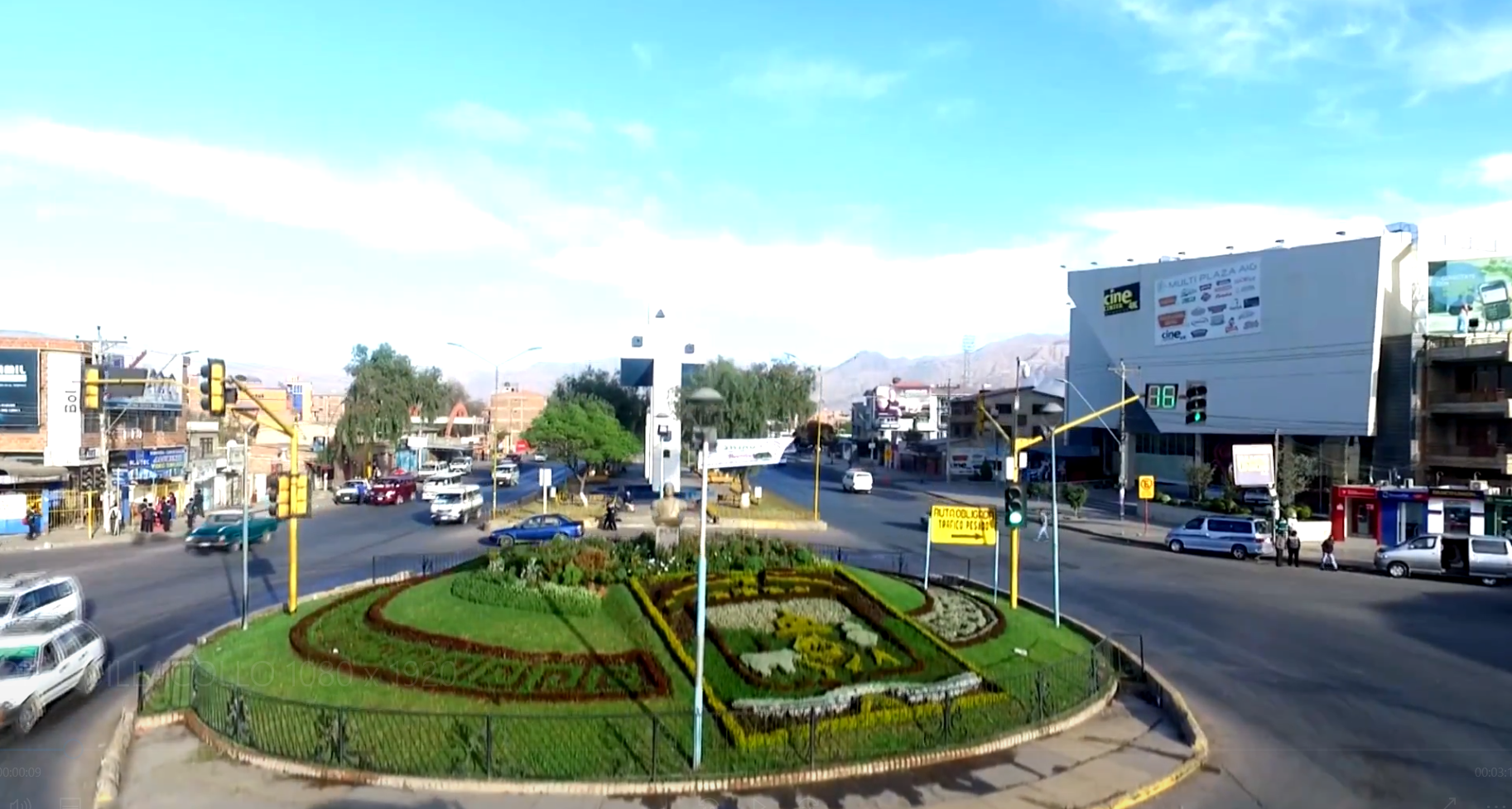
Quillacollo
Introduction
Quillacollo is the capital of Quillacollo Province in the Cochabamba Department of Bolivia. The municipality was established in 1905, during the presidency of Ismail Montes, and sits at an elevation of 2,550 meters above sea level.
Before you go
Quillacollo sits just west of Cochabamba, and the two are linked by Blanco Galindo Avenue, a wide three-lane highway that carries heavy public transportation traffic. The sprawl along that highway has grown so dense that the two cities now read as a single large urban center, so plan your trip with that continuity in mind rather than treating Quillacollo as a remote stop.
Because the corridor between them is so built up and so well served by public transport, getting between Cochabamba and Quillacollo is straightforward, and you can expect the surroundings along the route to feel urban the whole way.
Getting there
You will most likely arrive from Cochabamba, which lies a short distance away. Trufis and buses make the trip in about twenty minutes, so Quillacollo works easily as a stop on a wider Bolivian journey rather than a destination in its own right. To catch a trufi, head for the corner of Heroinas and Ayacucho in Cochabamba, where vehicles leave for Quillacollo. Buses also serve the route, giving you a choice depending on where you are starting from in the city.Getting around
Quillacollo sits just west of Cochabamba and functions as an extension of the larger city rather than a separate destination with its own transport system. You move around it the way you move around greater Cochabamba: by shared vans, buses and taxis, all road-based. There is no rail, metro or tram network serving the town, so don't plan on trains or light rail for any part of your journey. Most visitors arrive from Cochabamba City to the east, joined to Quillacollo by Avenida Blanco Galindo, a busy stretch of the main national highway. Trufis — shared vans — are the classic way to make the trip, leaving frequently from the corner of Heroinas and Ayacucho in Cochabamba, with the ride taking roughly twenty minutes. Ordinary buses run the same route. Because the journey is quick and departures are frequent, you can treat Quillacollo as a straightforward day trip from Cochabamba or as a base outside the bigger city.
Fares on trufis and buses are typically paid in cash on board, with no visitor pass or ticket system to worry about, and services are frequent rather than scheduled — you wait for the next vehicle instead of consulting a timetable. Quillacollo itself is a compact, walkable market town with a post-colonial architectural blend, modern houses mixed in, and restaurants scattered along its streets; the centre is small enough that the streets, restaurants and markets are reachable on foot. Sunday is market day, when stalls and informal commerce fill the town and crowds slow your going, and flea markets and informal trading swell considerably during the festivities. Take the walking at an easy pace until you have adjusted to the altitude. Quillacollo has no airport of its own: visitors arrive through the Cochabamba area's airport and continue overland, so the airport leg and the Cochabamba–Quillacollo leg are two separate stages. From the airport, take a taxi into Cochabamba City first, then continue by trufi or bus, or stay in the taxi for the whole trip; with heavy luggage or at night, a direct taxi is the least complicated choice. Plan your transport around Cochabamba, not around Quillacollo, and carry small cash. If your visit coincides with the August festivities around the Virgen de Urqupiña, expect the town to be extremely busy and transport in heavy demand; outside festival time it is quiet and easy to navigate.
Where to stay
Quillacollo is a small city in the Cochabamba valley, and its accommodation is modest and practical rather than plentiful. Most visitors treat it as a base for exploring the surrounding area, and the choices reflect that: simple lodgings clustered around the centre, within easy reach of the main plaza and the market streets.
- Stay near the centre if you want to be within walking distance of the plaza, the market and the transport links onward to Cochabamba and the valley towns.
- Expect basic, functional rooms rather than resort-style comforts; this is a working city, not a tourist resort.
Food & drink
The source material for Quillacollo offers no details on where or what to eat and drink, so there is nothing specific to recommend here.What to see and do
Quillacollo is best known for the Fiesta of Urkupiña, a religious festival held over three days in mid-August. Each day has its own focus: the entrada or folkloric parade, the fiesta itself, and a trip to the Calvario.
Outdoors, the town works as a base for two excursions. You can reach a hot spring near Cochabamba by taking a trufi from the southeast corner of Plaza Sucre, near the university, to Quillacollo; get off at the main plaza, Plaza Bolívar, then walk one block west to Calle Santa Cruz, where trufis to the springs pick up passengers on the north side of the main road. Ask whether the trufi goes to the "aguas calientes", and expect to walk the last stretch on foot. Quillacollo is also a gateway town to Tunari National Park, where hiking to the top of Cerro Tunari is a popular day outing; the trailhead lies a few kilometres away and can be reached by taxi or local bus.
Three days in Quillacollo
Day one: Base yourself in Quillacollo, in Cochabamba Department, and use the town as your starting point. Cochabamba City is nearby, reached along Blanco Galindo Avenue, so you can travel between the two without much trouble. Trufis and buses run along Avenida Blanco Galindo, and taxis are another option; ordinary fares apply, so plan your cash accordingly. Once in Quillacollo, find Plaza Sucre and get your bearings around the centre.
Day two: Head out to the Calvario, the hillside site tied to the Virgen de Urqupiña. The climb is outdoors, so wear shoes you don't mind scuffing and carry water. If you are there in August, expect the Fiesta de Urkupiña, when the town fills for the celebration. Each year the fiesta draws people to Quillacollo, and the atmosphere around the Calvario and the centre changes completely.
Day three: Stay in Quillacollo Province and take a slower look at the town, or use the day to travel into Cochabamba City. From Cochabamba you can reach Heroinas and Ayacucho, two central streets worth walking. Keep the return trip simple: trufis, buses and taxis all link the city and Quillacollo along Blanco Galindo Avenue. If your visit falls in August, plan around the fiesta crowds rather than against them.