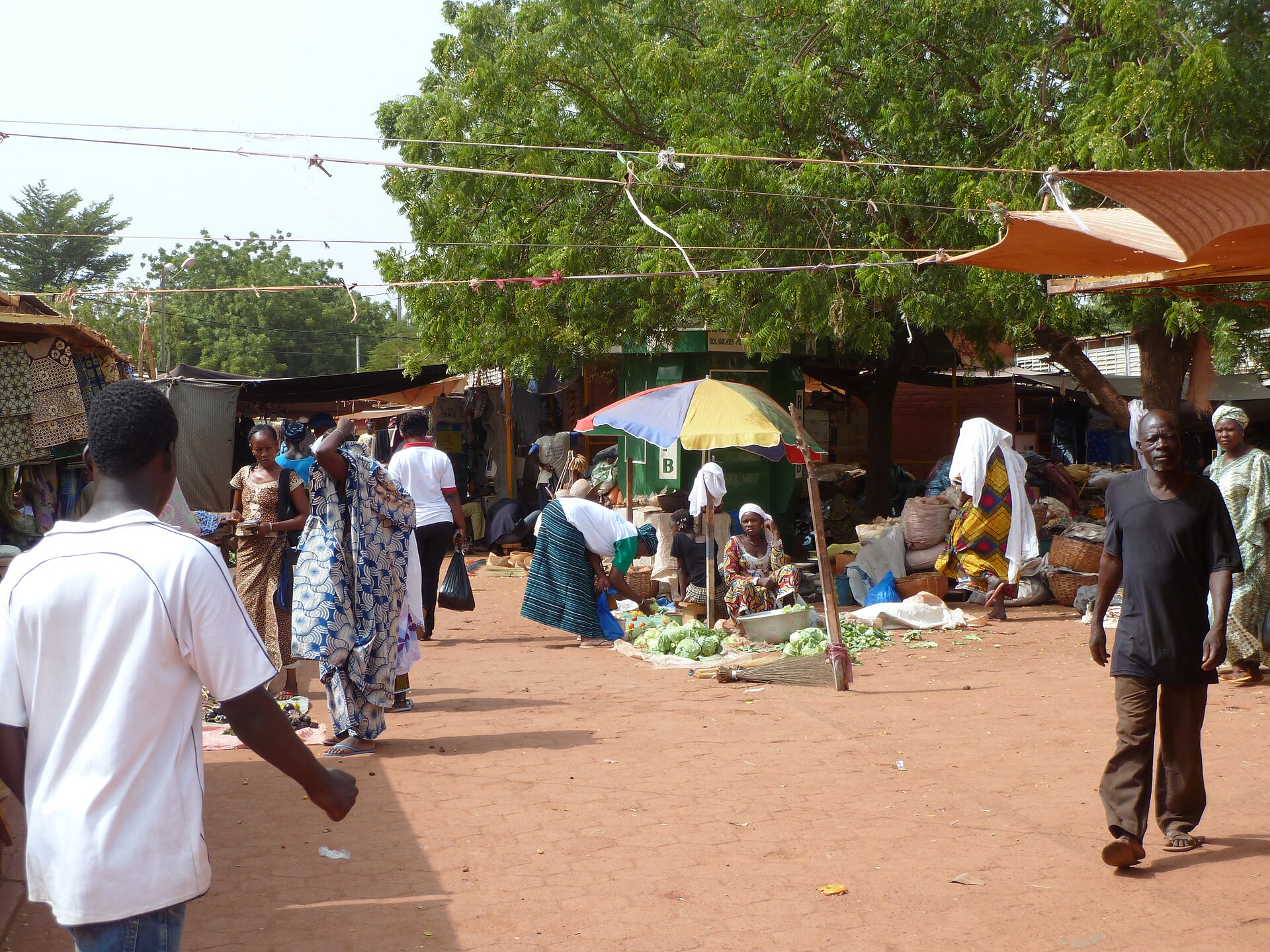
Ouahigouya
Introduction
Ouahigouya is a city in northern Burkina Faso, the capital of Yatenga Province and the biggest town in the Nord Region. It sits about 182 kilometres northwest of Ouagadougou, making it a natural stop for travellers heading through the country's north.
Before you go
Ouahigouya is the capital of the Yatenga region and the centre of Mossi culture, so Mooré is the language you will hear most around town. The town itself is dry and dusty, and a large barrage sits on its north side.
Getting there
Ouahigouya is reached by bus from Ouagadougou, with several companies running daily services in both directions. STMB, STAF and SOGEBAF all make the run, and STMB offers a loyalty card, available in either city, that earns you a free ride after ten trips (a round trip counts as two). SOGEBAF puts on many departures a day but has a reputation for running consistently late and undependably, so build some slack into your plans if you use them. STGF and ZST also serve the Ouahigouya–Ouaga route. Fares are modest, and a round trip costs less than two one-way tickets.
Check the bus stations for departure times, and note the large taxi brousse gare next to the SOGEBAF gare if you prefer shared taxis. Ouahigouya can be approached from most directions and works as a hub for travellers heading north to Mali. The paved road from Ouagadougou ends here: routes north to Mali, west to Tougan and Dédougou, and east to Djibo are all dirt roads.
Getting around
Ouahigouya is compact enough that walking is a practical way to reach much of it, including Naaba Kango's tomb, the Yatenga Naba's compound and the artificial lake. Because the climate is hot and semi-arid, plan your walks for the cooler parts of the day and carry water. There is no rail, metro or tram network, so for longer hops within town you arrange local transport on the ground and confirm arrangements directly with drivers; no taxi companies, ride-hailing apps or fare structures are documented, so don't count on an app.
For onward travel, buses are the main option, with several companies running scheduled services, mostly to and from Ouagadougou on an asphalted road. STMB, STAF, SOGEBAF, STGF and ZST all serve the route; STMB and STAF depart in the morning, around midday, in the afternoon and in the evening, with the same times in both directions, while SOGEBAF has the most frequent schedule but is consistently reported as very late and undependable. Ask STMB about their Carte de Fidelité: ten rides (a round trip counts as two) earn a free ride to anywhere their buses travel. Next to the SOGEBAF gare is a rather large taxi brousse gare for shared long-distance vehicles. Note that the paved road ends at Ouahigouya — routes north to Mali, west to Tougan and Dédougou, and east to Djibo are dirt roads, so build in extra time and check conditions locally before setting out.
Where to stay
Ouahigouya has a handful of hotels, and the differences between them matter more than the names suggest. Hotel Liberté, off Ave de Mopti north of the centre, is one to approach with caution: the rooms have no mosquito nets and no grilling on the windows. Hotel Coulibri is fan-cooled, pretty clean and equipped with mosquito nets, and sits near the former PCVL house. Hotel Dunia is described as a nice hotel.
At the other end of the scale, Hotel de l’Amitie is very large and has a pool; its rooms run from a simple shower-and-bed setup to a suite with a salon, refrigerator, complete bathroom, air conditioning and television. The Hotel Auberge, by contrast, is dirty and a reputed brothel. Given the mosquito nets at some places and not others, it is worth asking about nets and window screening before you settle in.
Food & drink
Ouahigouya's eating scene splits between sit-down restaurants and the street. Among the restaurants, Le Caiman draws locals who claim its grilled chicken is the best in town, alongside typical Burkinabé fare such as frites, riz-sauce and meat soup; be prepared for slow service. Hotel Dunia requires a call ahead, and its kitchen turns out Syrian, Lebanese and Burkinabé dishes that are well regarded. For a more formal meal, Maquis "Le Kadiami" and Hotel Amitié both have a classy look with white tablecloths and higher prices, the latter offering European and Middle Eastern dishes. "Tanti's Gourmet" serves large portions of upscale street food in a laid-back, eat-with-your-hands setting, with notably strong piment. Standard bar-restaurants, kiosques and cafés such as Auberge, Ciné Place and Hawaii Café line the main road through town, serving decent food at reasonable prices.
- Le Caiman – grilled chicken and typical Burkinabé plates; slow service
- Hotel Dunia – call ahead; Syrian, Lebanese and Burkinabé cooking
- Maquis "Le Kadiami" – classy setting, high prices
- Hotel Amitié – white tablecloths, European and Middle Eastern dishes
- "Tanti's Gourmet" – big portions of upscale street food, very strong piment
Street food is everywhere along the main road and around the marché, thinning out as you leave the centre. "Benga ladies" sell benga, rice and sauce, tô, spaghetti and sometimes meat soup; atchiéké is easy to find around town. Gateaux, galettes and various fried doughs and potato-like produce are sold throughout the marché and surrounding areas, and a vendor near the post office grills good chicken. Laiterie Kossam Yadega is well stocked with tasty milk products, though the expensive gateaux on sale are not worth the price. For drinks, bars along the main route and across town serve standard fare such as sobbra, flag, castel and Guinness. Hawaii Café lists specialty coffee drinks and oatmeal on its menu, with grilled meat vendors nearby; Auberge attracts businessmen and serves tasty but not cheap grilled mouton and poulet; and Bar Restaurant Dancing de L'Amitié, next to the hotel restaurant, is a good spot to cut loose on a Saturday night.
What to see and do
Ouahigouya's sights are few but rooted in the town's place as the seat of the Yatenga Naba. You can visit Naaba Kango's tomb, the mausoleum of the ruler, and see the Yatenga Naba's compound, the traditional chief's residence.
For entertainment, the Ciné Palace shows movies daily, with seating in different classes. Sports fans can head to the football stadium near the post office, where local squads occasionally play. If you want to swim, the pool at the Hôtel de l'Amitié is open for day use.
When to go
Ouahigouya has a hot semi-arid climate, so your trip will fall into one of two very different stretches of the year. The dry season brings essentially no rain: the land is dusty and parched, and harmattan haze often thickens the air. Heat builds through these months, so shade and water become precious. This is the reliable stretch for travel, though the later months are the harshest.
The rainy season is short, with heavy downpours that break the heat, green the countryside and leave the air humid. Travel can be slowed by flooded tracks and muddy roads, and some rural routes become difficult. This is when the landscape is at its most alive.
Three days in Ouahigouya
Day one: Start in Ouahigouya, the capital of Yatenga Province in Burkina Faso's Nord Region, and get your bearings in a town tied to the history of the Mossi and the Yatenga Naba. Take in the legacy of Naaba Kango as you wander, and ask at your hotel about local transport options. In the evening, settle in at one of the town's hotels, such as Hotel Libert, Hotel Coulibri, Hotel Dunia or PCVL, and plan the days ahead.
- Ouahigouya town centre
- Yatenga Province landmarks
- Hotel Libert, Hotel Coulibri, Hotel Dunia or PCVL for the night
Day two: Use Ouahigouya as your base for exploring the wider Yatenga area and the Nord Region. Because onward travel in Burkina Faso is often by shared transport, check schedules with the bus companies serving the region, including STMB, STAF, SOGEBAF, STGF and ZST, which connect Ouaga (Ouagadougou) with towns such as Tougan, Dédougou and Djibo. Note that services can be infrequent, so confirm times a day ahead.
- Bus companies: STMB, STAF, SOGEBAF, STGF, ZST
- Routes toward Tougan, Dédougou and Djibo
- Ouagadougou (Ouaga) connections
Day three: Wrap up your stay with any remaining errands in town and a final look around before departure. Check out of your hotel, whether that is Hotel Libert, Hotel Coulibri, Hotel Dunia or PCVL, and head for the bus station. Ask STMB or the other carriers about seats and any loyalty or discount cards such as Carte Fidelit before you travel on toward Ouagadougou, Mali or Mopti.
- Final morning in Ouahigouya
- Hotel checkout
- Onward travel via STMB and other carriers