Sumgayit
Introduction
Sumgait, officially known as Sumqayit, sits on the Absheron Peninsula near the Caspian Sea, roughly 31 kilometres from the capital, Baku. It is Azerbaijan's second city, and its scale reflects that standing: a large urban centre rather than a small coastal town.
Its position on the peninsula places it within easy reach of Baku while keeping it distinct, set beside the Caspian shoreline.
Before you go
Before you go, it helps to know that Sumqayit was planned and built in the 1950s as one of the Soviet Union's major industrial cities, with the industrial zone deliberately set several kilometres away from where people lived in an attempt to limit pollution. That layout still shapes the place today: heavy industry has largely gone, leaving only a handful of plants, and the separation between the working zone and the residential city is part of why the coastline is so green. Come expecting an industrial city rather than a resort, and plan your time around the coast and the green space along it. The source gives little on practicalities, so treat this as background for understanding what you see rather than a checklist of sights.Getting there
Sumqayit sits about 45 km from Baku, roughly an hour away by bus. Direct marshrutkas run from Ismailli, and buses from Baku cover the same route in around an hour.
By taxi, a ride from Baku to Sumqayit is inexpensive by most standards, and fares are negotiable, so it pays to bargain before you set off. If you are driving yourself, the trip from Baku's centre at Targovi to the Sumqayit coast at Göyercin takes roughly 30 to 40 minutes.
Getting around
Sumgayit has no metro or tram network — those are Baku features — so getting around means rail, road transport, or your own two feet. The city is compact and laid out on a Soviet-era grid, which makes the central streets reasonably easy to navigate on foot; the core of civic buildings, the university, shops and main residential blocks is close enough together that walking between them is realistic, and the seafront and the coastal strip toward Göyercin are pleasant to explore on foot in good weather. Keep the climate in mind when planning a walk: Sumgayit has hot summers and cold winters. The outlying settlements of Jorat and Haji Zeynalabdin sit apart from the main urban core and are better reached by bus, marshrutka or taxi than on foot.
Public road transport is built around buses and marshrutkas (shared minibuses), which cover the main districts and the outlying settlements. Marshrutkas are the workhorse of intercity travel here, running directly between towns, with fares paid in cash on board in Azerbaijani manat and kept inexpensive; from Baku, expect roughly an hour by bus or marshrutka depending on traffic. Taxis are plentiful and cheap by international standards, and drivers are generally open to bargaining, so agree a price before you set off rather than accepting the first figure quoted. Ride-hailing apps can be a convenient way to arrange a car for the intercity run — confirm the fare in the app before departure. For the Baku–Sumgayit leg, rail is the most straightforward option, and the suburban service connects the two cities directly; Sumgayit's station also sits on the main line running north and west from Baku for onward travel within the country. Sumgayit has no international airport of its own, so arrivals come via Baku's airport and continue overland by taxi, bus, marshrutka or, after reaching Baku, train — allowing extra time for traffic leaving Baku at peak hours. Carry cash in manat, since buses, marshrutkas and many taxis expect it.
Where to stay
Accommodation in Sumgayit is limited, so plan ahead. Apartments are available for rent in the city, which can suit travellers staying longer or preferring a self-catering base. For a more conventional stay, Sumgayit Plaza Hotel on Sulh Street is an option; it has an indoor pool and a restaurant serving a breakfast buffet, though it is on the expensive side.
Food & drink
What the source does cover is drink, and it points you toward the city's board game cafés as the most authentic way to spend an evening.
- Board game cafés — settle in with a glass of tea and watch the regulars, mostly elder men, at their games.
- Finding them can take some effort; if you cannot locate one, ask a local for directions.
What to see and do
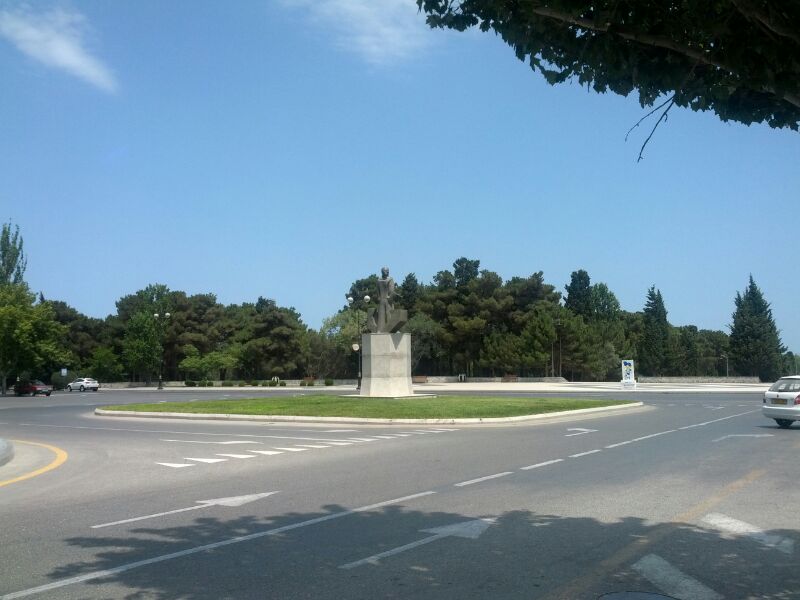
In the town centre you can see the municipality building, and the city has a UEFA-accredited football stadium that you can also use for exercise. The shore is where you will find the city's main entertainment, marked by a bird-like statue; the area is known as Goyercin, or the dove. The Peace Dove itself is an allegorical sculpture in Nasimi Culture and Leisure Park and serves as the symbol of Sumgayit, made of solid concrete and raised in 1978 as a symbol of peace. If you like pictures of decaying industrial buildings with sheep in between, head to the region southwest of the centre. For nearby sights and things to do, see the Baku Region.When to go
Sumgayit has a cold semi-arid climate, so the year splits into a hot dry stretch and a cooler stretch rather than four distinct seasons. Summer is hot and dry, with rain scarce and the land parched; expect strong sun and little relief from showers, so plan outdoor sightseeing for early or late in the day. Winters are cold, with low temperatures and occasional frost or snow. This is the quietest time to visit, with fewer crowds and lower prices, but you will need proper winter clothing.Three days in Sumgayit
Day one: Base yourself in Sumgayit on the Absheron Peninsula and get your bearings along the Caspian Sea. Settle into accommodation such as the Sumgayit Plaza Hotel or an apartment, then walk Sulh Street to see how the city lives day to day. Come evening, eat where the locals do and keep the pace slow.
Day two: Ride a marshrutka or take a taxi to Jorat and Haji Zeynalabdin, two settlements that show the Soviet-era shape of Sumgayit. Back in the city, look at what remains of the Soviet Union years, when Sumgayit grew as an industrial town on the Caspian. If you want a longer trip, Ismailli and Göyercin are reachable, but the peninsula itself rewards a full day.
Day three: Take a direct bus or taxi to Baku, the capital, for a change of scale, or stay put and spend the morning on the Caspian shore. Before you leave, sort out your onward transport - marshrutkas, taxis and buses all serve the route. Carry cash for small purchases, and board early if you are heading back to Baku in the evening.