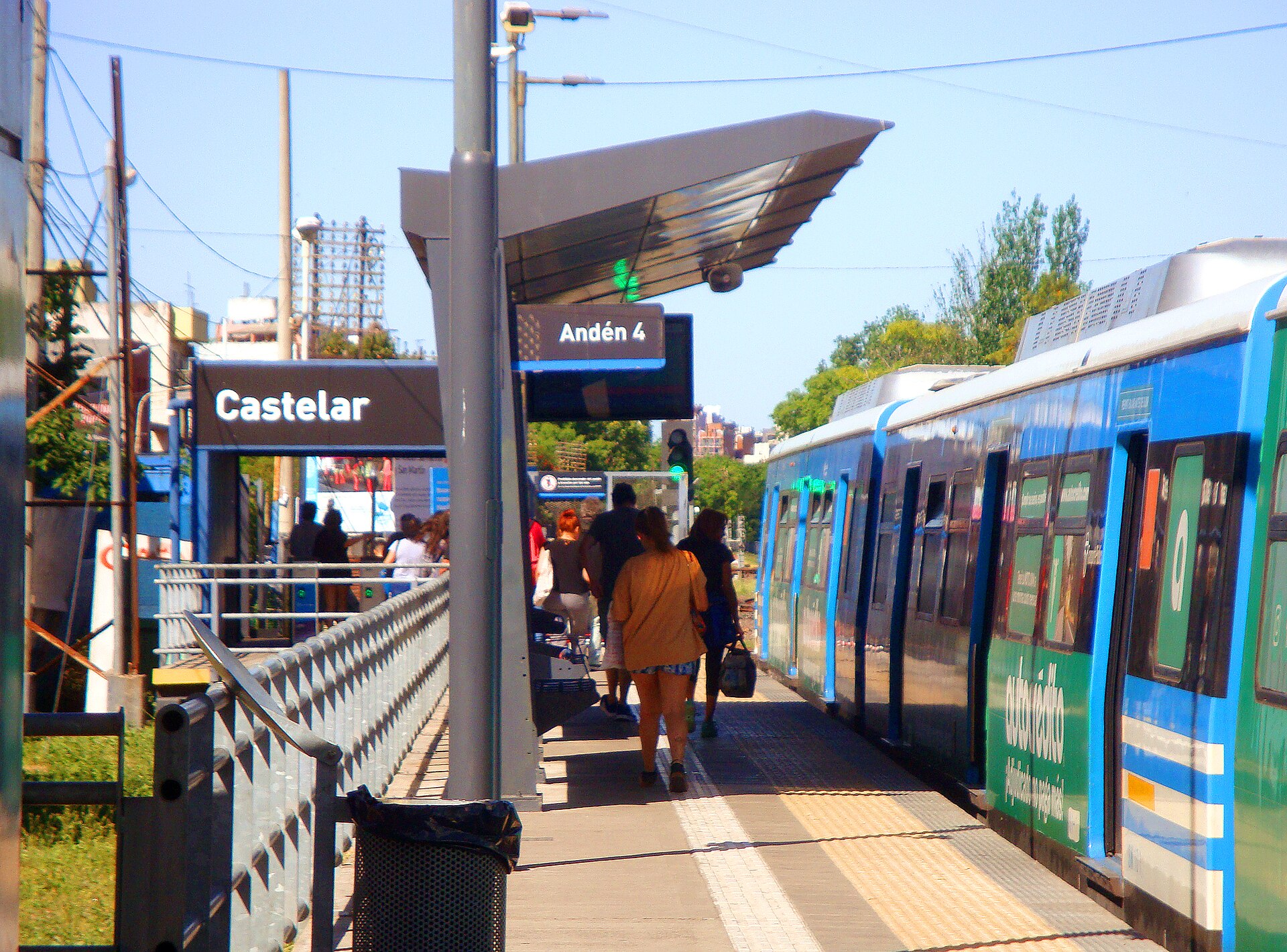
Castelar
Introduction
Castelar is a city in Morón Partido, in Buenos Aires Province, Argentina, sitting roughly 30 km west of the autonomous city of Buenos Aires. It forms part of the Greater Buenos Aires metropolitan area, so you can treat it as one piece of the capital's sprawling urban edge rather than a separate destination.
Getting around
Castelar is a compact, walkable suburban centre, and most local movement is on foot — the station, shops and restaurants are all reachable without transport. For anything beyond the immediate centre you'll want the train or a bus, since the wider metropolitan area is spread out and the distances into Buenos Aires are not walkable.
The Sarmiento line, operated by Trenes Argentinos, is the key rail connection: trains run from Castelar's own station to Once station in Buenos Aires roughly every 15 minutes daily, taking about 42 minutes, and this is the cheapest option for reaching the capital. Buses are operated by Buenos Aires Colectivos, boarding around Martín Irigoyen y Anatole France or at Nuestra Señora De Buen Viaje 969-999; the direct service to Buenos Aires runs every 30 minutes and takes about 1 hour 41 minutes, while indirect options with a transfer via Rivadavia Avenue or on to Belgrano Avenue can be quicker. Fares on the buses are paid with the SUBE card — without one you cannot pay the standard bus fare, and registering your card gets you a lower fare, so it's worth doing if you plan more than a trip or two. Taxis are a practical option for direct trips, especially with luggage or outside bus and train hours, taking roughly 25 minutes into Buenos Aires. If you're arriving by air, treat Buenos Aires as your gateway: reach the city first, then continue by Sarmiento train from Once or by colectivo.
Three days in Castelar
Day one: Start in Castelar itself, a neighbourhood in Morón Partido within Buenos Aires Province, Argentina. Get your bearings along the main avenues, Rivadavia Avenue and Belgrano Avenue, and use the local buses, Buenos Aires Colectivos, or taxis to move around. For longer hops, the Sarmiento line, run by Trenes Argentinos, connects the area with Buenos Aires and Once, and fares are paid with the SUBE card.
- Walk the central streets of Castelar and note the avenues as your reference points.
- Pick up a SUBE card so you can use the Sarmiento and the buses without fuss.
Day two: Use the Sarmiento to reach Once in Buenos Aires, then return to Greater Buenos Aires in the evening. Keep the day flexible: the train is the backbone of the trip, with buses and taxis filling the gaps. Streets such as Martín Irigoyen and Anatole France give you a sense of the local grid, and Nuestra Señora De Buen is a name to look out for as you navigate.
- Ride the Sarmiento toward Once and back.
- Fall back on Buenos Aires Colectivos or taxis for short connections.
Day three: Slow down and stay close to Castelar. Wander the neighbourhood streets, use Rivadavia Avenue and Belgrano Avenue as your anchors, and take a taxi or bus if you range further into Morón Partido. If you are heading back toward Buenos Aires, check the Sarmiento timetable and keep your SUBE topped up for the journey.
- Spend the morning on foot around Castelar.
- Plan your return with the Sarmiento and Trenes Argentinos.