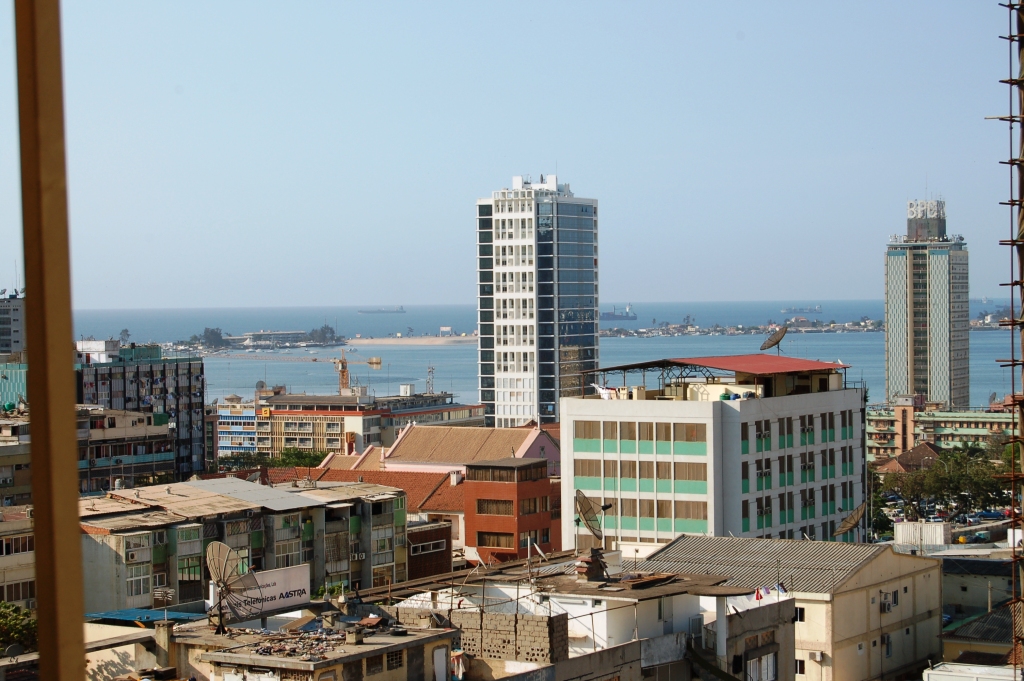
Ingombota
Introduction
Ingombota is the oldest district of Luanda, Angola's capital, and one of the six urban districts that make up the municipality of Luanda. It is the economic, political and symbolic center of both the city and the nation, and it holds Luanda's central business district.
Most of Luanda's prominent hotels and office towers are found here, so expect a dense, business-oriented cityscape rather than a quiet residential quarter. Plan your visit around the district's role as the city's commercial and administrative heart.
Getting around
Ingombota is compact and largely urbanised, so many of your trips will keep you inside the district on foot or on a short ride. The streets are paved and carry a mix of motorbikes, bicycles, public buses and informal vans. In practice you have four realistic options: walking within the core, the state-run bus network, informal shared transport, and taxis or ride-hailing. The historic neighbourhoods reward walking — Baixa concentrates the financial and commercial life of the capital along and near Avenida 4 de Fevereiro, with hotels, restaurants, bars, bakeries, kiosks, shops and street vendors; Cidade Alta sits on high ground with the Presidential Palace, ministries, the National Assembly and the Igreja de Jesus, and has heavy security, so carry identification; Maculusso is a formally planned residential quarter with paved streets, sidewalks and trees; and Luanda Island holds the Igreja da Nossa Senhora do Cabo and the pedestrian corniche along the bay, a reliable reference point for orientation.
- Buses: TCUL, the state-owned operator, runs a substantial network of lines within Luanda province and is the backbone of budget public transport; the private operator TURA gives a second formal option on some routes. Published route information does not break service down by district, so ask at your hotel or at a bus stop which lines serve the places you want to reach.
- Candongueiros: shared taxis and vans that fill a large role in everyday mobility. Treat them as a local, cash-based option rather than a pre-booked service, and agree on your destination and fare before setting off.
- Taxis and ride-hailing: the more straightforward choice for a direct, private trip, particularly at night or when carrying luggage.
- Rail: the Central Train Station in the district provides service on the Luanda Railway and is your departure point for rail travel into the wider province and beyond. The Luanda Light Rail, under construction since 2020, is a project in progress rather than a service to rely on during your visit.
- Airport transfers: Quatro de Fevereiro Airport lies to the south of the district, but the new Angola International Airport replaced it and sits much farther to the southwest — confirm which airport your flight uses before arranging a transfer. From either, a taxi or ride-hailing car is the direct option, or public and informal transport if you are travelling light and on a budget; from the new airport a pre-arranged private transfer or ride-hailing pickup is least complicated.
If you plan to travel onward within Angola, both the Central Train Station and TCUL's intercity buses to cities including Benguela, Sumbe, N'Dalatando, Malange, Uíge and Huambo depart from within or near the district.
Three days in Ingombota
Day one: Start in the Baixa, the lower city, where the streets of Ingombota hold the Igreja de Jesus and the everyday bustle of Luanda. Plan your morning around the Cidade Alta, taking in the Presidential Palace and the National Assembly from the outside. In the afternoon, head toward Maculusso to get a feel for the neighbourhood's character. Buses run by TCUL and TURA, along with candongueiros, can move you between districts; treat taxis as another option when you want to cover more ground.
- Baixa
- Igreja de Jesus
- Cidade Alta
- Presidential Palace
- National Assembly
- Maculusso
- TCUL and TURA buses
- Candongueiros
Day two: Give the day to Luanda Island, the long spit of land that sits off the city and offers a change of pace from the mainland streets. Most visitors reach it by road, and candongueiros or taxis make the trip straightforward. Back in Ingombota, spend the late afternoon around Nossa Senhora and the Cabo area, where the city meets the water.
- Luanda Island
- Nossa Senhora
- Cabo
- Candongueiros and taxis
Day three: Use the rail network to see how the city connects to the wider country. The Central Train Station serves the Luanda Railway, with services reaching out toward Benguela, Sumbe and Dalatando, while the Luanda Light Rail is another way to move around. If you are heading onward, Quatro de Fevereiro Airport and Angola International Airport are the departure points. Finish your time in Ingombota with a last walk through the Baixa and along Avenida Fevereiro.
- Central Train Station
- Luanda Railway
- Luanda Light Rail
- Quatro de Fevereiro Airport
- Angola International Airport
- Baixa
- Avenida Fevereiro