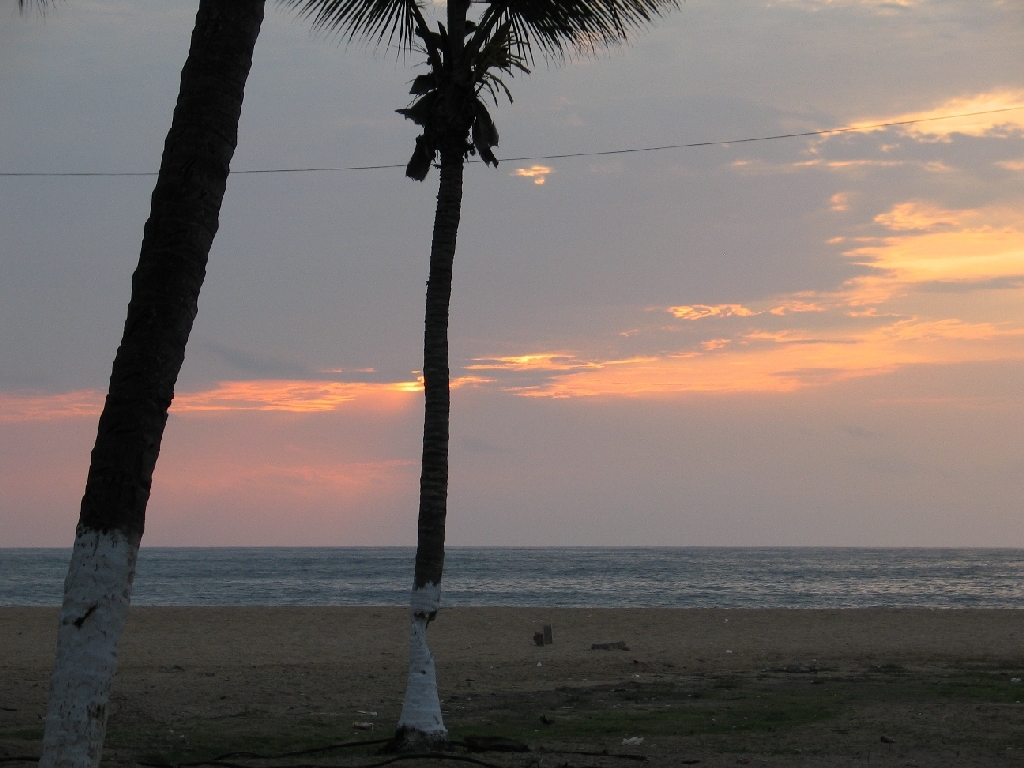
Sumbe
Introduction
Sumbe, formerly known as Novo Redondo, is a city in west central Angola and the administrative capital of Cuanza Sul Province. If you are travelling through the country's central coastal region, it serves as the provincial hub and a natural base for exploring the surrounding area.
Before you go
Sumbe takes its name from a Kimbundu word meaning "to buy", and the site has long been a place of exchange between the peoples of the interior and the coast — salt, fish and fabrics once fed that trade. Keep this commercial history in mind as you plan: the area's life today rests on fishing and river activity, small-scale farming of corn, potatoes and horticulture, and cattle and goat raising.
The city has a dry tropical climate. Plan for the hottest weather between January and April, and for the coolest conditions in July and August. Quicombo Bay and the beaches along it are the area's draw for visitors, so build beach time into your itinerary around those seasons.
Getting there
Huambo is served by two bus terminals, both on the EN100 south-east of the city centre. Huambo Expresso runs several buses a day to Luanda, a journey of five to six hours, and also serves Benguela via Lobito in four to five hours. Macon operates from its own terminal about 2 km south-east of the centre, with a similar daily schedule to Luanda and the same route to Benguela via Lobito.
Whichever operator you choose, expect long road journeys on the EN100; plan to arrive at the terminal with time to spare before departure.
Getting around
Sumbe is a compact provincial capital, and the centre and its immediate surroundings are small enough that walking is a reasonable way to cover short distances. The main bus terminals sit just outside the centre along EN100, so reaching them on foot from the middle of town is feasible, though the walk is along a highway and you should take the usual care with traffic. Given the dry tropical climate, with the hottest conditions from January to April, it is sensible to do longer walks in the cooler parts of the day.
For onward travel, two bus terminals on EN100, both south-east of the city centre, are the practical starting point: Huambo Expresso and Macon each run daily services to Luanda and to Benguela via Lobito, with Macon offering several departures through the day. Buy your ticket at the terminal rather than relying on any citywide pass or card system, as none is described for Sumbe, and go in advance to confirm departure times since schedules are set by the operators. No taxi or ride-hailing services are documented, so treat app-based rides as unverified and arrange local transport through your accommodation or a trusted local contact instead of counting on hailing a car on the street. Air links are provided by Angola Air Services, SAL and Inter Transit; because no designated airport transfer, shuttle or fixed taxi rank is described, organise your onward transport into the city in advance, for example through your hotel or a pre-arranged pickup.
Where to stay
Sumbe has a small choice of hotels, both centrally placed. Hotel Kalunda sits in the centre and offers single en-suite rooms with breakfast included, making it a straightforward base for exploring the city on foot.
- Hotel Kalunda — central location, en-suite singles with breakfast
- Hotel Ritz Sumbe — on Marginal do Sumbe at 4 de Fevereiro; somewhat run down, but with a fine view of the sunset over the Atlantic. Wi-Fi is available at reception only.
Food & drink
Sumbe's eating options are few but pleasant, and both of the places worth knowing sit along the seafront avenues. At Café Restaurant A Esteirinha on Avenida de Maio, between Avenida Joaquim Kapango and Rua do Quicombo, you'll find a straightforward café-restaurant for a casual meal. Restaurant Mar e Sol on Avenida Marginal 4 de Fevereiro has a terrace on the waterfront with a view of the ocean, making it the better choice when you want to eat with the sea in sight. The source lists no bars, cafés or other drinking venues, so plan your drinks around your meals rather than expecting a separate nightlife scene.What to see and do
Start with the Catedral, which sits on the corner of Avenida Marginal 4 de Fevereiro and gives you an easy orientation point in the city before you head further afield.
- The real excursion from Sumbe is to the Sassa Caves, roughly 11 km south-east of the city and said to be one of the seven wonders of Angola. Take the EN100 south of Sumbe, and after about 4 km turn left at the junction and continue for another 7 km. The footpath is on the left of the road but unmarked, so watch for it carefully. From there you walk downhill for about 2 km; when you reach the river, the cave entrance is on the left, hidden behind rocks.
- Ask locals for directions to the caves — they are happy to guide you for a tip.
- Bring a light inside: there are many bats on the ceiling.
- Once you have walked through the second room, you come out on the other side of the river.
When to go
Sumbe has a dry tropical climate, with the hottest conditions falling between January and April. If you visit during this period, expect strong heat during daytime outings and plan your sightseeing and time outdoors around the cooler hours.
July and August bring the mildest conditions of the year and are the most comfortable stretch for walking and exploring the city. Evenings and early mornings feel noticeably cooler during these months.
Three days in Sumbe
Day one: Start in Sumbe, the provincial capital of Cuanza Sul Province, and get your bearings along the Marginal, the seafront stretch facing the Atlantic. Take in the colonial-era character of the old town, still known to many as Novo Redondo, and settle into your base at one of the central hotels such as Hotel Kalunda or Hotel Ritz Sumbe. In the afternoon, walk the Avenida and stop at At Café Restaurant or Esteirinha for a meal; Wi-Fi is available at some cafés, so you can plan the rest of your stay. Keep the day light and let the pace of the town set your rhythm.
- Marginal seafront walk
- Old-town streets of Novo Redondo
- Dinner at At Café Restaurant or Esteirinha
Day two: Head out to Quicombo Bay, the coastal spot within reach of Sumbe, for a slower day by the water. The weather is warm and humid for much of the year, so plan around the heat and carry water. If you prefer to stay in town, use the day to explore the markets and streets of Sumbe and pick up local crafts. In the evening, return to the Marginal for a meal and a drink as the sun goes down over the Atlantic.
- Quicombo Bay
- Sumbe markets and streets
- Sunset on the Marginal
Day three: Use your last day to look beyond Sumbe. Huambo lies inland and is reachable by road, with Huambo Expresso among the transport options; alternatively, Luanda, Benguela and Lobito are connected along the coast. If you are flying out, Angola Air Services and SAL are among the carriers serving the region, and Inter Transit can help with connections. Whichever route you take, allow time to return to Sumbe, settle your plans and enjoy a final meal at Café Restaurant before you leave.
- Road or air connections to Huambo, Luanda, Benguela and Lobito
- Final meal at Café Restaurant