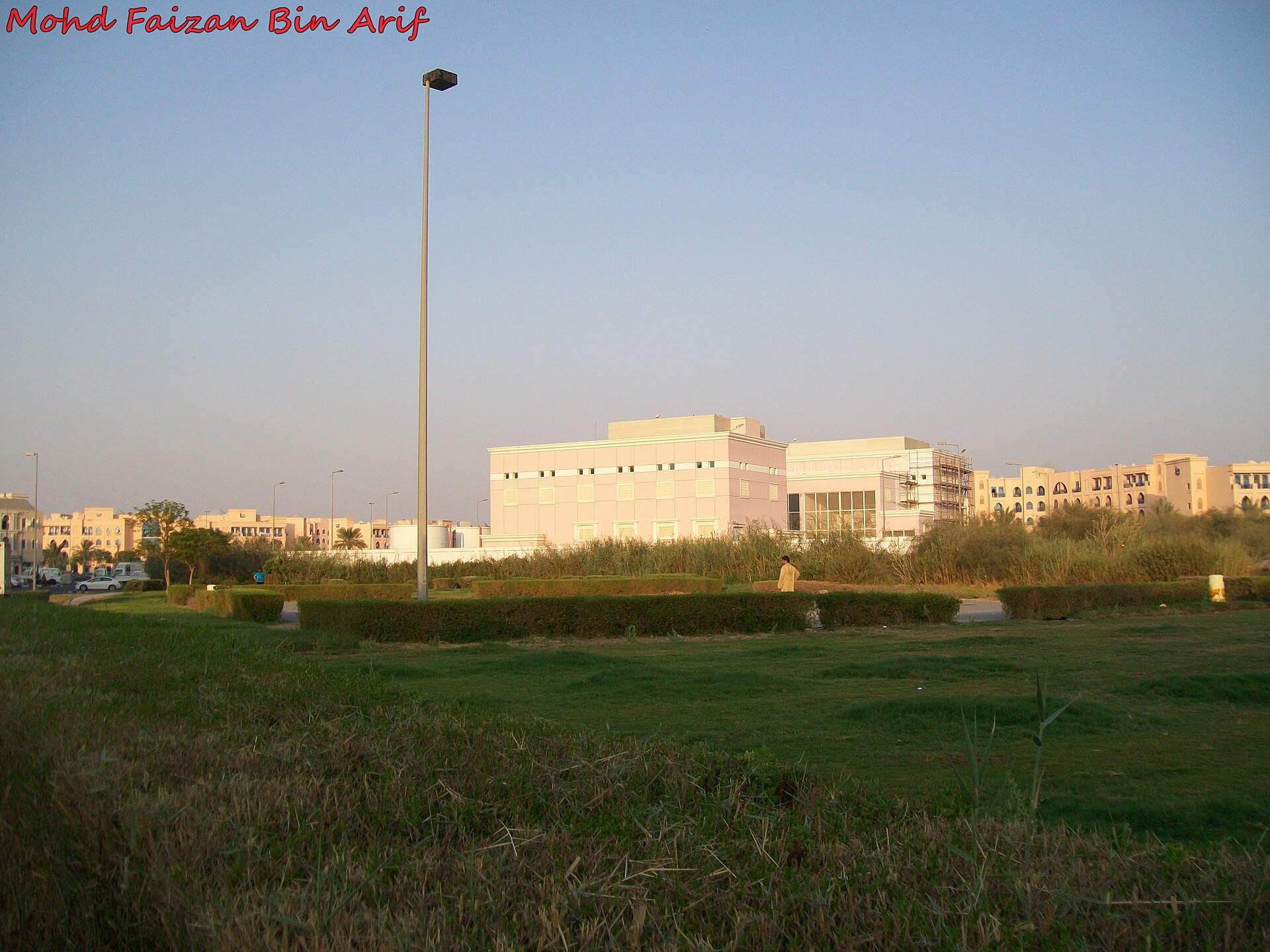
International City
Introduction
Dubai International City is a country-themed district in the Al Warsan area of Dubai, where residences, businesses and tourist attractions are grouped into clusters named after different nations. The layout of the whole development is inspired by traditional Middle Eastern carpets, and it spreads across a wide expanse of land near the Dubai Central Fruit and Vegetable Market.
The city is divided into multiple phases, each with its own set of residential and commercial clusters, so the character changes as you move between them. Expect a lived-in, international feel rather than a resort strip, with everyday commerce and places to eat woven into the neighbourhoods.
Getting around
International City is a car-oriented community in the Al Warsan area of Dubai, laid out in clusters named after countries such as China, England, France, Persia, Greece, Russia, Spain, Morocco, Italy and Emirates, plus a Central District and a Lake District. It has no metro station of its own yet, so most movement within the development is by car, taxi or bus. The RTA bus network is the main public transport option both for reaching the community and for travelling between it and the wider city. Walking works within individual clusters and around the Central District, which holds parks, pools, gyms and shopping areas, but the development is large and spread out, so you cannot realistically cover the whole area on foot. Traffic gridlocks have existed here, a sign that the layout is designed around vehicles rather than pedestrians.
Several RTA routes serve the area, and the International City, Civil Defence1 stop is a useful landmark for planning a journey. Route 365 connects International City with Rashidiya Metro Station via Silicon Oasis and Dubai Academic City, while route 367 links the Etisalat Metro station area with International City and Dragon Mart. Route X23 runs to Ras Al Khor, Oud Metha and Dubai Gold Souk, route 53 to Al Badia, Dubai Festival City, Deira City Centre and Dubai Gold Souk, and route 366 between Rashidiya Metro Station, International City and Silicon Oasis. Route 50 runs direct to the Burj View central Tower 1 area near Burj Khalifa/Dubai Mall, and the less frequent N30 connects International City with Airport Terminal 3, where you can pick up the Dubai Metro Red Line. Because there is no metro station in the community, a bus-to-metro connection is the usual way to combine International City with the metro network; the Red Line serves key visitor destinations such as the Airport Terminal stations and Burj Khalifa/Dubai Mall. An International City 1 metro station on the Blue Line is planned as an interchange, along with a separate International City 2 & 3 station, but these are future plans rather than services you can use today, and no tram connection serves the area. Taxis are a straightforward alternative, with a journey to the Burj Khalifa/Dubai Mall area described as taking roughly 19 minutes, considerably quicker than the direct bus. Fares are set by the RTA, so check with the authority for current ticket and pass options. If you are driving, note that paid public parking began on 1 February 2026, replacing previously free on-street parking in many parts of the community; it operates daily until midnight and remains free on Sundays and public holidays, with residents of eligible buildings able to obtain one complimentary permit per housing unit.
Three days in International City
Day one: Start in International City itself, which is organised into country-themed districts such as China, England, France, Persia, Greece, Russia, Spain, Morocco and Italy. Wander the Central District and the Lake District on foot to get your bearings, keeping in mind that walking can be tricky where traffic builds up. In the evening, head to Dragon Mart, the sprawling market that anchors the area.
Day two: Use the RTA routes and several RTA services that link International City with the rest of Dubai. Travel towards Rashidiya Metro Station and connect onwards via the Etisalat Metro, or head out to nearby Al Warsan. For a change of scene, visit Dubai Central Fruit and Vegetable Market and take in the produce stalls.
Day three: Branch out to the surrounding spots. Consider Ras Al Khor, Oud Metha, Al Badia, Dubai Festival City, Deira City Centre or the Dubai Gold Souk, and take in the Burj View. If you prefer to stay closer, the Silicon Oasis and Dubai Academic City areas are within easy reach, and the Middle Eastern food around International City makes a good final meal.